Dept. of Civil Engineering
Mail: 416 Yates Street
Deliveries: Nedderman Hall 417, 416 Yates Street
The University of Texas at Arlington
Arlington, TX 76019-0308
Research in Civil Engineering
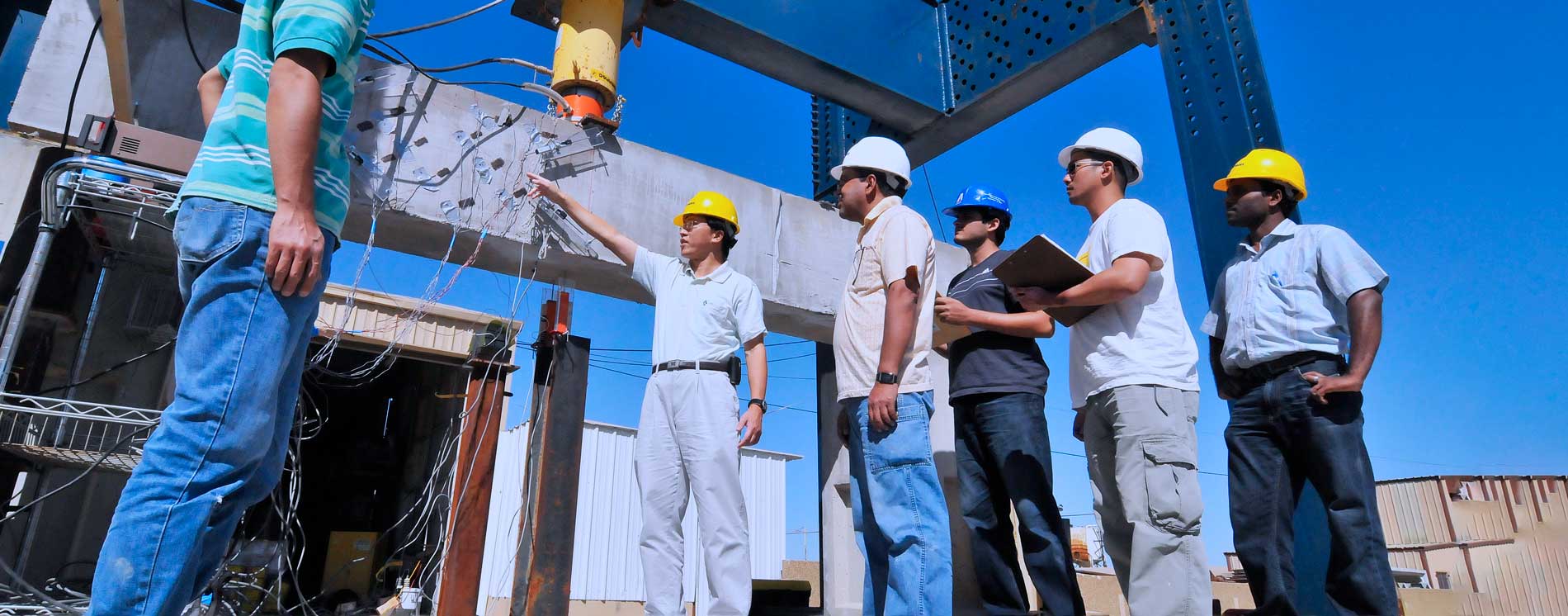
Equipment and Facilities
- Advanced Asphalt Laboratory
- Advanced Geomechanics Teaching and Research Laboratory
- Ashraf Lab
- Center for Underground Infrastructure Research and Education
- Center for Advanced Construction Materials
- Civil Engineering Laboratory Building and Structural Research Laboratory
- Hydraulics and Applied Fluid Mechanics (HAFM) Lab
- Next-gen Sustainable and Resilient Infrastructure Lab
- Smart Infrastructure and Testing Laboratory
- Water and Wastewater Treatment Laboratory
Expertise Areas
Below is a list of our expertise areas. Also, find faculty and their specialties in the areas of expertise page.
- Additive Manufacturing
- Air Quality
- Artificial Intelligence (AI) and Machine Learning (ML)
- Asset Management
- Bridge Engineering
- Building Science
- Coastal Resilience
- Concrete and Cement-based Materials
- Corrosion Control
- Digital Twin and Extended Reality (VR, AR, MR)
- Earthquake Engineering
- Energy
- Engineering Education Research
- Fiber-reinforced Polymer (FRP) Materials
- Flood Science
- Foundation Engineering
- Human Health
- Landfill and Solid Waste Management
- Pavement Materials and Structures
- Reinforced Concrete and Prestressed Concrete Structures
- Remote Sensing
- Retrofit and Rehabilitation
- Risk Analysis
- Smart & Sustainable Building
- Soil Materials
- Steel Structures
- Stormwater, Hydrology, and Water Infrastructure
- Structural Health Monitoring
- Sustainability and Resilience
- Traffic Operations and Intelligent Transportation Systems
- Transportation Planning and Modeling
- Underground and Pipelines Infrastructure
- Water and Wastewater Treatment
- Weather
- Wind Engineering (Tornado, Hurricane, Storm)
- Workforce Development
Research Labs and Centers
- Advanced Computing in Transportation, Informatics, Operations and Networks Lab (ACTIONLAB)
- Advanced Geomechanics Teaching/Research Laboratory
- Advanced Pavement Research Lab
- Advanced Link for Digital Construction (ALD) Lab
- Ashraf Lab
- Center for Advanced Construction Materials
- Center for Durable and Resilient Transportation Infrastructure
- Center for Transportation Studies
- Center for Underground Infrastructure Research and Education (CUIRE)
- Built Environment and Health (BEH) research lab
- Civil Engineering Laboratory Building (CELB)
- Data, Decision & Network Analytics Lab for Resilient Urban Systems (D2NA)
- Environmental Research Internship Center for Youth (ERICY)
- Flood Forecasting Research Against Extreme Events Laboratory
- Humanized Built Environment Lab
- Hydraulics and Applied Fluid Mechanics Lab
- The Hydrology & Hydroinformatics Innovation (h2i) Lab
- Intelligent Systems and Emerging Technologies (iSET) Lab
- Sustainable Mobility and Resilient Transportation (SMART) lab
- North Texas Initiative for Resilient Infrastructure (NTIRI)
- Next-gen Sustainable and Resilient Infrastructure Lab (NSRI Lab)
- Smart Coast Initiative
- Smart Infrastructure and Testing Laboratory
- Solid Waste Institute for Sustainability (SWIS)
- Sustainable Engineering for Urban Stormwater Infrastructure (SEUSI) Lab
- Sustainable Water-Environmental Innovation Research (SWEIR) Lab
- Structural Engineering Research/Simulation and Pipeline Inspection Lab
- Water and Wastewater Treatment Lab
- Water Engineering Research Center (WERC)
Administration
Melanie Sattler, PhD, PE
Dr. Syed Qasim Endowed Professor and Chair
NH 406
Shih-Ho Chao, PhD, PE
ACPA Tom Wheelan Endowed Professor and Associate Chair for Research and Graduate Studies
NH 407
Arpita Bhatt, PhD
Associate Professor of Instruction, Associate Chair for Student Success
NH 336