Architecture Students Explore Rockefeller Center’s Urban Design Legacy
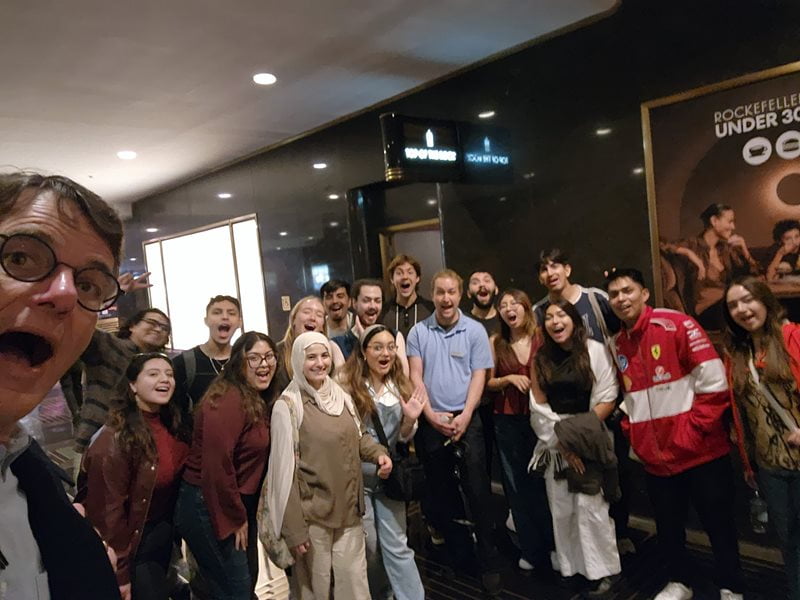
Adjunct Assistant Professor Michael Malone recently led students in his Fourth-Year Architecture Design Studio (ARCH 4556) on an immersive field trip to New York City, giving students firsthand exposure to one of the nation's most celebrated works of urban design —Rockefeller Center.
For many students, the visit was more than an academic exercise; it was an inspiring introduction to the architectural and cultural complexity of a global city. Professor Malone described their reaction as immediate and enthusiastic.
"The Rockefeller Center is a fully realized piece of design, where architecture, urban planning, landscape, and art converge," Malone said. "It may be the finest piece of urbanism in America, and the students readily embraced the vision and execution behind it."
The trip provided the class with a real-world example of the design integration they study in the classroom, demonstrating how urban spaces can serve both functional and experiential goals.
The students participated in three immersive tours, each led by professionals closely involved with Rockefeller Center's operation and preservation. Malone emphasized that these experiences deepened the students' understanding of the site's significance and complexity.
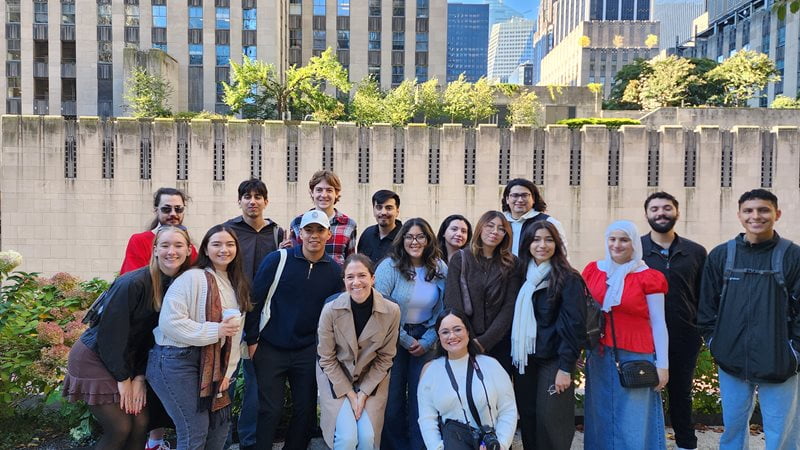
The first tour explored the historic roof gardens, the central heating and cooling plant, and the vast underground truck dock and delivery system—critical infrastructure that keeps the above-ground environment pleasant and unobstructed. Next, the center's head archivist shared vintage newspapers, construction-era photographs, and stories that revealed how Rockefeller Center came to life and why it remains integral to New York's identity. The final tour focused on architectural history, highlighting key design features and the individuals who shaped the center's development.
"All of them were generous with their time and welcoming our students," Malone said. "Their insights made the experience incredibly knowledgeable."
For most students, this trip was their first exposure to the scale and dynamism of New York City – a moment Malone described as unforgettable.
"Only two of the students had ever been to New York," he shared. "Seeing them experience such a large city, absorbing significant architecture in such a short time, and being visibly excited and inspired by it, was significant. Knowing I played a role in their introduction to New York as a place full of opportunity and excitement was very rewarding."
This visit is also connected to themes in Malone's Craft Housing studio project, which examines the housing challenges facing craft workers in the entertainment industry. These people often remain unseen despite their essential roles. His studio is designing a hypothetical 72-unit multifamily development located at Rockefeller Center, intended to serve behind-the-scenes employees who make productions like The Today Show, Saturday Night Live, and NBC Evening News possible. While the center hosts major tenants such as NBC and Comcast, many craft workers endure long commutes due to New York's high housing costs. Similar challenges persist in Los Angeles, especially after recent wildfires, underscoring the urgency of affordable housing solutions. "Our profession is at the forefront of providing housing for people earning honorable wages who need decent places to call home," Malone said. "Exposing students to this societal need makes them more sensitive, more caring, and more likely to support affordable housing initiatives in the future."
Ultimately, the visit left students with a lasting impression of how architecture, landscape, and art can converge to create environments that are both functional and emotionally resonant.
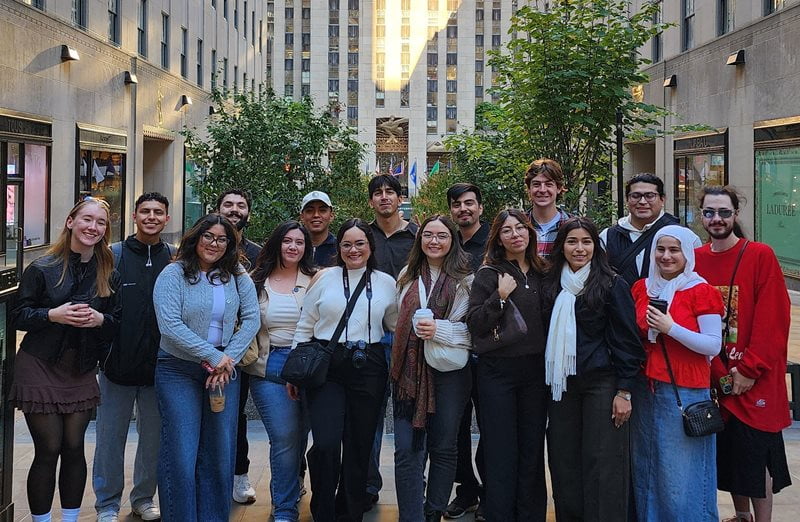
"The students responded to the quality of the built environment at Rockefeller Center and the delight that comes from a carefully orchestrated design," Malone said. "To see landscape and art serving the built environment is rare in most U.S. projects. Witnessing how these elements, paired with sensitive design and attention to human needs, can create a special place was a direct result of our visit."