PhD Graduate Defends Dissertation on Sexual Consent Education for Students with Disabilities
Megan R. Westmore, LMSW, has successfully defended her doctoral dissertation at the University of Texas at Arlington’s School of Social Work, marking the completion of her Ph.D. in Social Work. Her research, which addresses sexual consent scripts among college students with intellectual and/or developmental disabilities (IDD), contributes to an emerging body of scholarship aimed at reducing sexual violence within this underserved population.
A sexual script refers to the set of expectations or unwritten “rules” that people use to guide sexual behavior and communication. For people with IDD, those scripts are often shaped by limited education, inconsistent messages, or misinformation —which can leave them vulnerable to harm or misunderstanding.
Westmore earned a Bachelor of Social Work and a bachelor’s degree in Spanish from the University of Texas at Austin before completing her Master of Science in Social Work with a concentration in Community and Administrative Leadership at UT Austin in 2014. She went on to pursue her doctoral studies at UTA, where she was awarded the prestigious Norman Pauling Fellowship from the University of Texas System in recognition of her scholarly achievements.
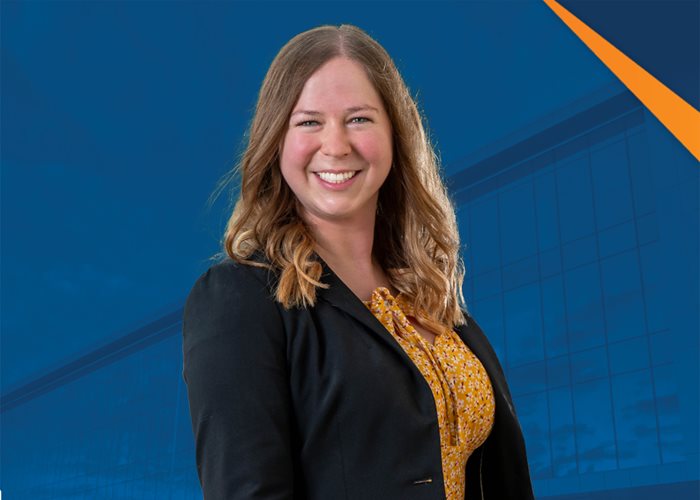
Dr. Megan R. Westmore poses for a photo.
Her mixed-methods dissertation revealed that only half of participants with IDD had received formal sex education prior to college enrollment, and many reported limited discussions about consent within their social networks. Westmore identified critical educational needs related to the age of consent, the effects of alcohol or drugs on consent and the ongoing and revocable nature of consent. She also found that a notable proportion of participants relied primarily on the internet for information—highlighting the importance of developing cognitively accessible, accurate and evidence-based online resources.
“This was one of, if not the first study looking at sexual scripts for consent among people with IDD,” Westmore said. “I hope that we will continue to see more researchers commit to using accessible research methods to hear directly from people with IDD and not just from others in their lives such as parents or professionals. Yes, it can take longer to do research in an accessible manner, but it is crucial that we hear from disabled people themselves, as they are the experts in their lives and needs. I also hope that my work will lead to increased efforts by disability service providers and violence preventionists alike to better address the epidemic of sexual violence against individuals with IDD.”
Her dissertation chair, Dr. Rebecca Mauldin, described Westmore as “an exceptional doctoral student” who excelled as a scholar, researcher and leader. “Her findings illuminate both the strengths of young adults with IDD and the need for targeted social work interventions to support primary prevention of sexual violence,” Mauldin said.
“The qualitative methods allowed me to highlight the voices of people with IDD, a population that is often excluded from both scientific research and conversations about sexuality,” Westmore said. “The quantitative methods helped me to learn more about who is influential in the lives of young adults with IDD. I see these individuals as potential partners in future anti-violence work”
Westmore’s study employed both qualitative and quantitative methods, including semi-structured interviews and egocentric social network analysis, to capture the perspectives of individuals with IDD while ensuring accessibility in research design. “The qualitative methods amplified the voices of people with IDD,” she said. “The quantitative data identified key influencers who could serve as allies in prevention efforts.”
Reflecting on her doctoral journey, Westmore cited the relationships she built at UTA and her experiences teaching at the university level as especially meaningful.
“I am deeply grateful to the many faculty and staff, as well as fellow cohort members, who mentored me and supported me emotionally and intellectually throughout this journey. Also, one of my favorite experiences was teaching at the university level for the first time. In particular, the students in my Fall 2023 Introduction to Social Work class had such a huge impact on my desire to continue teaching in my next position. My class was so engaged and thought deeply about social issues," she said. "I learned a lot from them, and it gave me such reassurance that future generations of social workers will be doing important work with passion and skill."
Westmore will begin her appointment this fall as an assistant professor of social work at Metropolitan State University of Denver. She plans to continue advancing research, policy and practice initiatives that promote accessible, effective, and empowering consent education for individuals with IDD.
To future doctoral students, she offers this advice: “Value your cohort and support one another. Academic success is important but so is caring for yourself and your peers. That community will be your foundation.”