Alumni Spotlight: Carol Klocek (’94 MSSW)
For Carol Klocek, social work has always been about creating stability, dignity, and generational change for families navigating poverty. With nearly two decades of leadership, she currently serves as CEO of Center for Transforming Lives, an organization dedicated to empowering single mothers and their children through housing, education, counseling, and economic mobility services.
Under her leadership, the Center serves more than 3,000 women and children annually using a comprehensive, evidence-based, two-generation and trauma-informed model. From families experiencing homelessness to those working toward long-term security, Carol’s work focuses on helping parents and children build well-being together. Most recently, she led the opening of the organization’s Riverside Campus, a 14-acre space designed with trauma-informed principles to foster healing, partnership, and community.
Grounded in lived experience, professional advocacy, and a passion for bold impact, Carol’s journey reflects the heart of social work in action.
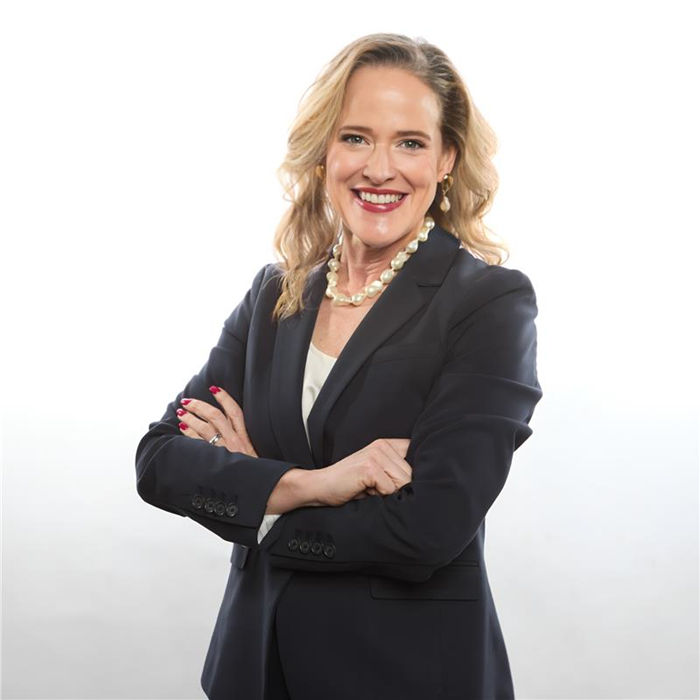
Carol Klocek, CEO of the Center for Transforming Lives, poses for an official photo. (Courtesy Photo)
Q: What inspired you to pursue a career in social work?
A: I grew up in a family that struggled financially and was dysfunctional. After completing my bachelor's degree in philosophy, I worked at a residential treatment center for children who’d been abused and neglected. I recognized many of their experiences as similar to my own.
Working in the field for three years before deciding to go back for my master’s degree gave me deep experience from which to draw during my education and clarified that social work was the right path for me to create change and healing for others.
Q: How did your experience at the UTA School of Social Work shape your professional path?
A: There were several professors that made deep impressions, including one that provided understanding on abuse and neglect and how a supportive response can make a life-altering difference, another who helped me broaden my horizons to understand racial complexities, and another who helped me to understand and enact different forms of advocacy.
But as a professional already practicing administration, it was the ‘micro’ practice classes and practicum that helped me experience areas of practice that then drove my administrative work to truly support front-line work so our services can be most effective.
Q: What is one project, initiative, or accomplishment you’re especially proud of?
A: I am extremely proud of our Riverside Campus, which opened this past May. The 14-acre campus and buildings were designed with trauma-informed design principles and with both parents and children in mind, so it is a beautiful, peaceful place that is child and family friendly.
It was also designed to support partnerships with other providers, such as our Mobile Health programming, and to foster community. Seeing the space used in exactly the way I hoped, seeing the space accelerate transformational change for children and caregivers, along with tremendous expansion of services, makes me very proud.
Q: What are some of the challenges you’ve faced in your work, and how have you navigated them?
A: One challenge that we faced was in addressing family homelessness. Most families who become homeless don’t want others to know and thus remain ‘invisible’ and underserved.
We have worked to raise awareness and increase support for them, but this was a nontraditional understanding, so it took many one-on-one conversations, in addition to releasing multiple publications, to increase understanding and create change.
Q: Who or what has been a major influence or source of support in your career?
A: I’ve had the benefit of several mentors and heroes. Karen Spicer, the former executive director of Catholic Charities, and Ted Blevins, who ran Lena Pope Home for over 30 years, were individuals who made a tremendous difference in my early years.
More recently, Melissa Mitchell and Scott Lydick, both former board chairs, encouraged me to lead more boldly and get out of my comfort zone. I’m introverted by nature, and their encouragement to dream big for our organization and to be more public facing in my advocacy truly helped shape who I am today.
Q: What advice would you share with current social work students or recent graduates?
A: Social work is an open door to so many opportunities, but it is up to you to chart your path to be the change you want to see in the world. That is cliché, but so true.
If we think small, we stay small. If we think big and are willing to put in the work to make it happen, we can grow to whatever the size of impact we want to make. But social work is not for the faint of heart. We have to do the internal work first to create the foundation, which allows us to remain strong for the duration.
Q: How do you stay connected to the values and mission of social work in your everyday life?
A: By talking to the people who use our services as often as possible. I get to know them as people, connect with them, hear their advice and learn their struggles and joys. The more I learn from them, the more I stay grounded and focused in my work.
I also get to know the people who are on the front line, whether it’s those who answer the phones, help families who are homeless through casework or placement, or our teachers. I hear their stories and work to support them in the best way I can.