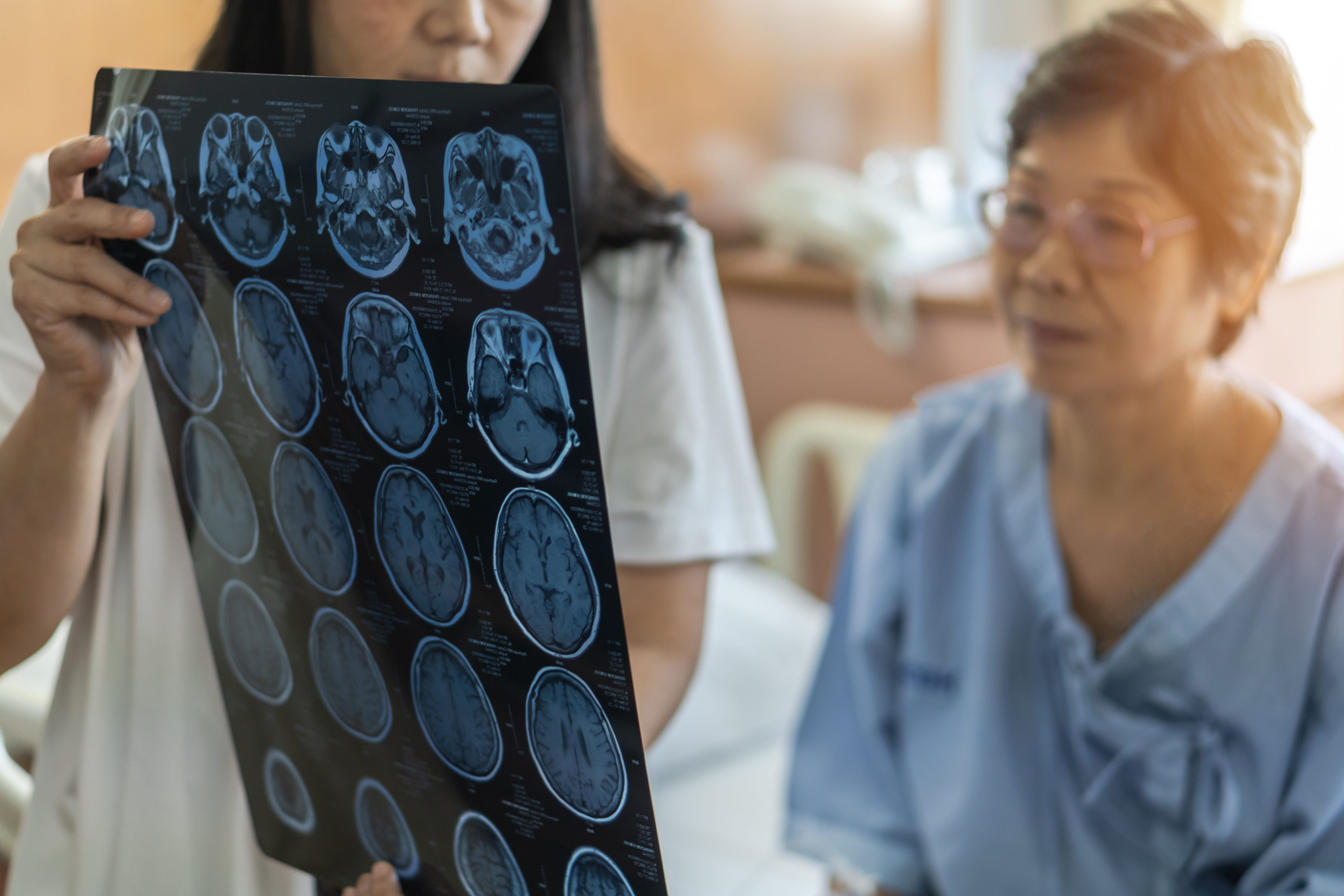
More than 6 million Americans live with some form of dementia, and the National Institutes of Health anticipates nearly half of people in the U.S. over age 55 will eventually develop the disease. These numbers underscore the urgency of research studies to address the numerous challenges this condition brings.
As many researchers continue to search for a cure, others aim to improve quality of life for people currently living with this progressive neurodegenerative disease. At UT Arlington, professor-researchers across academic disciplines tackle various aspects of this disease that impact a person’s quality of life, from loneliness to disorientation to progression of cognitive impairment.
“Losing the ability to navigate is among the biggest threats to independence and quality of life.”
Inside the MIND of Dementia
Although Alzheimer’s disease is the most common cause of dementia, there are other types, too, such as vascular, Lewy body, frontotemporal, and more. Knowing the type of dementia a patient has, especially in the earliest stages, can make a profound difference in the progression of the disease.
“The clinical challenge is how to differentiate the types of dementia because the interventions and medications are totally different,” says Dr. Dajiang Zhu, director of the MIND (Medical Imaging and Neuroscientific Discovery) lab and an associate professor in the Department of Computer Science and Engineering. “One research focus in my lab is to understand how to diagnose different dementia subtypes using AI techniques.”
Before the age of modern AI, doctors could diagnose Alzheimer’s disease with relatively high accuracy, but other types of dementia and pre-dementia, or mild cognitive impairment, were more difficult to pinpoint. The MIND lab is trying to change that.
In collaboration with researchers at the University of Cambridge, Zhu is creating an AI model to analyze vast amounts of data that had been difficult to compare in the past. For example, structural and functional neuroimaging results and genetic information can now be examined alongside questionnaire responses and physicians’ written clinical notes.
Using a state-of-the-art AI model to analyze these diverse data modalities may help doctors more accurately diagnose the type of dementia a patient has and, in turn, implement targeted interventions sooner. Zhu aims to build a model that can predict the preclinical stage of dementia on an individual level with more than 95% accuracy.
“This is not group-level prediction because that is not helpful in real clinical settings. With large language models, we can integrate different modalities of data for individual patients,” says Zhu, who hopes to get the technology into doctors’ hands within the next few years. “We can use AI techniques to find something we couldn’t find before to help predict the status of the patient and predict the progression of cognitive impairment. If we can do this, we can do interventions early and delay the progression of cognitive change.”
Preserving Independence Through Navigation
One of the earliest signs of Alzheimer’s disease and other dementias is disorientation in familiar environments, even before the condition is clinically detectable.
“Losing the ability to navigate is among the biggest threats to independence and quality of life,” says Dr. Steven Weisberg, a cognitive neuroscientist and assistant professor of psychology who studies spatial navigation behavior as the director of the Spatial Cognition and Navigational Neuroscience (SCANN) Lab. “It is critically important to preserve these skills.”
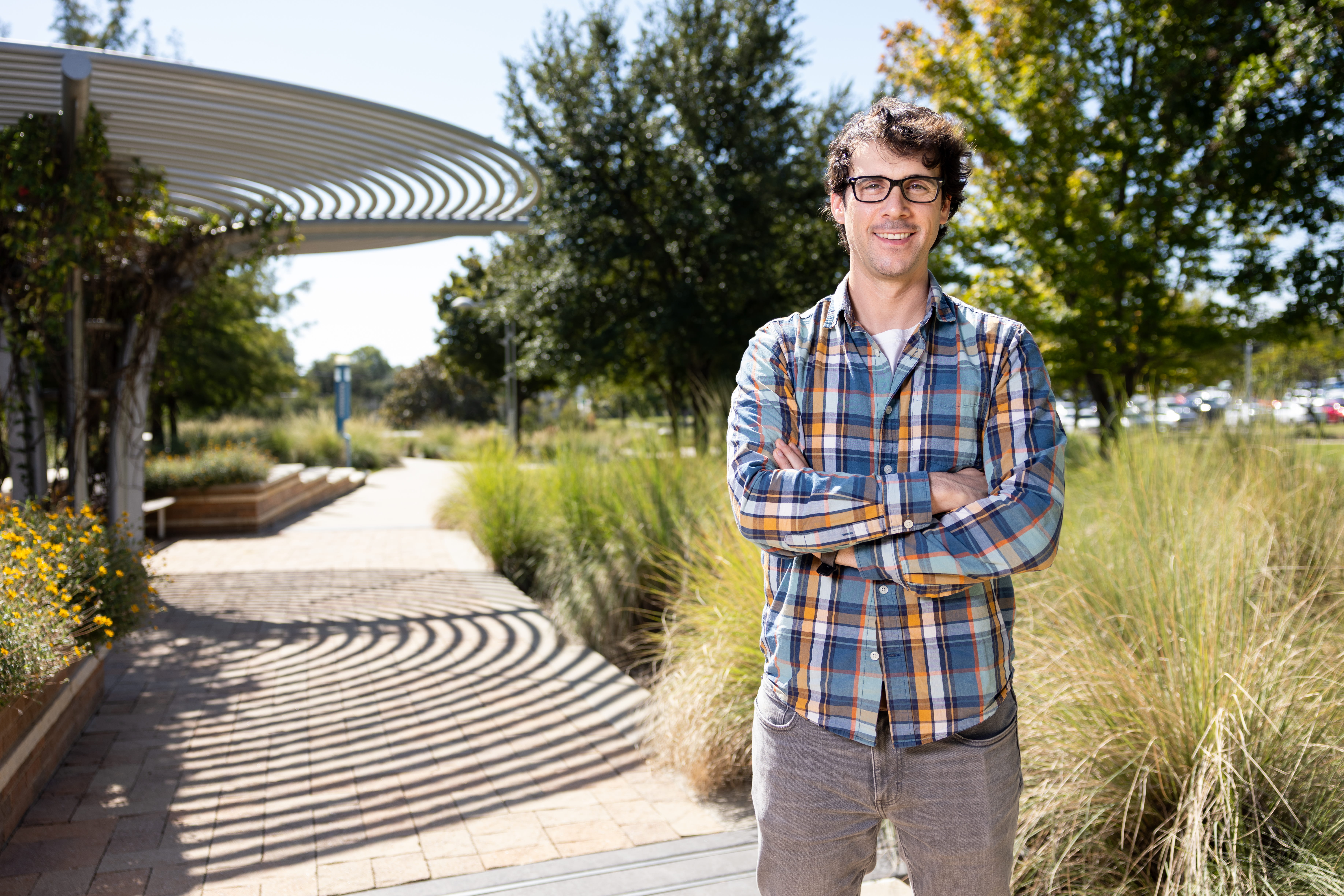
His research aims to do exactly that. In the SCANN lab, Weisberg and his team study human wayfinding in people of all ages. One of his current projects focuses on whether training can help older adults improve their navigational skills. For the study, Weisberg created a virtual environment set up like a large city, where participants must find the shortest route between two landmarks. As participants succeed in solving the challenges, new tasks are added, building upon the tasks already completed. By comparing MRIs taken before and after the training, researchers can analyze whether any changes occurred in the functional activity of participants’ brain networks.
Weisberg has already completed similar research on younger adults with promising findings, revealing that participants’ functional connectivity patterns changed as a result of the training. Although his study with older adults is still in its early stages, Weisberg believes its potential implications could be significant.
“Navigation training might be an opportunity to increase cognitive reserve, particularly around skills involving brain regions that are at risk,” Weisberg says. “We don’t know yet whether that will lead to anything protective for Alzheimer’s disease, but in order to even ask that question, we have to develop an effective training.”
The project is currently lab-based, but he hopes to eventually develop a training participants can do at home on their own, which Weisberg says may have a higher potential for transferring navigational skills to real-life situations.
Helping People Thrive Where They Are
While no cure currently exists for dementia, some researchers are increasingly exploring innovative ways to support quality of life, social connection, and well-being for people living with the progressive disease.
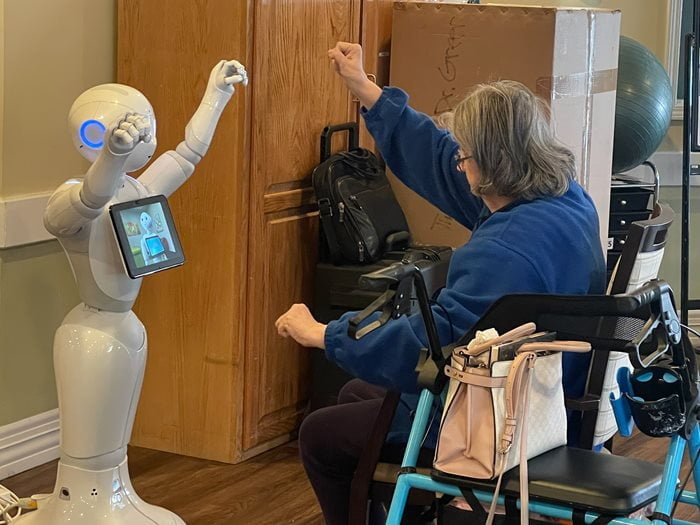
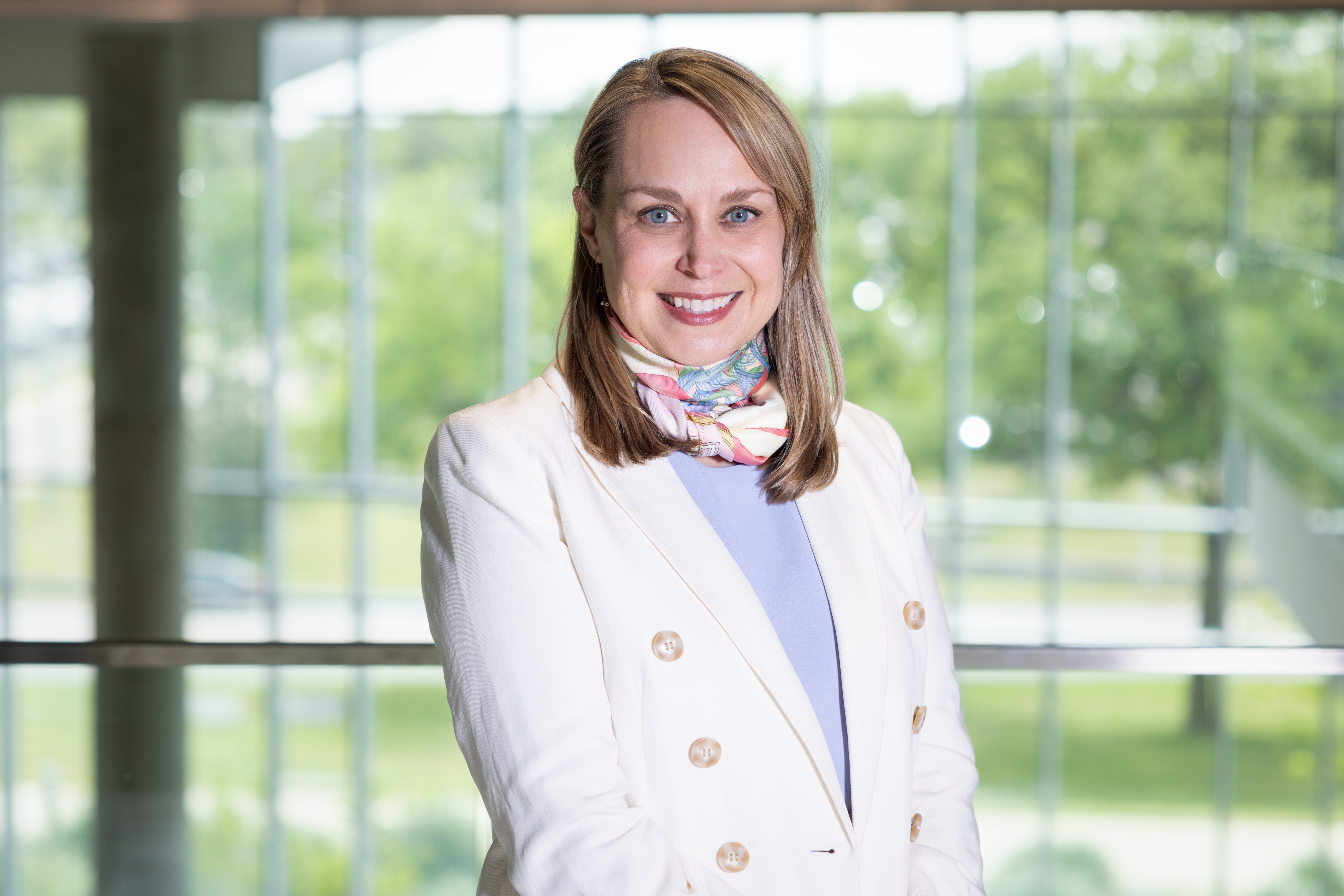
Dr. Noelle Fields, a gerontology researcher and professor of social work who co-leads the Emotional Robotics Living Lab, is one of those researchers. For one of her projects, Fields collaborates with students from the School of Social Work and the Department of Computer Science and Engineering to design social robots with integrated artificial intelligence (AI) to support people living with dementia in residential care settings.
“We embrace the human-robot-human model with a resident, robot, and family member,” Fields says. “We’re trying to leverage technology as a tool to create more opportunities for engagement in an intentional and ethical way.”
Fields’ past research has shown positive outcomes with preprogrammed social robots, and now, using AI, conversations between resident and robot can be more interactive and natural. These robots can also provide respite for caregivers.
“A social robot can support redirection when a person has challenging behaviors, such as repetitive questions or agitation,” Fields explains. “The caregiver can have a moment to step away but knows the person is doing something meaningful, such as a reminiscence activity.” In these activities, a robot prompts the person to remember past experiences and strengths, focusing on resilience to help them better manage their current circumstances.
As part of the research, Fields and her team took the robots to Brookdale Oak Hollow, a retirement community in Bedford, Texas, to demonstrate their capabilities and to learn what residents, families, and staff would want in a social robot.
“It was a magical night,” says Peter Seemann, a Brookdale staff member who attended the demonstration. “We had about 10 residents participate, and I saw a lot of smiles. I had anticipated some frustration, but I did not see any of that. Many residents were mimicking and interacting with the robots. It was an outstanding experience for our residents.”
The residents’ reactions offered a reminder that advances in dementia research are measured not only by what they reveal about the disease but also by how they improve people’s daily lives. And that remains the focus of Fields’ research. “My interest is in helping people thrive where they are.”
About UTA Research and Innovation
As a Carnegie R1 institution, The University of Texas at Arlington endeavors to improve the world we live in through the relentless pursuit of game-changing discovery. Our researchers are charting a course toward a brighter future for all of us and your gift fuels groundbreaking developments, empowering them to tackle some of the world's most complex problems and create a legacy of innovation that will benefit generations to come.