Design meets AI in CAPPA’s new lab
At The University of Texas at Arlington, research and innovation are shaping how students learn and how emerging technologies are explored.
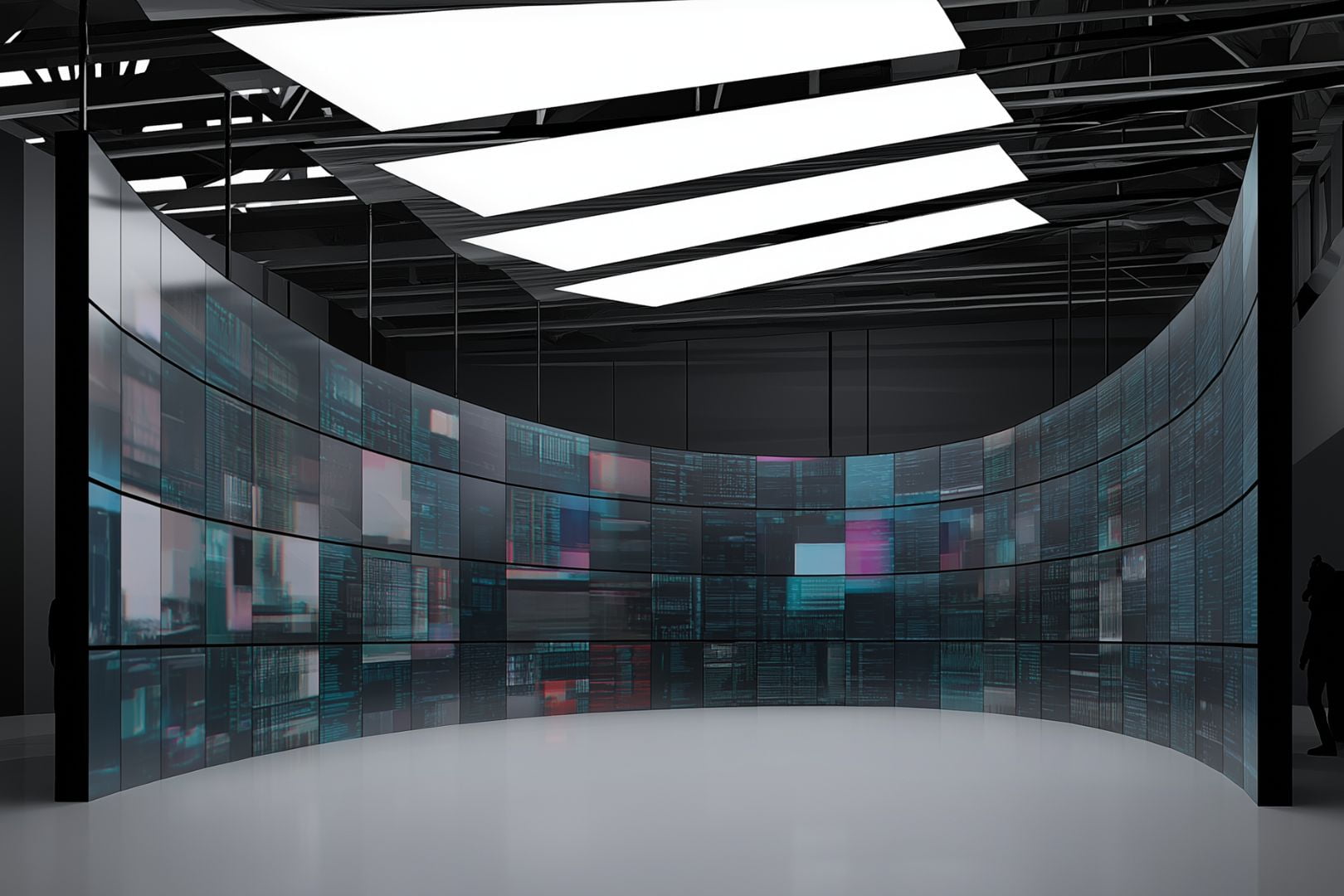
The latest example is a new immersive artificial intelligence research lab in the College of Architecture, Planning and Public Affairs that will unite AI-driven architecture design, immersive visualization of AI-generated images and videos, and robotics to support both research and teaching.
Led by Shermeen Yousif, architecture associate professor and internationally recognized researcher in AI and design and a RISE 100 hire, the Performative AI Lab will combine a curved high-resolution LED visualization wall with a programmable robotic arm. The result is a space where AI-generated design environments, computer vision, agentic AI and physical robotic fabrication intersect.
David Franco, director of the School of Architecture, said Dr. Yousif’s lab will advance AI and machine learning as critical instruments for design, shaping spatial, ecological and experiential performance across scales, from materials to urban systems.
“The lab will soon become a key component of the school’s life, where research seminars, design studios and a wide range of activities connected with AI and digital technology will take place,” Dr. Franco said. “By establishing this lab, Dr. Yousif positions UTA at the forefront of architecture’s technological and ecological future.”
The Performative AI Lab represents a major step forward for CAPPA, Dean Ming-Han Li said, by giving students and faculty access to immersive and AI-driven design tools.
“We are strengthening our research culture and preparing our graduates to lead in a rapidly changing profession,” he said.
The lab, currently in the planning and procurement phase, will be located on the third floor of the CAPPA building. It is designed to serve as both a research facility and a studio classroom, enabling students to engage directly with emerging AI-driven design workflows.
Related: New AI tools help scientists track how diseases start
“This kind of AI research is very difficult to communicate through still images or traditional presentations,” Yousif said. “With immersive environments, you can walk inside the design project, watch animations and interact with the AI-driven design workflow process that led to the conception of the projects. The visuals communicate design scenarios interactively and become self-explanatory. Anyone—from students to community members—can understand the value of the work much more clearly.”
At the center of the lab will be a curved LED wall constructed from modular panels capable of displaying high-resolution visuals, videos and AI-generated design ecosystems. The design allows researchers and students to visualize complex 3D models, point clouds and spatial data at multiple scales—similar to navigating a gaming environment, but grounded in architectural design.
Related: UTA opens AI-driven Smart Agriculture Research Center
“The lab advances research in agentic AI and interconnected AI models, positioning design intelligence as an emergent property of distributed, goal-oriented computational agents trained on aesthetically innovative and high-performing specific architectural datasets,” Yousif said.
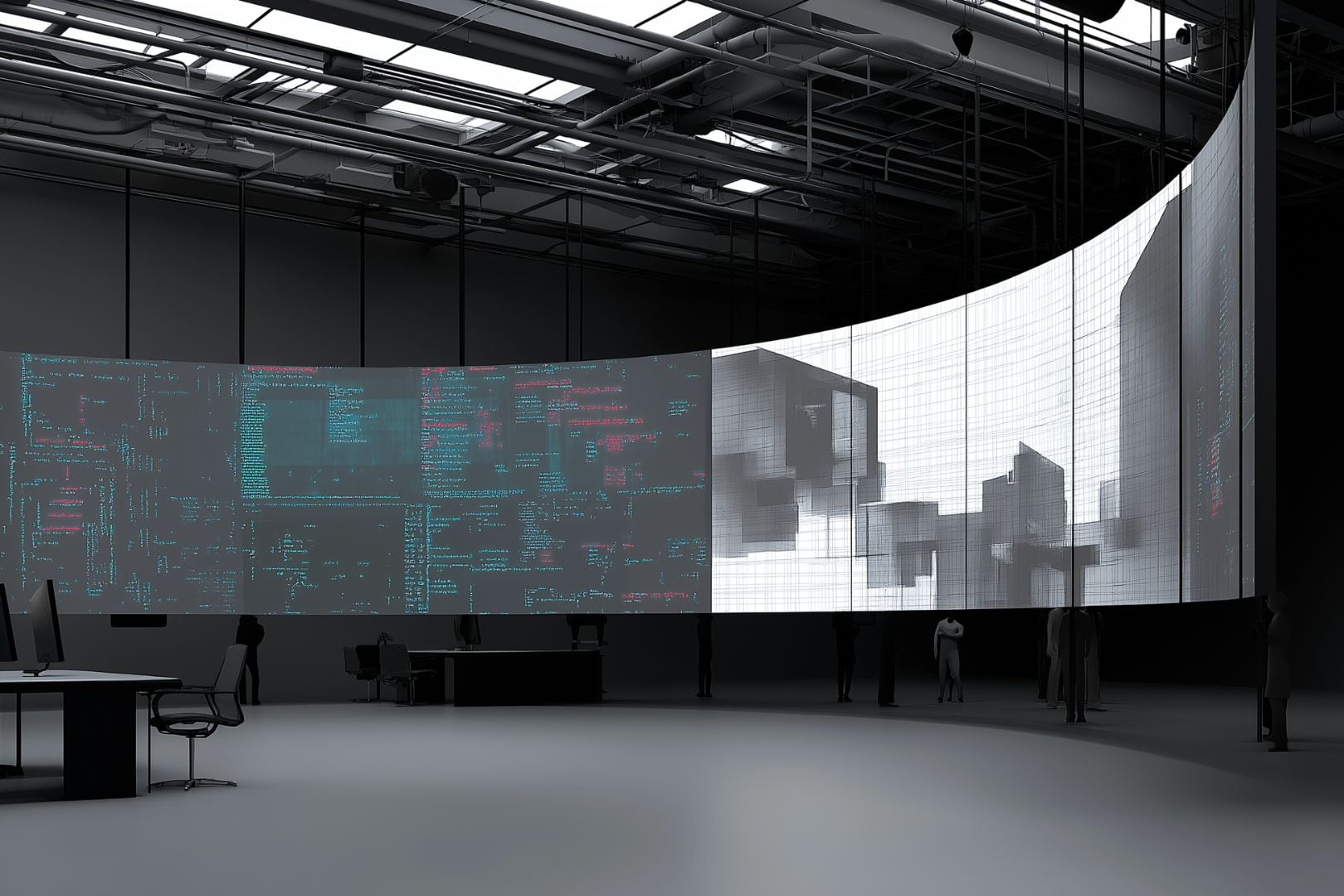
The lab will also house a robotic arm equipped with sensors that enable it to interact safely with users. The arm can be adapted for multiple research applications, including cameras and 3D scanning, computer vision experiments and advanced fabrication using extrusion systems.
“One of the strengths of this space is that the systems don’t have to work separately,” Yousif said. “We can connect the robotic arm to cameras and sensors and visualize that data live on the immersive screen, which opens new possibilities for research and teaching.
Advancing AI education and workforce readiness
The lab is designed to support both graduate- and undergraduate-level instruction, particularly in design studios that integrate AI research. Yousif said students will not only use AI tools but also learn to train their own models, gaining a deeper understanding of how AI systems work and how they can be applied responsibly.
“AI is still relatively new in architecture education, but it’s becoming increasingly important,” Yousif said. “Our students don’t just prompt a model and accept the output. They learn how to design workflows, train models and encode their own ideas and performance goals into the system.”
That approach, she added, helps students develop skills that set them apart as they enter the workforce.
“Architects who understand AI will replace architects who don’t,” Yousif said. “This lab gives our students the confidence and experience to lead in that space.”
Connecting research to community and industry
Beyond the classroom, the lab is intended to serve as a platform for collaboration with professionals, researchers and community stakeholders. Yousif said immersive visualization can help communicate complex research ideas, particularly in architectural and urban design, sustainability, predictive modeling and broader AI-driven design processes.
One of the lab’s early research efforts will focus on engaging the Arlington community, with plans to invite local officials and residents to experience projects in the immersive space.
“Immersive environments change how research is communicated,” Yousif said. “Instead of explaining a project through text and diagrams, people can experience it directly.”
She is currently editing a book on AI and ecological design that examines current issues in AI and design and explores projections for intelligent design futures.
About The University of Texas at Arlington (UTA)
The University of Texas at Arlington is a growing public research university in the heart of Dallas-Fort Worth. With a student body of over 42,700, UTA is the second-largest institution in the University of Texas System, offering more than 180 undergraduate and graduate degree programs. Recognized as a Carnegie R-1 university, UTA stands among the nation’s top 5% of institutions for research activity. UTA and its 280,000 alumni generate an annual economic impact of $28.8 billion for the state. The University has received the Innovation and Economic Prosperity designation from the Association of Public and Land Grant Universities and has earned recognition for its focus on student access and success, considered key drivers to economic growth and social progress for North Texas and beyond.