Nalley: ‘We delivered southern hospitality’
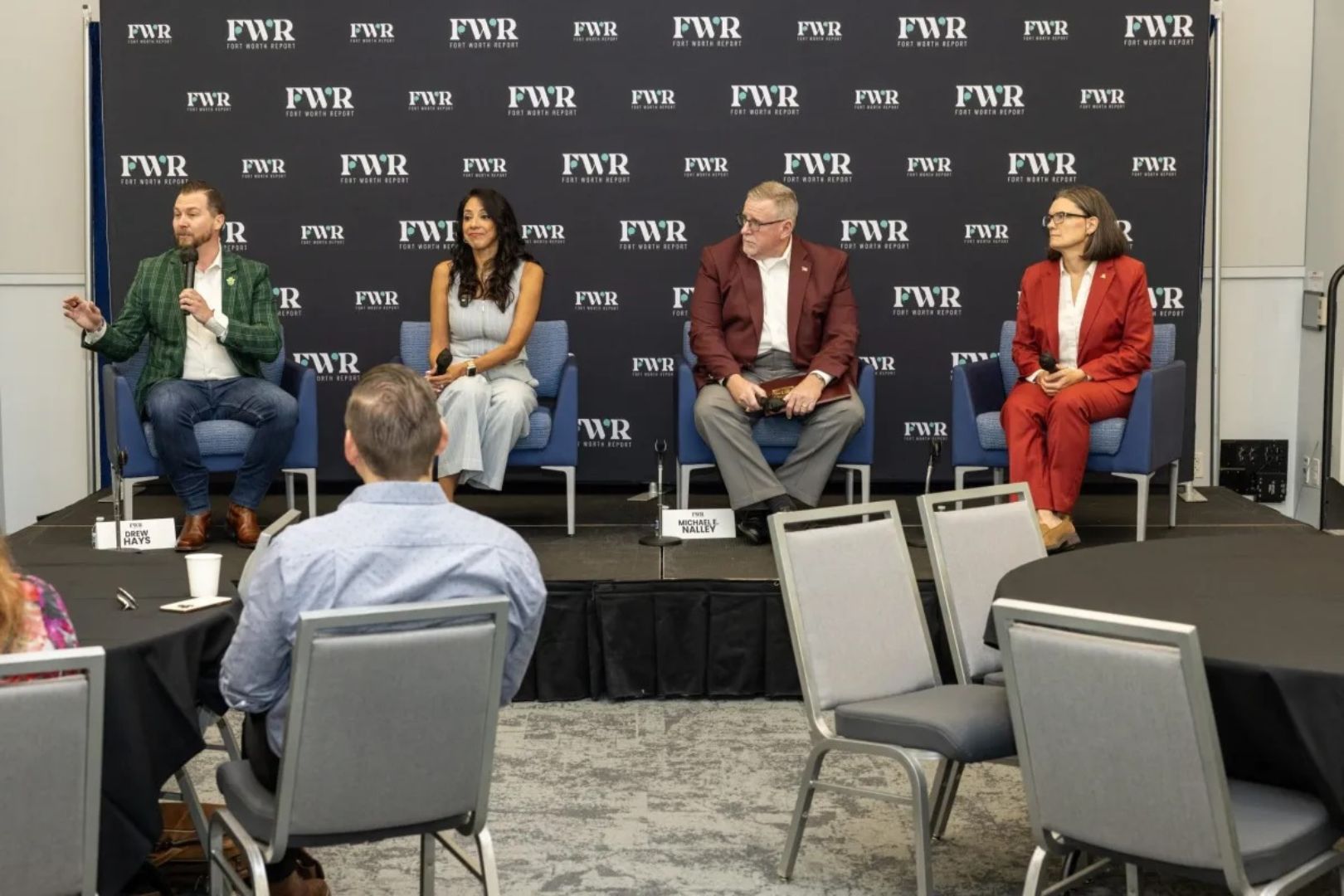
Michael Nalley, director of hospitality management and a professor of practice at The University of Texas at Arlington, recently joined a Candid Conversation panel held by the Fort Worth Report to discuss the impact of the World Cup on North Texas.
Here is Dr. Nalley’s perspective on how the region preformed and what its experiences could mean for future major events:
What was the overall impact of the World Cup from a hospitality and tourism perspective?
Nalley: The overall impact was very positive, not only for the people attending the matches, but also for the employees and for the businesses that were involved. Certainly, there were some that maybe didn't get the bump or the big increase they were looking for, and I think that's something we can go back and look at, but overall, the sentiment we've seen from fans has been very positive. They did complain about the heat—I don't know that we can really control that—but other than that, it's been very positive from a city perspective across all the venues they were engaged in. From a logistics perspective, I thought it went very well. When you look at hospitality venues for big events, there are typically a lot of moving parts and a lot of opportunities for things to break down, and I don't think we saw that. If we did, we responded very quickly and made it a positive experience from a guest or fan perspective. Overall, I think it was an opportunity for us to shine as a metro area, and we certainly did that from a tourism and hospitality perspective.
How did preparation and planning efforts by the cities and agencies pay off?
Nalley: From a hospitality and tourism perspective, being able to see the result of that preparation was extremely positive. There was a lot of coordination, a lot of logistics, a lot of stress that didn't necessarily get seen from a public perspective. Being able to deliver on our offerings, and also being able to pivot when the demand changed, is something we can continue to refine as other big events come into the area. We certainly have a great foundation to build on moving forward, and I think that will be a great advantage.
Related: Share your World Cup story with UTA Libraries
How did the region perform economically, and what should be taken from things like the room-block cancellations that made headlines?
Nalley: The numbers are still coming in, and certainly there were areas that did very well, specifically around the stadium and in the outlying areas. Looking at it in hindsight, there were peaks, and moving forward there are areas where we think there could be better availability from a business perspective—whether that's a communication issue or building awareness through marketing before visitors arrive. I think that's where the room-nights story comes in. It's a normal practice for big groups to make an edit or a change 30 days out from their room block. Given the scale of this event, both here and in other host cities, it got a lot of national coverage suggesting FIFA was canceling all the room nights, when from a business perspective that's a normal trend we'd expect. We can go back and compare that to the normal average, which is around a 10% drop in no-shows. That's part of the process we continue to learn from as we plan for future events.
What lesson should DFW take into future large-scale events?
Nalley: In hospitality and tourism, especially with an event like this, it's about being able to scale up and meet the demand. I think we did that well, and we were able to forecast and adapt. We might have done a little more than we needed, but that's just good preparation in some cases. There's a saying, you don't build a church for Easter Sunday. You don't schedule to meet your biggest day of the year and then sit there the rest of the time with no business. From a DFW perspective, being able to see what future events are coming and coordinate and collaborate to scale up and utilize resources across the different cities is only going to make us more adaptable and flexible to meet that demand. I think the adaptability and flexibility we showed in this event will bode well for us in the future.
How did the region's hospitality hold up for international visitors, and what did that mean for the area's reputation?
Nalley: Putting it in an industry perspective, I think we marketed and delivered southern hospitality. You look at the posts people had on social media, and southern hospitality is mentioned frequently. A lot of people, especially from an international perspective, really didn't know what to expect based on what the media in their home countries was telling them about the U.S., and I think we were able to change that mindset—to show that this is a very welcoming and warm place, that we do have Buc-ee's, and that we have people who greet visitors and are glad they're here.
I don't think that happened by mistake. Visit Fort Worth ran a great program training volunteers, and Arlington's CVB [Convention and Visitor’s Bureau] did something similar. There was a lot of forethought and planning behind it, and that's something that needs to carry forward. At the end of the day, we're going to stub our toe, we're going to make mistakes, but it's how you respond to those that matters, and I think we did that overwhelmingly well. Whether it's Arlington, Fort Worth or the southern hospitality of the region as a whole, that's really going to be the glue that brings this area together and makes a positive impact on future visitors and future events.
About The University of Texas at Arlington (UTA)
The University of Texas at Arlington is a growing public research university in the heart of Dallas-Fort Worth. With a student body of over 42,700, UTA is the second-largest institution in the University of Texas System, offering more than 180 undergraduate and graduate degree programs. Recognized as a Carnegie R-1 university, UTA stands among the nation’s top 5% of institutions for research activity. UTA and its 300,000 alumni generate an annual economic impact of $28.8 billion for the state. The University has received the Innovation and Economic Prosperity designation from the Association of Public and Land Grant Universities and has earned recognition for its focus on student access and success, considered key drivers to economic growth and social progress for North Texas and beyond