UTA student leads NASA-backed air taxi safety research
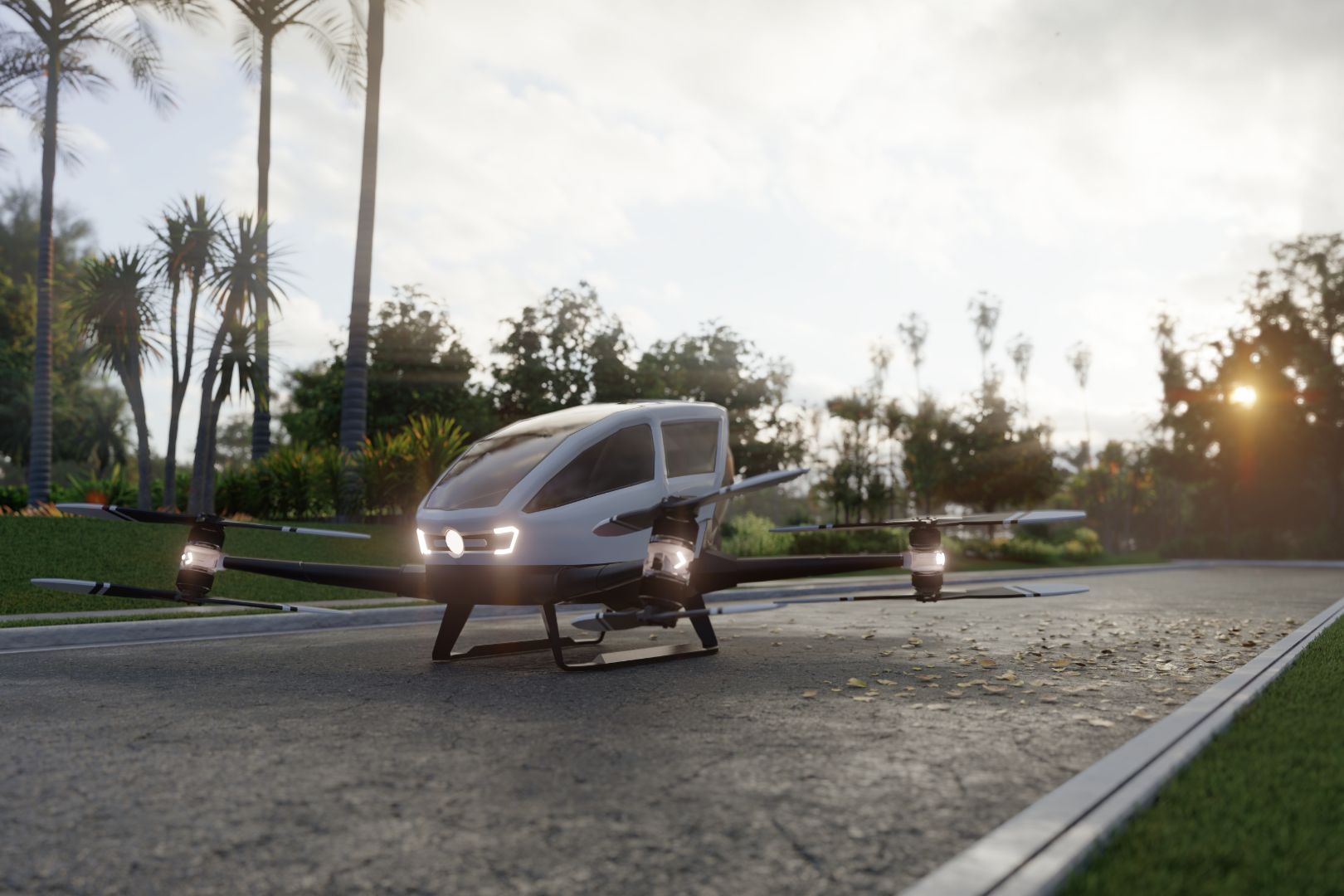
At The University of Texas at Arlington, students aren’t just working toward a degree: They’re building the future of flight. With support from a new NASA grant, a UTA undergraduate researcher is leading a project to develop innovative materials that could make emerging electric air taxis safer and more resilient.
The project is led by Ryan Shrestha, a mechanical and aerospace engineering major, under the supervision of Shiyao Lin, assistant professor of mechanical and aerospace engineering at UTA, and Dr. Othman Oudghiri-Idrissi, assistant professor of civil engineering at UT Austin.
Student co-investigators for the project span multiple universities, including Pablo Martinez (UTA), Omar Hamza (UT Dallas), Taegeon Yoon (UT Austin) and Aadi Sharma (UT Austin). Their research focuses on creating advanced material structures that can both absorb crash energy and dampen harmful vibrations in electric vertical takeoff and landing (eVTOL) aircraft, a rapidly growing segment of next-generation air mobility.
“We applied for this NASA grant last summer to explore unique materials that can help mitigate crash impacts experienced by passengers in vertical takeoff and landing aircraft, while also developing materials capable of absorbing vibrations generated by rotor and propulsion systems,” Shrestha said. “These are two distinct but critical challenges for future air mobility.”
Related: UTA emerges as hub for next-gen air travel
The research is structured into two complementary efforts. One project investigates materials optimized for energy absorption to improve passenger safety in the event of impact, as well as devices with passive sensing and energy harvesting capabilities. The second focuses on vibration attenuation, which is essential for reducing structural fatigue, improving ride comfort and protecting sensitive onboard systems.
“This work is specifically targeted toward material development for eVTOL platforms,” Dr. Lin said. “As these aircraft become more common, ensuring both safety and comfort will be key to their widespread adoption.”
Much of the research and upcoming testing is being conducted at UTARI—The University of Texas at Arlington Research Institute—which provides specialized facilities for advanced manufacturing, materials development and mechanical testing.
Related: NASA taps UTA to shape future of autonomous aviation
“UTARI is our main hub for fabrication and testing,” Shrestha said. “We’ve already produced and tested multiple sets of 3D-printed prototype structures, which were presented in the ASME Aerospace Structures, Structural Dynamics, and Materials Conference in June.”
NASA’s support reflects growing national interest in advancing air mobility technologies that are not only efficient but also safe and reliable.
“This project represents an important step toward making future air transportation quieter, safer and more resilient,” Lin said.
Additional project details, prototype images and testing updates will be released as the research progresses.
To learn more about the project, students have built and designed a website. And to support the project, those interested can make a donation here.
About The University of Texas at Arlington (UTA)
The University of Texas at Arlington is a growing public research university in the heart of Dallas-Fort Worth. With a student body of over 42,700, UTA is the second-largest institution in the University of Texas System, offering more than 180 undergraduate and graduate degree programs. Recognized as a Carnegie R-1 university, UTA stands among the nation’s top 5% of institutions for research activity. UTA and its 300,000 alumni generate an annual economic impact of $28.8 billion for the state. The University has received the Innovation and Economic Prosperity designation from the Association of Public and Land Grant Universities and has earned recognition for its focus on student access and success, considered key drivers to economic growth and social progress for North Texas and beyond.