UTA research could improve autonomous vehicle systems
A researcher at The University of Texas at Arlington is working to improve the reliability and efficiency of multi-agent systems in unpredictable real-world environments, research that could lead to better-performing autonomous vehicles.
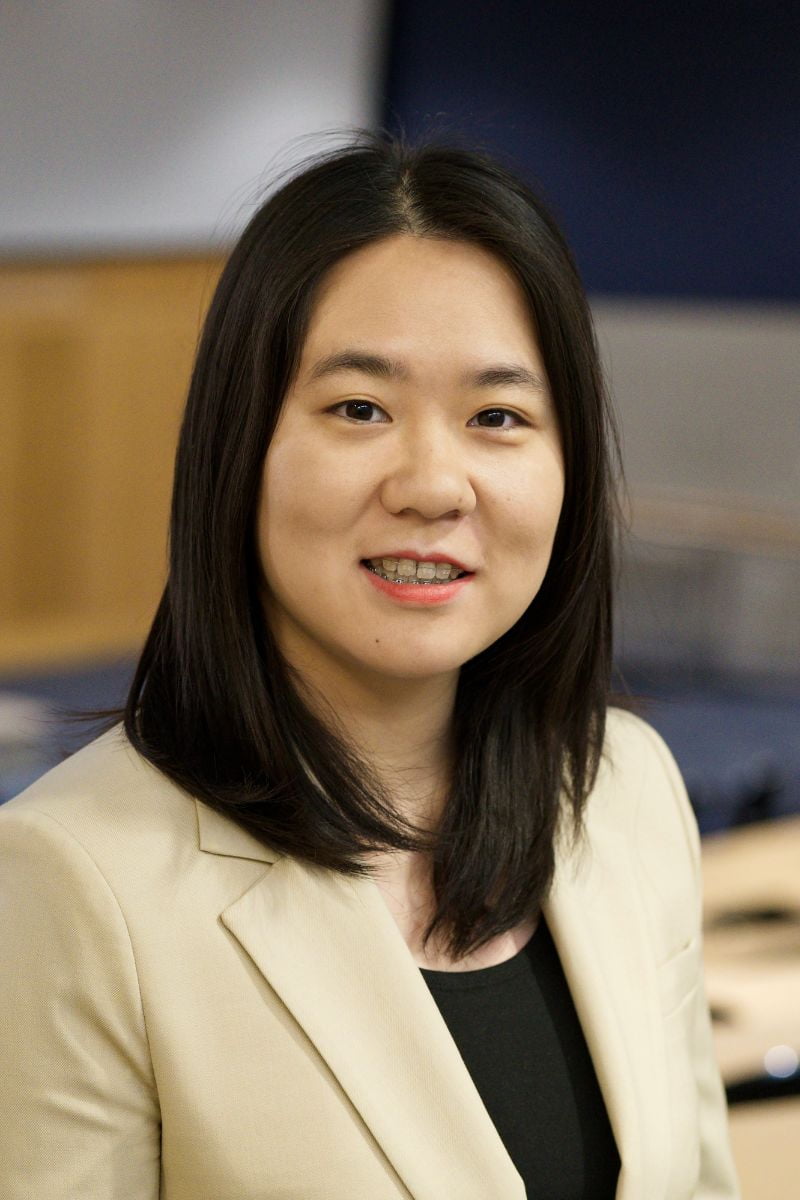
Sihong He, assistant professor of computer science, is partnering with Yue Wang, assistant professor of electrical and computer engineering at the University of Central Florida.
A multi-agent system is a network of autonomous artificial intelligence entities that work together, communicate and divide tasks to handle complex problems that would be difficult for a single model. By assigning specific tasks to different agents, these systems can improve accuracy and handle larger, more complex problems through real-time feedback.
He and Wang are focusing is on transportation and power systems, specifically those used in electric vehicles. They will use robust multi-agent reinforcement learning (MARL) models to test AI decision-making in situations where outcomes are partly random and partly under the control of a decision-maker. The research will occur in two phases. In the first, they will run small-scale simulations, such as video game-like environments where multiple agents can interact and data can be easily collected.
Next, they will collect New York City taxi data to build a model of passenger demand and also use OpenStreetMap to create a city topography that incorporates a power grid and electricity demand. They will then run simulations to observe how agents interact with the map and communicate with each other.
“Because our setting utilizes robust MARL, the trained model is highly adaptable,” He said. “The major advantage is that when we transfer the system from one city to another, it maintains a strong performance and significantly reduces the need for extensive retraining. Inputs will be different and data from the environment may vary, but the robust core model provides a reliable foundation. Users can change some settings and adapt the model to a new city's topography without having to train entirely from scratch.”
Potential applications could include fully autonomous vehicles used for ride-hailing services. For example, the system could help determine where a vehicle should go when it isn’t carrying passengers or when and where it should recharge. If one charging location is busy, the vehicle could be directed to another available location.
“Using the training this way could allow companies to re-balance power usage,” He said. “It could also increase revenues because vehicles won’t be driving around empty and will be managing their power better. We also hope to introduce fairness constraints, so the vehicle’s decision is fair for the community, fair for energy consumption and fair for collaboration.”
— Jeremy Agor, College of Engineering
About The University of Texas at Arlington (UTA)
The University of Texas at Arlington is a growing public research university in the heart of Dallas-Fort Worth. With a student body of over 42,700, UTA is the second-largest institution in the University of Texas System, offering more than 180 undergraduate and graduate degree programs. Recognized as a Carnegie R-1 university, UTA stands among the nation’s top 5% of institutions for research activity. UTA and its 300,000 alumni generate an annual economic impact of $28.8 billion for the state. The University has received the Innovation and Economic Prosperity designation from the Association of Public and Land Grant Universities and has earned recognition for its focus on student access and success, considered key drivers to economic growth and social progress for North Texas and beyond.