Why UTA is training nurses like athletes
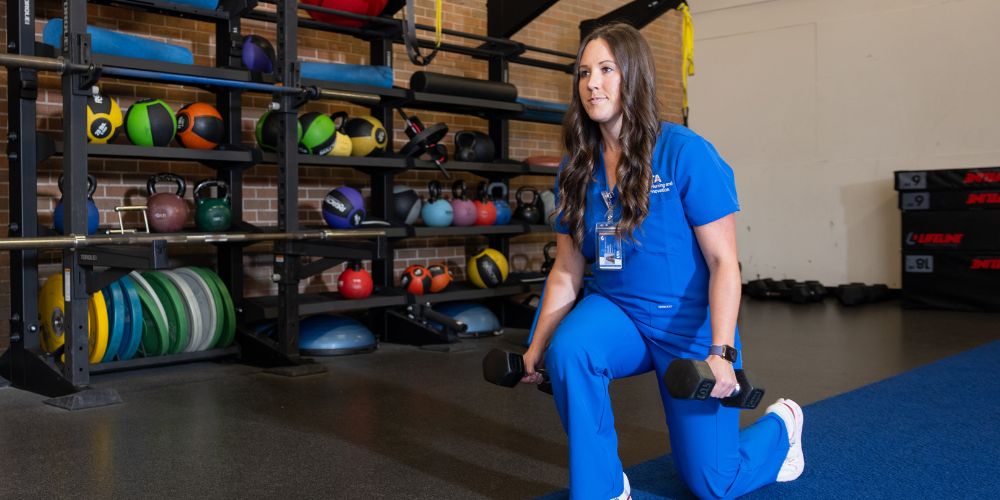
Chandler Browning always dreamed of being part of The University of Texas at Arlington’s nationally recognized nursing program and pursuing her goal of becoming a certified registered nurse anesthetist. Now in her first semester as a nursing student, she is experiencing firsthand UTA’s latest innovation in nursing education: treating nurses as “clinical athletes.”
The Clinical Athlete Framework applies performance science principles to the physical and cognitive demands of clinical practice, helping future nurses develop the strength, endurance and resilience needed to succeed in one of healthcare’s most demanding professions.
“The Clinical Athlete initiative shows that the departments aren’t afraid to work with each other,” said Browning, who played on UTA’s women’s golf team and graduated last spring with a bachelor’s degree in exercise science before pursuing a nursing degree. “It’s awesome to see educators come together to promote student health, safety and education.”
Tyler Garner, program director of exercise science and clinical associate professor, and Cynthia Koomey, associate chair of undergraduate nursing and clinical assistant professor, are leading UTA’s Clinical Athlete Framework initiative.
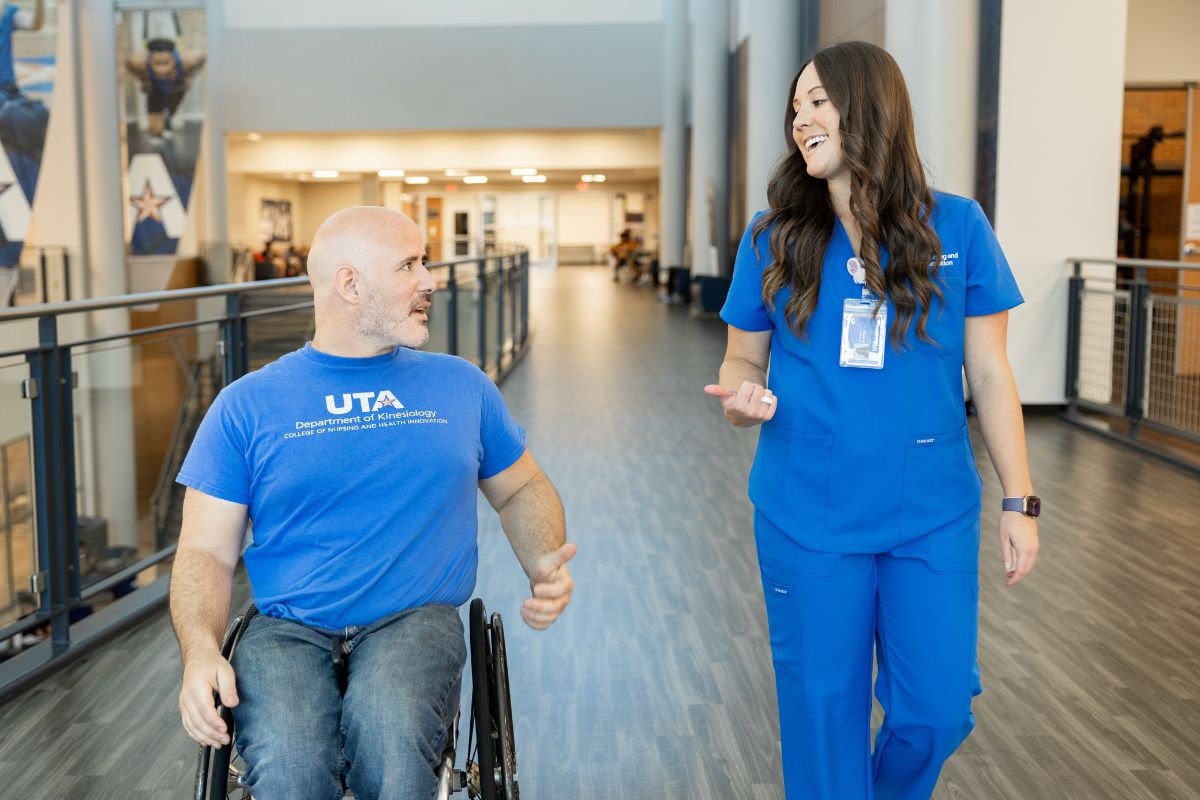
As healthcare systems nationwide face workforce shortages and high rates of burnout, UTA faculty see an opportunity to better prepare and support nurses before they enter the profession. By treating nurses as "clinical athletes,” the program focuses not only on physical conditioning but also on recovery and long-term well-being. Students learn about the importance of proper sleep, nutrition and strategic breaks to help reduce the risk of injury, fatigue and burnout, the latter of which is becoming a troubling trend in the nursing profession. Research has shown that burnout impacts one in five nursing students globally, while one in three nurses leave their first position within the first year. According to the American Nurses Foundation, 69% of nurses under age 25 report symptoms of burnout.
The American Nurses Association lists exercise among its strategies to combat burnout, saying physical activity has proven stress-alleviating effects and that improved strength and cardiovascular fitness can make the physical demands of nursing less strenuous. While the benefits of strength and cardiovascular fitness for nurses have long been recognized, the Clinical Athlete Framework offers an innovative approach by developing programming tailored specifically to those needs.
Related: UTA nurse educator on the profession’s future
“What we're trying to do with the Clinical Athlete Framework is to get nurses included in the conversation about occupational athletes,” said Dr. Garner, a UTA alum. “Nurses have a very physically intense job. They're on their feet all day, lifting patients, lifting equipment, and pushing beds."
Dr. Koomey recalled the demands of the job when she worked at a Level I trauma hospital. Nurses often worked three consecutive 12-hour shifts and frequently added four hours to a fourth consecutive shift, stretching that workday to 16 hours, she said.
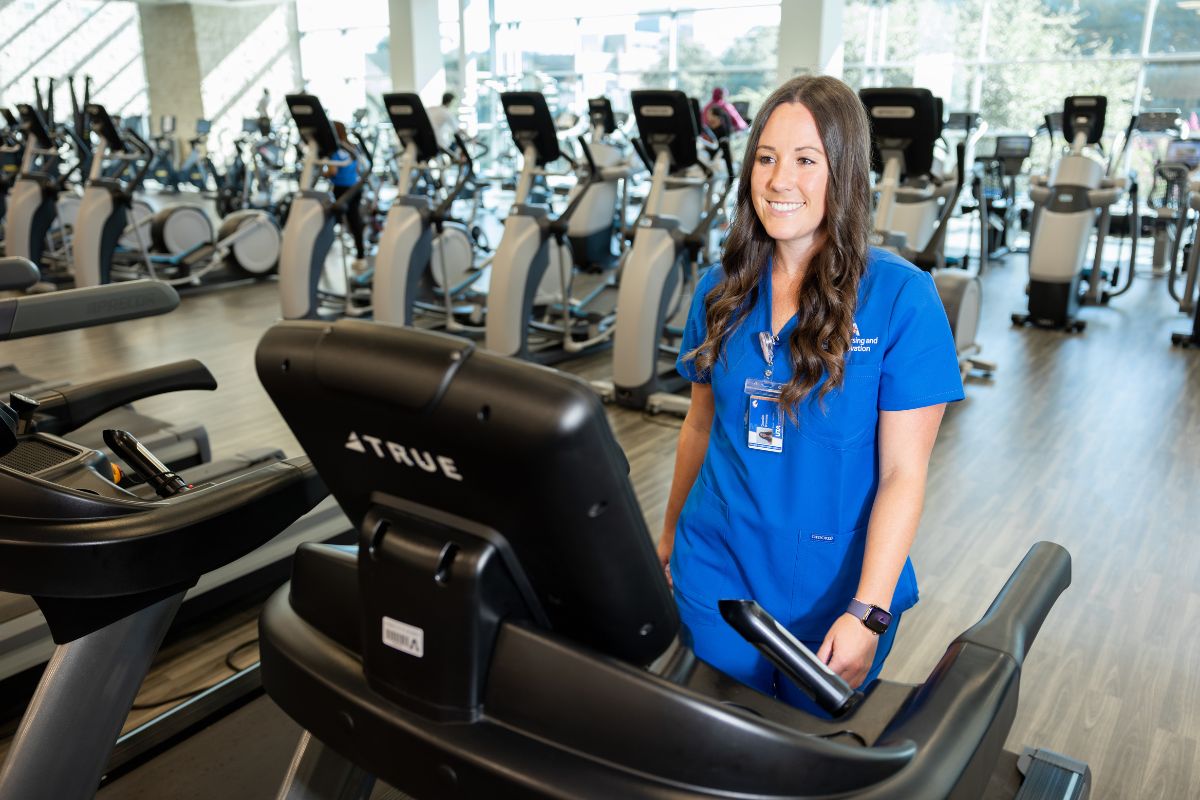
“Then, when you add in not just the number of hours that you’re working in a four-day stretch, but also the number of steps that you take during each shift, I mean, it can easily be 30,000 steps a shift,” said Koomey, a UTA alumna. “Pushing those ICU beds through the halls … it’s just tremendously demanding work.”
Garner said nurses should be considered occupational athletes alongside first responders such as firefighters, police officers and emergency medical personnel.
“There’s an entire framework built around the demands of their jobs; nursing is never included in those conversations,” Garner said. “What we’re trying to do is bridge that gap and start to incorporate the exercise science of nursing practice so we can develop exercise and training interventions for what we're calling clinical athletes.”
Garner added that strength development is a key part of the framework because nurses experience higher-than-average rates of musculoskeletal disorders, according to the Bureau of Labor Statistics.
“One thing we want to try to do is get nurses stronger so that they're able to better handle the physical load,” Garner said. “A big emphasis over here in exercise science is the role of structured strength training as a means of injury prevention.”
So far, the response has been overwhelmingly positive among colleagues and students.
As Browning noted, “UTA really wants students to succeed. I feel like they’re preparing us not only to be great nurses, but also to be great caregivers.”
About The University of Texas at Arlington (UTA)
The University of Texas at Arlington is a growing public research university in the heart of Dallas-Fort Worth. With a student body of over 42,700, UTA is the second-largest institution in the University of Texas System, offering more than 180 undergraduate and graduate degree programs. Recognized as a Carnegie R-1 university, UTA stands among the nation’s top 5% of institutions for research activity. UTA and its 300,000 alumni generate an annual economic impact of $28.8 billion for the state. The University has received the Innovation and Economic Prosperity designation from the Association of Public and Land Grant Universities and has earned recognition for its focus on student access and success, considered key drivers to economic growth and social progress for North Texas and beyond.