UTA sets another record for incoming students
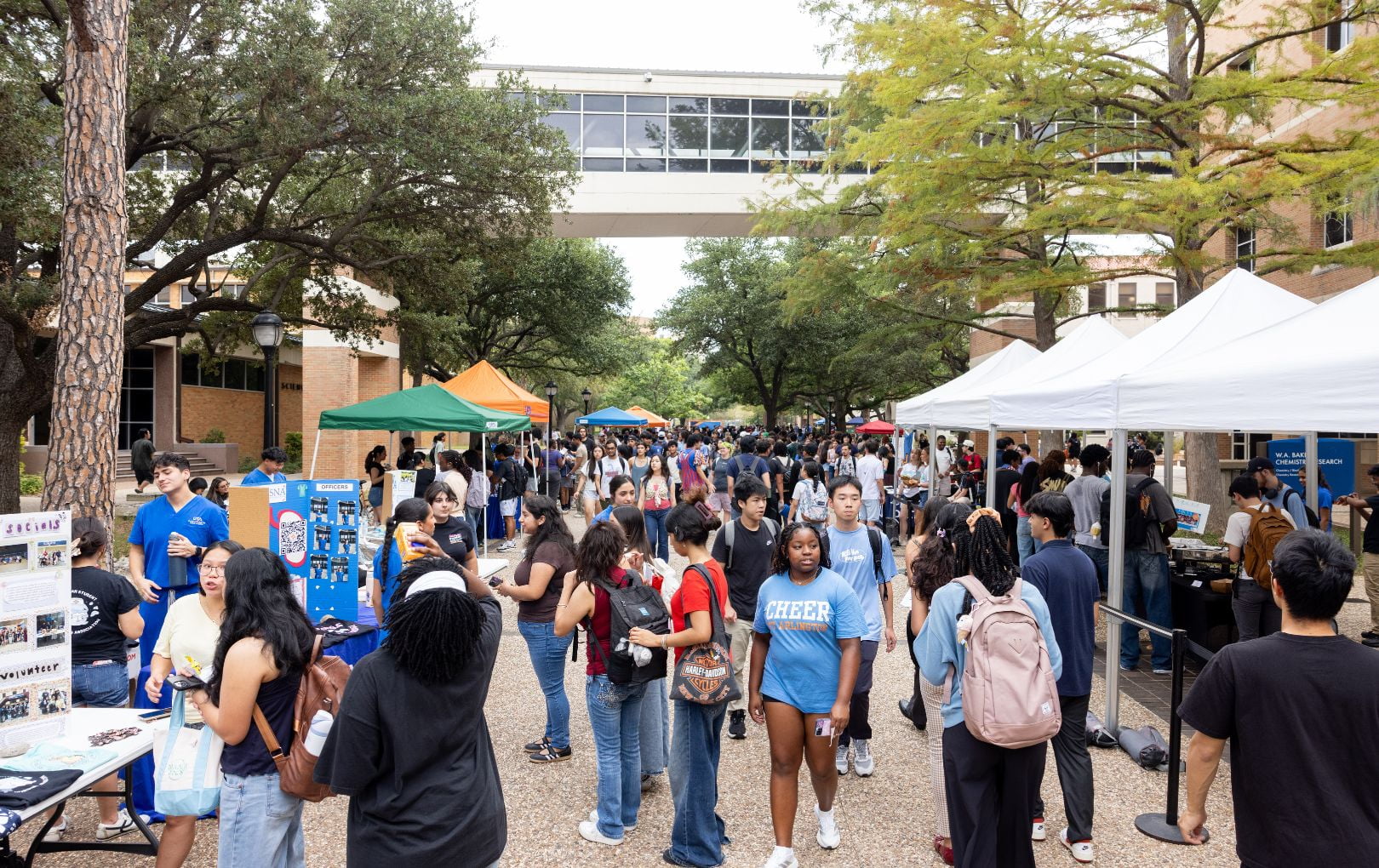
The University of Texas at Arlington has welcomed its largest incoming class of first-time-in-college students in University history, breaking the record set just one year ago.
In newly released fall 2026 preliminary enrollment statistics, UTA enrolled 5,332 new first-time-in-college students this fall, a 4% increase from last year’s record class. Total enrollment stands at 42,787 students.Undergraduate enrollment also continued to grow, reaching 31,165 students, a 1.5% increase from last fall.
“As more students seek an affordable, high-quality education that leads to meaningful careers and upward mobility, they continue to turn to us because of the opportunities a UTA education creates,” said Archie Holmes, acting president of UTA. “This reflects the confidence students and families place in UTA and a testament to the collective efforts of our university community. From our outstanding faculty who lead innovative academic programs, to our dedicated enrollment management and student affairs teams that help students navigate their educational journey, to our alumni who demonstrate every day the transformative power of a UTA degree, this achievement belongs to the entire University.”
The continued enrollment growth comes as UTA expands opportunities for students with more than 190 degree programs, while strengthening academic programs and resources designed to support them from enrollment through graduation.
Among the top 5% of research institutions nationwide, UTA is one of 21 universities recognized by the Carnegie Classification of Higher Education’s new designations for expanding access to higher education and helping graduates earn competitive wages.
Improving and expanding access to a UTA education has been a top priority. Key among the University’s accessibility initiatives is UTA’s Blaze Forward program, part of the UT System’s Promise Plus initiative that fully covers tuition and mandatory fees for qualifying in-state residents. Blaze Forward includes eligible families who make less than $100,000 per year.
Blaze Forward, combined with other grants and scholarships, will enable 60% of all full-time enrolled undergraduate students to have their tuition and mandatory fees fully covered.
UTA also continues to receive national recognition for the value it provides students. Washington Monthly recently ranked UTA No. 1 in Dallas-Fort Worth and No. 5 in Texas in its “2026 Best Colleges for Your Tuition (and Tax) Dollars” rankings, which evaluate universities based on access, affordability, student outcomes and public service.
The University’s enrollment growth comes as UTA continues to expand academic and career opportunities for students. UTA offers more than 180 undergraduate and graduate degree programs and provides students with opportunities to gain career-ready skills and experience inside and outside the classroom.
About The University of Texas at Arlington (UTA)
The University of Texas at Arlington is a growing public research university in the heart of Dallas-Fort Worth. With a student body of over 42,700, UTA is the second-largest institution in the University of Texas System, offering more than 190 undergraduate and graduate degree programs. Recognized as a Carnegie R-1 university, UTA stands among the nation’s top 5% of institutions for research activity. UTA and its 300,000 alumni generate an annual economic impact of $28.8 billion for the state. The University has received the Innovation and Economic Prosperity designation from the Association of Public and Land Grant Universities and has earned recognition for its focus on student access and success, considered key drivers to economic growth and social progress for North Texas and beyond.