Expert Insights: Would a diesel export ban lower prices?
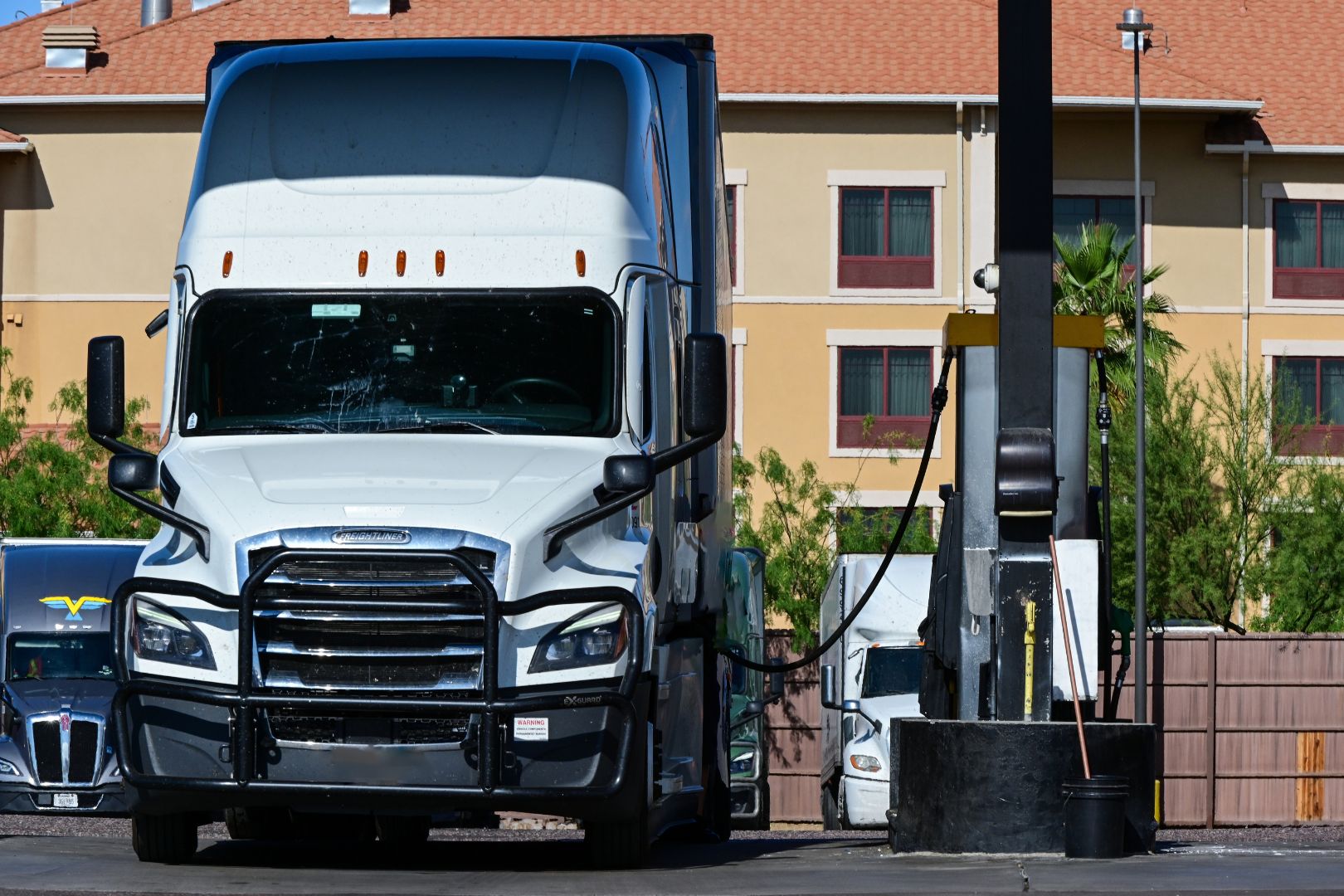
As oil prices climb amid disruptions in global energy markets, some U.S. lawmakers are calling for a ban on the U.S. export of diesel fuel.
But would that actually translate to lower prices? And how would it affect the North Texas region?
Bill Crowder, professor and chair of The University of Texas at Arlington College of Business Economics Department, said a proposed ban on U.S. diesel exports could lower prices for domestic consumers by keeping more fuel in the country. However, he said the impact would likely be limited.
“In terms of how much it’s going to bring down the price of diesel, the fact is, yes, the users of the diesel will benefit at the expense of the producers of the diesel, but in terms of overall benefit, even for users, it’s still going to be relatively small,” Dr. Crowder said.
The proposal comes as diesel prices continue to rise. According to the U.S. Energy Information Administration, Americans consume nearly 160 million gallons of distillate fuel oil each day, including diesel. The transportation industry accounts for about 123 million gallons of that consumption.
Lawmakers argue that an export ban would help lower prices by increasing the supply of diesel available to American consumers and reduce the costs for farmers, truckers and other industries that rely on it. The proposal, however, could also create costs for domestic diesel producers by limiting their access to international markets.
“One of the problems whenever you restrict something, people will find a way around the restriction. That’s human nature to look for the loopholes,” he said. “If the oil companies aren’t going to be able to profit as much from producing diesel, they might switch to producing another product like jet fuel. As a consequence, the supply of diesel in the U.S. might not actually increase very much. Economists are generally skeptical of these kinds of policies.”
For North Texas, an export ban could provide some savings at the pump, but Crowder said the impact would likely be modest.
“The price of diesel is only one factor in the entire production process, so it might have only a marginal impact,” he said. “You might see the price of diesel fall 50 cents a gallon.”
The region could also face longer-term consequences if an export ban reduces the incentive for refiners to invest in production, Crowder said.
“There’s several potential negatives of an export ban, but the one that would be particularly problematic for us is that it would encourage the oil refining companies to pull back on whatever investments they might be making because the return isn’t there now,” he said. “And the reality is we need more investment in this area.”
While a national export ban could provide some short-term relief for North Texas, the state is already taking measures to address the spike in prices.
Governor Greg Abbott declared a state of emergency over rising diesel prices last week, temporarily lifting certain restrictions on commercial transportation and allowing the use of some restricted diesel fuel, including dyed diesel, for commercial truckers and farmers. The measure is intended to increase the supply of regular diesel available to other consumers.
The order could have a noticeable effect in North Texas because of the major role the region has in transportation.
“DFW is particularly susceptible to diesel fuel spikes because the region is a transportation and distribution hub,” Crowder said. “So we will benefit disproportionately from the executive order.”
While North Texas' diversified economy could help limit the broader effects of higher oil prices, Crowder said transportation remains a key area to watch as diesel prices remain elevated.
“The longer oil prices stay high, the more people’s spending will start to fall, and the more it will impact production decisions,” he said. “Oil is an input in almost every production process, if not directly, then indirectly. Increases in the price of these basic products are a net negative for the economy.”
About The University of Texas at Arlington (UTA)
The University of Texas at Arlington is a growing public research university in the heart of Dallas-Fort Worth. With a student body of over 42,700, UTA is the second-largest institution in the University of Texas System, offering more than 190 undergraduate and graduate degree programs. Recognized as a Carnegie R-1 university, UTA stands among the nation’s top 5% of institutions for research activity. UTA and its 300,000 alumni generate an annual economic impact of $28.8 billion for the state. The University has received the Innovation and Economic Prosperity designation from the Association of Public and Land Grant Universities and has earned recognition for its focus on student access and success, considered key drivers to economic growth and social progress for North Texas and beyond.