UTA drives road safety in rural tribal communities
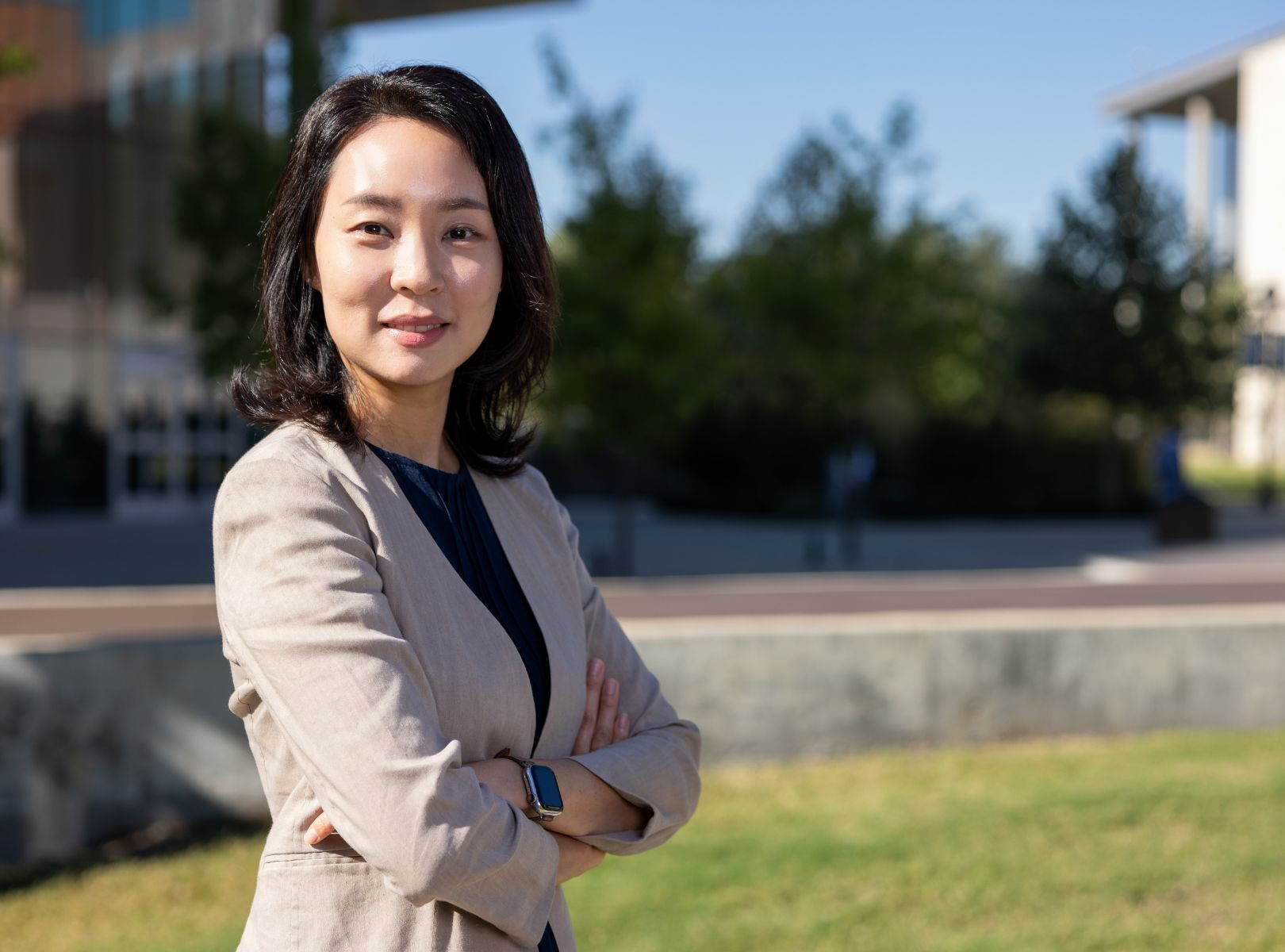
A University of Texas at Arlington researcher is leading a project funded by the U.S. Department of Transportation to improve road safety in three rural tribal communities, where poor infrastructure and limited resources leave drivers and pedestrians at greater risk.
Kate Hyun, associate professor in the Department of Civil Engineering, will work with the Pawnee Nation in Oklahoma, the Pyramid Lake tribe in Nevada and Colorado River Indian Tribes in Arizona during the 52-month project. The $4.6 million grant supporting the work is part of a federal program that funds cities, counties and smaller communities to develop safety plans and tangible improvements at the local level.
“I’ve been doing transportation safety for more than a decade, but I always thought that rural areas and tribes are the ones who are really overlooked in transportation planning or safety strategic planning,” Hyun said.
Most tribal communities are located in rural areas, where roadway pavement, markings and other infrastructure are often in poor condition. Funding from federal, regional and local sources is limited, Hyun said, leaving few resources for road improvements, public awareness campaigns or educational programs.
While schools and offices may sit in a town center with better roads, many residents live farther out along roads that may be unpaved or lack signage. Light traffic can contribute to higher speeds, while weather adds to the risk, from heavy winter snow in the Reno area to storms in Oklahoma.
Hyun said the communities share several common problems: lane departure crashes on curvy mountain roads with few barriers, speeding, low seat belt use, and alcohol use among teens and young adults. Lighting is limited even in town centers, and many crossings near schools and community centers lack traffic control.
Roads within tribal lands can also experience sudden increases in traffic when construction closes a rural interstate and drivers are detoured through the community, creating congestion and conflicts that residents, especially young drivers, may not be accustomed to.
Another challenge is a lack of data. Communities often know where problems exist but lack the resources and staff to collect information that provides a complete picture.
To fill that gap, the team will conduct roadway safety audits using drones, sensors, video and lidar, depending on each community’s preferences. Some communities may not welcome drones because of privacy concerns or the sacred nature of their lands, Hyun said.
Researchers will also survey and interview community members, leaders, teachers and parents and hold focus groups to ensure residents’ voices are part of the data. The team will then use digital twin technology, which creates virtual models of real-world roads and traffic conditions, to simulate possible solutions, such as better traffic control, markings or signage, and identify how each community can best use its limited resources.
The project also includes temporary “quick-build” demonstrations, in which the team will test improvements like markings, signage and lighting in all three communities. Researchers will study how drivers and pedestrians respond to the changes and gather feedback from community leaders on each strategy.
Baseline data collection will take place from November through March, followed by surveys and focus groups six months to a year later.
Hyun said her work focuses on people as much as roads. Federally recognized tribes have their own transportation departments, rules and guidelines, and residents often travel on roads both inside and outside their communities, where traffic conditions can differ significantly.
“I always think that driving is decision-making all the way,” she said. “How they make those decisions is based on their culture, their built environment, their living environment and the weather. I want to know how all of that shapes their decision-making, not only for drivers but for pedestrians, too.”
That is why the project pairs infrastructure upgrades with education and awareness.
“Safety can be improved by upgrading infrastructure, of course,” Hyun said. “But everything has to be backed up and supported by education, public campaigns, better awareness and enhanced knowledge. I want to connect those two components to create holistic solutions, not just infrastructure upgrades.”