UTA uses AI to advance precision medicine
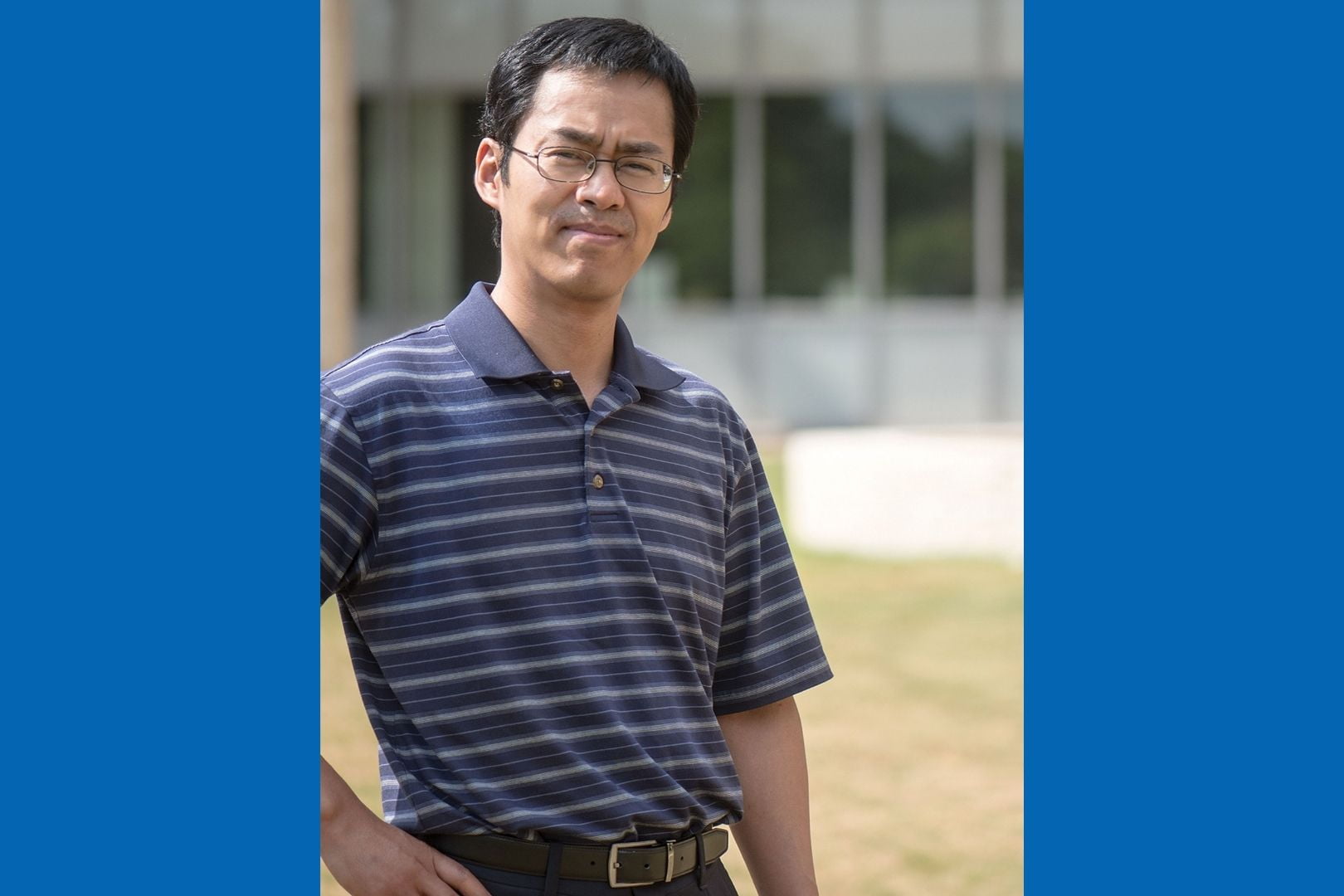
Junzhou Huang, a professor of computer science and engineering at The University of Texas at Arlington, is using artificial intelligence to better predict how genes and drugs might work together to treat disease.
A $3.1 million National Institutes of Health grant will support the project, which is jointly led by Professor Huang, UTA mathematics Professor Xinlei Wang, and UT Southwestern Assistant Professor Lin Xu. Together, the researchers will develop an advanced computational framework to predict gene-gene and drug-drug synergies, aiming to lower costs and accelerate the development of targeted treatments.
The project reflects a close collaboration among UTA’s College of Engineering, UTA’s College of Science and UT Southwestern Medical Center, bringing together expertise in artificial intelligence, Bayesian statistics, computational biology and high-throughput drug screening.
“Hopefully, we can find correlations between gene-gene and drug-drug prediction to create better drug-drug synergy. If we can make better predictions, we can streamline drug development and be more effective with precision medicine,” Dr. Huang said.
Dr. Wang added, “Using Bayesian modeling to integrate drug-screening, multi-omics, chemical, and gene data, we believe we can predict working drug combinations, quantify prediction uncertainty, and explain their biological mechanisms.”
Gene-gene synergy occurs when multiple genes share and enhance common biological functions, leading to effects greater than their individual contributions. Drug-drug synergy is the therapeutic effects from drug combinations targeting those functionally related genes. Drugs targeting those functionally related genes are more likely to exhibit therapeutic synergy, but that relationship has not been studied extensively.
Identifying synergies in a lab is costly, labor-intensive, and inefficient. Current computational methods do not integrate diverse datasets comprehensively in a way that can be used to predict synergies.
Related: UTA engineering faculty earn national composites honors
Recent breakthroughs in machine learning and data integration offer possible solutions to this problem. The researchers and their teams will apply multi-modal large language models and Bayesian statistical modeling to develop an advanced computational framework.
For this project, they will 1) use advanced multi-modal deep-learning approaches to enhance gene function prediction and provide a robust foundation for comprehensive analysis of gene synergies, addressing the challenge of limited functional annotations for thousands of genes; 2) design a hierarchical model to predict drug synergies with explainable mechanisms by integrating combinational screening data, multi-omics data, chemical properties, and drug-target interactions; and 3) validate predictions through high-throughput screening experiments, establishing real-world evidence of computational insights. Huang will lead the deep-learning component, Wang will lead the Bayesian modeling component, and Xu will lead the experimental validation.
“Our study has transformative potential. By combining deep learning, Bayesian modeling, and experimental validation, we aim to accelerate the discovery of safer, more effective combination therapies, reducing development time and cost. By addressing challenges in interpretability and data integration, we hope to set a new standard for synergy prediction,” Huang said.
About The University of Texas at Arlington (UTA)
The University of Texas at Arlington is a growing public research university in the heart of Dallas-Fort Worth. With a student body of over 42,700, UTA is the second-largest institution in the University of Texas System, offering more than 180 undergraduate and graduate degree programs. Recognized as a Carnegie R-1 university, UTA stands among the nation’s top 5% of institutions for research activity. UTA and its 300,000 alumni generate an annual economic impact of $28.8 billion for the state. The University has received the Innovation and Economic Prosperity designation from the Association of Public and Land Grant Universities and has earned recognition for its focus on student access and success, considered key drivers to economic growth and social progress for North Texas and beyond.