Box 19162
Arlington, TX 76019-0162
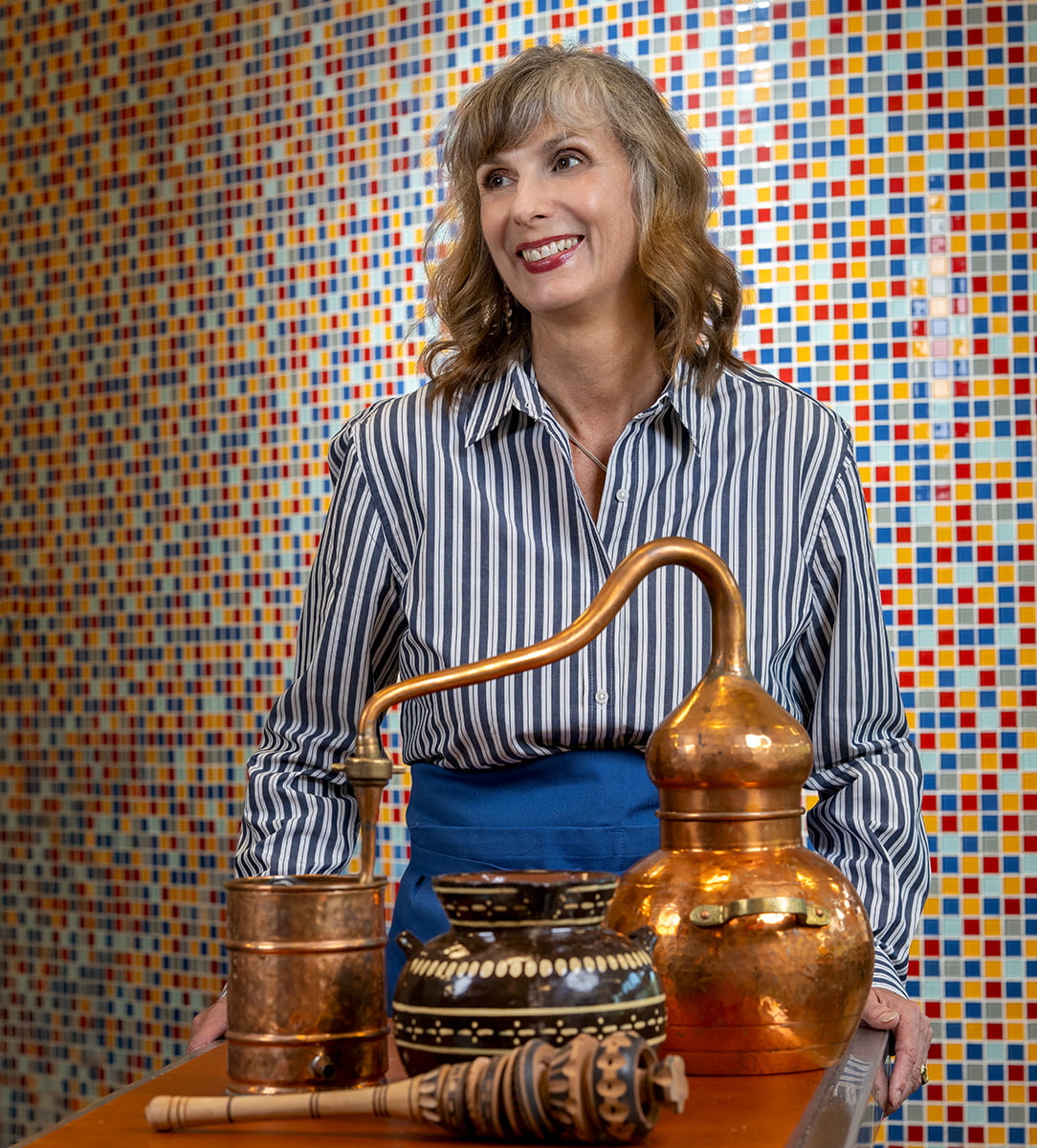
While many people may enjoy baking a cake, Amy Tigner’s love for cooking goes beyond the kitchen and deep into the archives. The English professor studies tasty treats down to the last morsel, from their histories to the way they illustrate how different cultures have changed over time.
Amy Tigner
on the pleasures to be found in old recipes.
What got you hooked on researching food histories?
In 2012, I published Literature and the Renaissance Garden from Elizabeth I to Charles II: England’s Paradise. It seemed like a natural step to go from gardens to the food produced in gardens. I’ve always been interested in food and cooking, but I became more fascinated when I began following chocolate’s evolution.
How did it evolve?
Chocolate originated in Mexico as a cold, foamy drink that was bitter like coffee. In the 16th and 17th centuries, the drink moved to Spain and other European countries, with each population changing it to suit their own tastes, such as heating it or mixing it with other ingredients. For example, in England chocolate was typically warmed and mixed with milk, alcohol, and sometimes eggs to create a medieval drink known as a posset. Chocolate became more accessible during the Industrial Revolution, when a steel roller system made its mass production possible. Joseph Fry created the first chocolate bar in 1847, and soon after Lindt, Hershey’s, Cadbury, and others began making their own products.
Do you have a favorite recipe?
There are several cake recipes that I like from the archives because they’re familiar yet different. They don’t use baking soda or baking powder for leavening because those were 19th-century inventions. Instead, they use yeast or more eggs and are typically either a bready texture or very dense.
What challenges do you face in researching food histories?
It was only relatively recently that many 17th-century recipes were digitized. Before then, I had to travel to libraries in Washington, D.C., and London to look through archives. I even visited the family home of the first Earl of Sandwich in England, a 17th-century ambassador to Spain who wrote recipes for chocolate in one of his journals. Deciphering and transcribing early modern handwriting is time consuming, especially as spellings were not standardized until the 18th century. To make researching recipes accessible, I along with five other academics founded the Early Modern Recipes Online Collective to create a searchable database of manuscripts and their transcriptions.
Can you share an unexpected discovery you’ve made in your trips to the archives?
The most exciting part about research is the process of discovery and never knowing where a rabbit hole might lead. I once found a medicinal recipe written by a Captain Felpes, whom I discovered wrote a narrative about his escape from captivity in Morocco. That gave me the full story behind the recipe and showed that slavery was sometimes an unlikely source for disseminating medicinal knowledge.
Your research also focuses on early modern women’s writing. How does that intersect with food history?
Recipes provide a lens through which we can study early modern culture and the environment. Most recipe manuscripts were written by wealthy women whose families were literate and had access to a variety of ingredients. We still have these documents because aristocratic families maintained dedicated archival spaces in their homes.
What do you find rewarding about teaching food studies?
I enjoy giving students a greater understanding of the food they eat every day, where it comes from, and how it has changed over time. Students may have recipes from their great-grandmother that give them a connection to the past; studying early modern cooking extends that connection by exposing them to recipes centuries older.
You Might Also Like

Before the Storm
Early warnings of natural disasters can save thousands of lives and millions of dollars. UTA researchers are using predictive tools to help design, build, and integrate such systems for everything from floods to wildfires to crop failures.

Letora Anderson
Each time Letora Anderson revisited the historic Baton Rouge neighborhood where she grew up, she noticed its steady decline. Seeing the area become more and more run down was disheartening, but ultimately helped inspire her future career path.

From the Vice President
As we celebrate 130 years of excellence, The University of Texas at Arlington stands at a defining moment in our history. Research and innovation remain at the core of this institution.