Box 19162
Arlington, TX 76019-0162
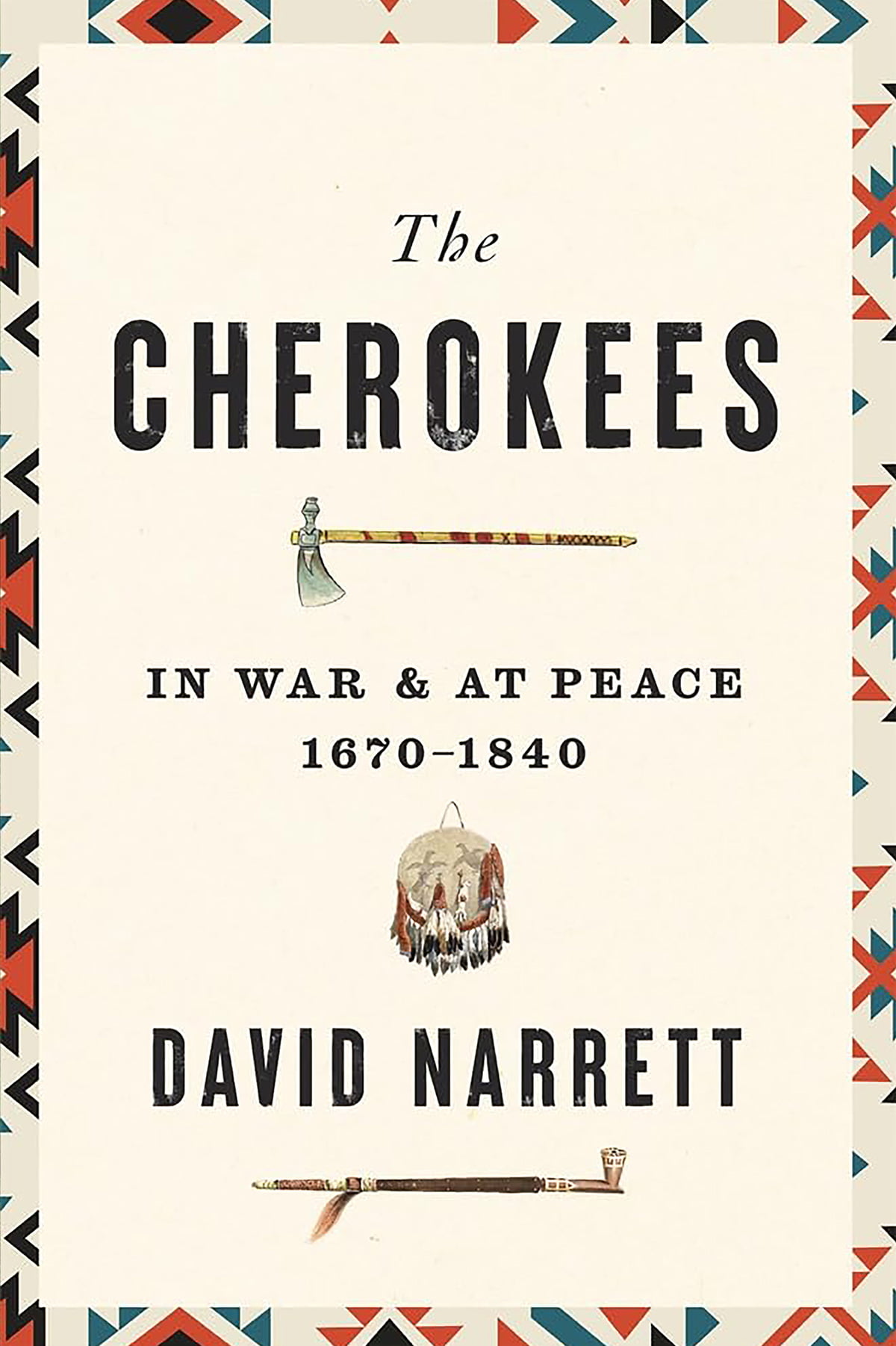
In his new book, The Cherokees in War and at Peace, 1670-1840, historian David Narrett combines deep research with a sweeping narrative. Below, he shares some of its highlights.
When I began to explore the Cherokee past, I realized that there were major gaps in the story long predating the Trail of Tears—the agony of forced Indian removal and expulsion of the 1830s. Cherokee history is not only a matter of collisions with “the white people”—as Cherokees called the British and Anglo-Americans. The story also encompasses conflicts, negotiation, and alliance-making between Cherokees and other Native peoples, from the Creeks (Muscogees) in the south to the Iroquois in the north.
The Cherokees focuses on the cultural and profoundly human dimensions of war and diplomacy. Peoplehood and perseverance are essential elements of this story.
Let’s look at one dramatic episode of 1781 during the American Revolutionary War. It was a desperate time for the Cherokees, who suffered enormously during warfare with the Southern states over years. Besides the loss of Indian lives, many Native women and children were on the brink of starvation. The situation led Cherokees who favored peace to meet in conference with Virginia and North Carolina representatives. In a bold move, Nan-ye-hi, a Cherokee woman (known as Nancy Ward to white settlers) stepped forward at the conference and directly addressed the Southern state deputies. Her plea was one of pride and dignity, not surrender.
Nan-ye-hi first chastised the Americans: “You came and settled on our land and took it … by main force.” The treaty of four years past was “broken,” and a new peace was needed for all time. Nan-ye-hi summoned the ideal of shared humanity and kinship. There was something important that white men and Cherokees warriors held in common: All were born of women. “You know that women are always looked upon as nothing, but we are your mothers. You are our sons,” Nan-ye-hi said. “Our cry is all for peace, let it continue. Let your women’s sons be ours, our sons be yours. Let your women hear our words.”
Cherokee women had served over decades as couriers, go-betweens, and messengers behind the scenes. Nan-ye-hi’s talk of 1781 was a bold step going beyond the past. Native headmen themselves called on Nan-ye-hi to try to soften the “Virginians” and bring them to reason. A woman’s empathetic plea might prove of greater power in dire circumstances than a gun or tomahawk.
But her eloquence did not itself bring peace. Militant Cherokees refused to compromise their rights and remained at war with encroaching white settlers. The fighting was bloody. White settlers sought vengeance for their dead by killing Cherokees in an indiscriminate manner, not distinguishing between peace-minded and militant Indians.
By 1794, Cherokee militants were defeated by white militia offensives. It was then that the Cherokee people as a whole, living in several regions, consulted together and decided on peace with the United States. They did so without surrendering any lands at the time. The Cherokees kept that peace for 40 years before Andrew Jackson moved ahead with his policy of “Indian removal” to lands west of the Mississippi.
You Might Also Like

The Future of Biotech in DFW
Opened in November 2025, the new satellite campus of the National Center for Therapeutics Manufacturing (NCTM²) provides hands-on training for students and industry partners, state-of-the-art lab space, and support for biotech startups, expanding workforce development and research opportunities in North Texas.

Capturing the Past
Last year, Associate Professor David LaFevor spent his spring break traveling along Magdalena River in the rural interior of Colombia, helping to recover, preserve, and digitize the archives of its colonial towns. His work is part of the Slave Societies Digital Archive project.

Strengthening Research Centers on Campus
The North Texas Genome Center now offers faculty access to a next-generation gene sequencer through which they can study the genetic links between health and disease on a large scale, facilitating a deeper analysis of rare genetic variants and paving the way for breakthrough treatments. The $1 million sequencer is the only one of its kind in North Texas.