Box 19162
Arlington, TX 76019-0162
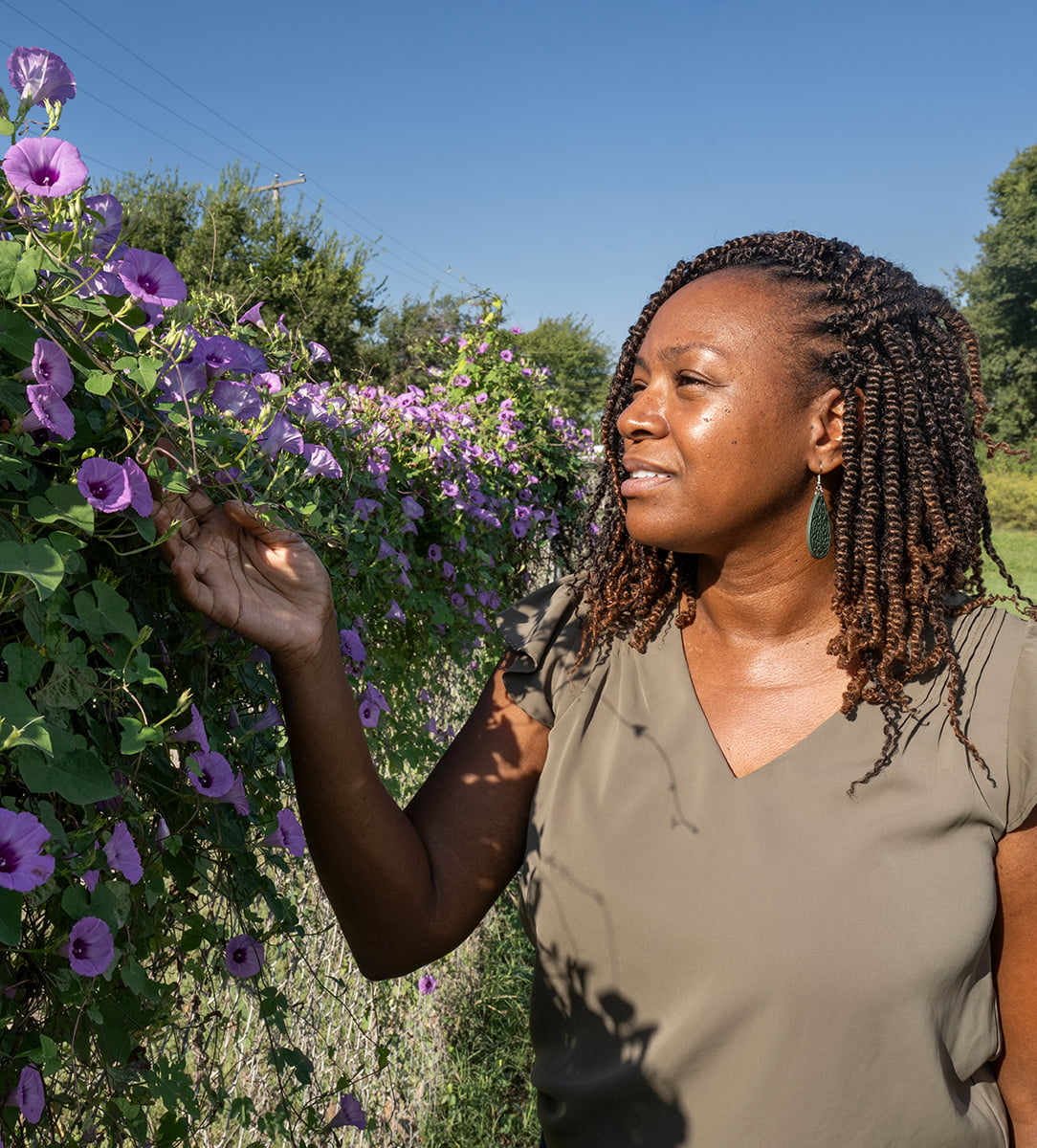
Each time Letora Anderson revisited the historic Baton Rouge neighborhood where she grew up, she noticed its steady decline. Seeing the area become more and more run down was disheartening, but ultimately helped inspire her future career path. As an adjunct professor of landscape architecture, she now teaches students how to revitalize struggling neighborhoods and empowers residents to effect real change in their communities.
Letora Anderson
on designing spaces rooted in history and culture.
When did you start researching landscape architecture?
My research journey began in 2006 while I was pursuing a degree in landscape architecture at Louisiana State University. Hurricane Katrina had struck just the year before, and many of my projects focused on the Ninth Ward in New Orleans, where flooding brought lots of devastation. Many residents were displaced and resettled in Baton Rouge, which gave me an early perspective on the intersection of disaster, displacement, and community resilience.
Before you started at UTA, you were a city planner for Greenville, Texas. What did you learn from that experience?
Serving as the city planner for three years introduced me to the challenges of building momentum around community engagement in the public sector. Sometimes reaching residents meant announcing engagement events at local churches or hosting small focus groups to include voices that were not typically invited to the table. Working in city planning also helped me understand the significant costs tied to infrastructure improvements. To address this, I oversaw the creation of a funding structure that helped offset the long-term costs of new developments.
Your research focuses on designing spaces that preserve communities’ cultural, historical, and social identities. What drew you to that topic?
While earning a graduate degree in community development policy and practice, I examined the systemic dynamics that contribute to neighborhood decline and gentrification. This trajectory eventually led me to research in Greenville and later to work at UTA, where I challenge my students to reach a deep understanding of residents’ needs now and in the years to come. Last year, I collaborated with residents of the Garden of Eden neighborhood—a historic area near downtown Fort Worth—as they confronted environmental justice issues. I then brought my students there to gather information about the land, its residents, and its potential for the future.
How have you grown as a researcher since you first started?
Community engagement has always been at the core of my research methods. Over the 20-plus years I have been studying landscape architecture, technological advances have provided tools to better quantify the impact of engagement and design outcome, which is an important step when working in the built environment. Alongside capturing the qualitative effects of landscapes on culture and historic preservation, I have expanded my strategies to measure environmental impacts using a range of apps, software, and online platforms.
What are you most looking forward to this year?
I recently started work as the assistant director of community development for Greenville, so I am excited about the projects we have underway. I’m equally excited about teaching my courses at UTA this semester. The students entering the Landscape Architecture and Sustainable Urban Design programs bring a real eagerness to learn, and it’s encouraging to see their awareness of the growing demands that development places on the environment. Both are such critical fields to be part of right now, and I believe they recognize that.
You Might Also Like

Before the Storm
Early warnings of natural disasters can save thousands of lives and millions of dollars. UTA researchers are using predictive tools to help design, build, and integrate such systems for everything from floods to wildfires to crop failures.

Ricardo Sanchez-Murillo
Ricardo Sánchez-Murillo, earth and environmental sciences associate professor, was inspired by the natural landscapes of his home country to pursue science. His recent research explores how extreme weather events impact urban environments.

Nursing Undergrad Publishes Research
Caroline King didn’t expect to get involved in research when she arrived at UTA as a freshman. But after joining the Honors College and taking a job with the Center for Rural Health and Nursing (CRHN), she found herself diving into a literature review on midwifery in rural Texas.