Tuesday, Sep 22, 2026
• Thomas Johns :
Thomas.Johns@uta.edu
For Conor Mullarkey, pursuing social work at The University of Texas at Arlington was more than earning a degree. It was part of a personal transformation that helped him turn his own experiences into a career focused on helping others.
Mullarkey began his journey toward UTA around 2015 after experiencing a period of instability, including struggles with mental health and substance use. As he began his recovery, he became heavily involved in volunteering at Millwood Psychiatric Hospital, where he spent nearly two years working with and supporting others.
“I really fell in love,” Mullarkey said. “I was there, you know, pretty much every day for two years.”
That experience helped him recognize that his own story could have value to others. After earning a degree in a different discipline, he eventually decided to pursue social work, drawn to the profession's wide career range and UTA’s reputation.
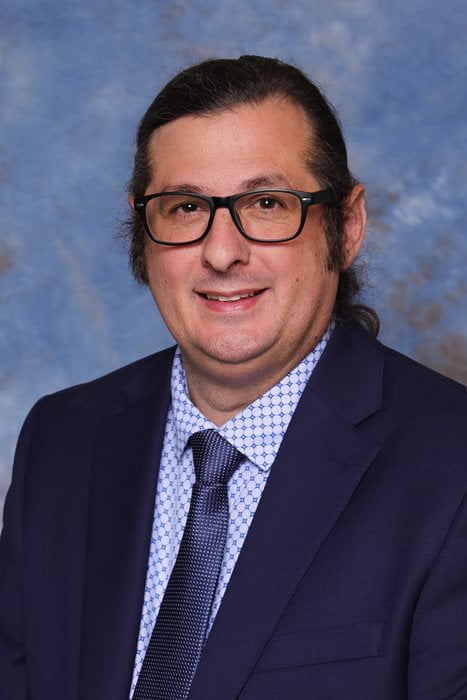
A photo of Conor Mullarkey, Program Director for the Human Service Provider Associate Degree of Applied Science and the Substance Abuse Counseling Certificate programs at Weatherford College. (Courtesy Photo)
After finding his calling, he earned a Master of Social Work degree from the UTA School of Social Work, then became a Licensed Clinical Social Worker (LCSW) and a Licensed Chemical Dependency Counselor (LCDC).
“I really liked just kind of the flexibility of the Social Work degree and the reputation that UTA had,” he said. “I applied for that program. And then very quickly I was just like, man, I’m in the right place.”
Today, Mullarkey serves as the Program Director for the Human Service Provider Associate Degree of Applied Science and the Substance Abuse Counseling Certificate programs at Weatherford College. His work includes developing relationships with clinical sites and community organizations, creating educational opportunities, working with students and building partnerships that can expand opportunities for future professionals.
Mullarkey credits UTA faculty with providing the patience, guidance and education that helped him grow both personally and professionally. Those lessons still influence how he approaches his work today.
“One thing I really try to hammer into my students is how to value themselves. A lot of students aren’t great at negotiating their needs; I know I wasn’t great at negotiating mine. I want them to feel safety in academia,” he said. “My job is to remove barriers for the students.
A significant part of his role is mentorship. Mullarkey said his own experiences taught him how important it is for students and early-career professionals to have someone willing to guide them, rather than simply throwing them into tough situations with little support.
“Mentorship is so important,” he said. “You have to be respectful, students are normally at the beginning of their career journey. They need a lot of support and guidance.”
That philosophy shapes how he works with his students. Mullarkey emphasizes meeting students where they are, understanding their individual needs and encouraging them to challenge themselves without pushing them beyond what they are ready to handle.
His connection to UTA also continues through a longstanding partnership between Weatherford College and the School of Social Work. The institutions are working to strengthen the transfer process and ensure students receive appropriate credit as they transition to UTA.
After completing their studies at Weatherford College, more than a dozen students transfer each year to UTA’s Bachelor of Social Work program. This transfer process makes it easier for students in the Human Service Provider Associate of Applied Science and the Substance Abuse Counseling Certificate programs to pursue a BSW and, through UTA’s direct graduate admit program, complete their Master of Social Work degree faster.
Mullarkey also maintains a private counseling practice, Amplified Counseling, with UTA student and mentor James Knight. The practice provides sliding-scale and pro bono services as part of Mullarkey’s ongoing commitment to meeting community needs.
Looking back, Mullarkey said the person he was before starting his UTA journey would have had difficulty believing where he is today.
“I’d find it hard to believe just how quickly everything happened. Getting an education was hope for me,” he said. “And today is hope realized, to a certain extent. I still have hope for the future too. I’m not done.”
For Mullarkey, that continuing pursuit of growth is at the heart of his work. He describes himself as a “seeker,” someone committed to continuing to learn, question and improve.
His story also reflects what he hopes current and future social work students will recognize about their own potential. He expressed that their starting point does not have to determine where they ultimately go.
“To students, and anyone beginning a long journey, you have more potential than you could ever imagine,” Mullarkey said. “We just have to unlock some doors, and part of that is doing personal work. My goal is to give others hope, just like the hope I received from my mentors that helped me through my journey.”