Wednesday, Oct 21, 2026
• Doughlas Gutierrez :
doughlas.gutierrez@uta.edu
Esmeralda Nava is a proud alumna of The University of Texas at Arlington School of Social Work, where she earned her Bachelor of Social Work and continued her academic journey, earning her Master of Social Work in fall 2024.
Her professional experience includes teaching in Arlington ISD, and she currently serves as the Bilingual Mental Health Resource Manager for Hispanic Outreach at the Grant Halliburton Foundation, where she connects Hispanic communities with mental health education, resources and support.
Through her education, professional experience and commitment to serving others, Nava has emerged as a dedicated social work professional and advocate, using her bilingual skills and lived experiences to help make mental health resources more accessible to the communities she serves.
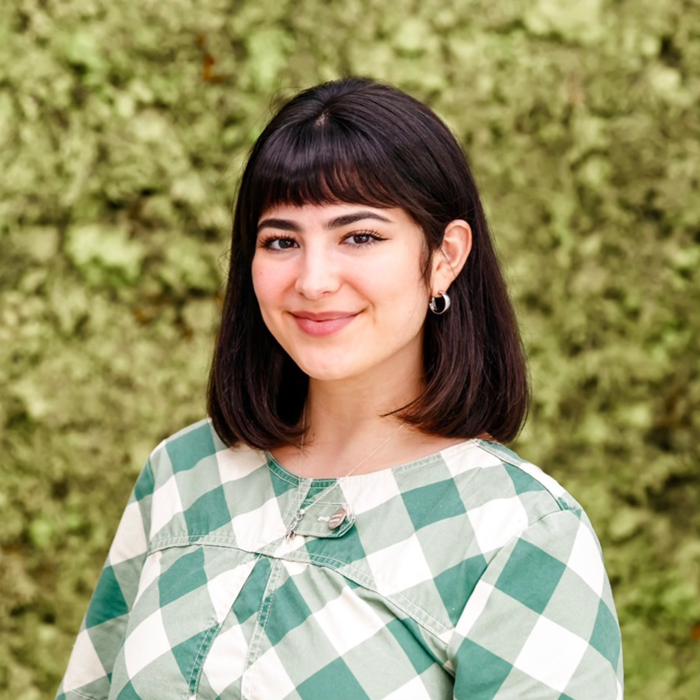
A photo of Esmerelda Nava. (Courtesy Photo)
Q: Celebrating Hispanic Heritage Month: What does Hispanic Heritage Month mean to you personally, and how has your Hispanic heritage shaped your journey as a mental health advocate?
A: Hispanic Heritage Month is a time to spotlight and recognize the beauty of Hispanic culture. Seven independence days fall within the month which reminds me of the resilience and sacrifices made by my ancestors. My Hispanic Heritage has influenced every aspect of my professional life. It has given me personal experiences that inform the advocacy and work I strive to offer my community. I carry those experiences with me as a reminder of where I came from, the community that raised, and the future I hope to create for them in return.
Q: Representation in Mental Health: As the Bilingual Mental Health Resource Manager for Hispanic Outreach, why is it important for Hispanic and Latino communities to have access to mental health resources that reflect their language, culture, and lived experiences?
A: As a culture, mental health has always carried a negative stigma. It is seen as weakness and a Western phenomenon that does not have space in our cultural beliefs. However, making mental health services both accessible and culturally relevant can open the door for our communities to approach mental health with openness and greater understanding. It is extremely important that they see our language, culture, and traditions reflected in the services they receive. This speaks to the importance of decolonizing mental health services by recognizing and valuing the cultural knowledge, traditions, and practices that existed long before Western beliefs were introduced.
Q: Breaking Down Barriers: What are some of the unique challenges Hispanic families may face when seeking mental health support, and how does the Grant Halliburton Foundation work to address those barriers?
A: Some of the complex challenges that our Hispanic community faces include immigration or legal status concerns, financial barriers, language barriers, and fear of government involvement or deportation. It is important to note that these struggles significantly impact access to mental health services for our Hispanic community in comparison to their White counterpart.
Grant Halliburton Foundation works to reduce barriers by making our mental health educational and resource programs available at no cost. We offer free mental health education presentations in Spanish that cover basic mental health topics and suicide prevention. We also offer a free mental health navigation line that connects individuals to relevant mental health services in their community which is available in Spanish. It is incredibly important to us that these programs are both free and available in Spanish in response to the barriers our community faces. This supports our mission of closing the gaps in access to mental health services and information.
Q: The Role of Social Work: How has your education and experience at UT Arlington's School of Social Work prepared you for your work in mental health outreach and connecting families with resources?
A: My education and experience at UTA prepared me for my work within this community particularly through my practicum experience. During both my undergrad and graduate programs, I interned with Catholic Charities Dallas under their immigration and legal services, specifically alongside victim's case managers. Hearing firsthand the experiences of victims while learning about immigration legislation, processes, and obstacles showed me the importance of social work practice beyond of direct practice. This experience broadened my understanding of the field. While I learned about the different levels of social work being micro, mezzo, and macro, I saw what these levels looked like in real time.
Q: Making an Impact: Through your work with Grant Halliburton Foundation and Here For Texas, how are you helping individuals and families navigate mental health resources and recognize the importance of mental wellness?
A: In my role as the Senior Bilingual Mental Health Resource Manager, I connect individuals with mental health services that are appropriate for their needs and circumstances. The resources we refer our callers are organizations and provider we have vetted and connected with directly. We make a point to meet the providers and tour the spaces so we can better understand the services and environments our callers may encounter. We share the information of our providers through our free Here For Texas Provider Database. I personally vet incoming providers to ensure their services align with our standards and the Social Work Code of Ethics. Additionally, I am the designated educational presenter for our Spanish presentations. I strive to make the mental health content relevant and digestible to ensure our community can meaningfully apply the information to their lives and families.
Q: Advice for Future Social Workers: What advice would you give to current UTA Social Work students, particularly those who hope to serve Hispanic and Latino communities and make a difference in mental health advocacy?
A: My advice would be to use your practicum as an opportunity to venture into an area of social work that differs from what you are used to or initially imagine for yourself. For me, it showed me how different social work can look and the importance of it in all aspects of our society. I would encourage students to attend as many Hispanic-centered professional events as well as cultural and traditional events. This allows you to engulf yourself in the culture to understand and appreciate the influence it has in our community. Immerse yourself in the community to better understand the culture to appreciate the strengths, traditions, and influence it offers.