411 S. Nedderman Drive
Box 19407, Arlington, Texas 76019-0407
P: 817-272-2776 | F: 817-272-5006
UTA Nursing Student Awarded Prestigious Gastroenterology Scholarship for Research
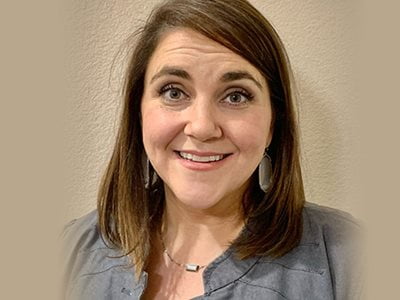
Jordan Dudley is a Doctor of Nursing Practice student at The University of Texas at Arlington who is leading a pilot study focused on improving outcomes for colonoscopy patients. Dudley was recently recognized by the Nurse Practitioner Healthcare Foundation for exemplifying “extraordinary NP leadership, outstanding academic achievements, and excellence in caring for the gastroenterology patient,” and was awarded the NPHF/Proctor & Gamble Gastroenterology Scholarship Award for her efforts. This scholarship is awarded once a year to an NP graduate student enrolled in a Master’s, DNP, or PhD program with clinical or research interests in the field of gastroenterology.
“It was very validating to know that I’m on the right track with my pilot study,” said Dudley. “It let me know that I’m making a difference and an impact for my patients in the long run.”
Dudley, who works as an acute care nurse practitioner with gastrointestinal patients, noticed a large amount of colonoscopy procedures that were being delayed, causing longer lengths of stay, increased costs, and increased risk for patients.
“I started looking into the literature and found that shockingly, inpatient colonoscopies have a very high rate of poor bowel preparation,” said Dudley. “About 20% of procedures were delayed due to poor preps on average. But when I was looking at our practice specifically, the numbers were even higher. So, I was like, ‘We’ve got to do something’”.
Colonoscopy patients are typically required to abstain from eating solid foods for 24 hours before the procedure. In addition to a clear liquid diet, patients are also given laxatives to clear the bowels. Dudley initially suspected that inpatient nurses were not adequately pushing the preparation, but quickly discovered that wasn’t the case.
“The nurses realized the significance of the preparation, it’s just that you can’t force a patient to do it – no matter how much you push them. It’s uncomfortable, it’s not a pleasant experience, so they just don’t want to do it,” said Dudley. “Patients in the hospital, they don’t feel good, so it’s an even more compounded issue. Nobody’s in the hospital feeling awesome and ready to go run a marathon.”
Once she has gathered enough data to establish a control group, Dudley plans to distribute an illustrated booklet to a new group of inpatients and measure its impact in her study. The booklet emphasizes the importance of bowel preparation and includes visuals to show patients what to expect.