411 S. Nedderman Drive
Box 19407, Arlington, Texas 76019-0407
P: 817-272-2776 | F: 817-272-5006
Celebrating National Rural Health Day: What Rural Health Means to One UTA MSN Student
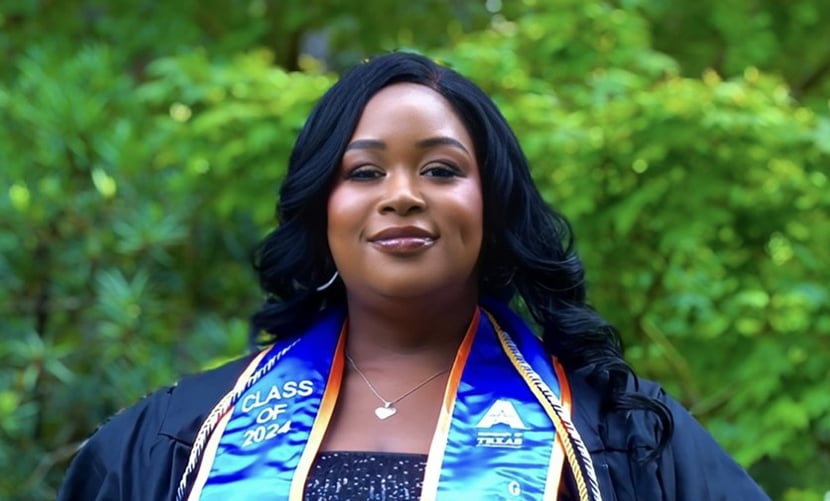
National Rural Health Day celebrates the resilience and dedication of healthcare professionals who serve rural communities. These leaders, providers, and organizations go above and beyond to ensure quality care reaches even the most remote areas. This year, we spotlight Arsheena Cox, a UTA Master of Science in Nursing (MSN) student and Assistant Chief Nursing Officer (ACNO) at PAM Health Rehabilitation Hospital of Clear Lake, whose journey into nursing and commitment to rural healthcare offer an inspiring look into the purpose of driving rural health forward.
Cox’s calling to nursing began with personal experiences caring for family members facing illness. As the oldest of her siblings, it was her responsibility to care for her mother, which allowed Cox to incorporate her knowledge into her education.
“This career path helped me learn and study ways to help my family live their best lives,” says Cox. “I was called into nursing, and everything I learned from taking care of my mother, I was able to apply it to my nursing career. I am a nurse because of my mother. I have made it this far in my education because she inspired me, and I owe it to her to accomplish my goals as a nursing leader.”
Determined to grow as a nursing leader, Cox began her academic journey at UTA, earning her BSN before entering the MSN program. She is set to graduate this December while balancing her dual roles as a student and ACNO.
“The MSN program at UTA has significantly influenced my leadership role as an ACNO,” says Cox. “It allows me to combine my clinical expertise with advanced administrative, financial, and strategic skills. Attending this program has helped me gain knowledge to manage operations, budgets, communication skills, and gain human resources skills while applying it into my leadership role. Overall, the MSN program has prepared me to strategically lead nursing teams, improve patient outcomes, and has positively impacted my overall performance at my acute care/rehab healthcare organization.”
At PAM Health Rehabilitation Hospital, lifelong patient success is one of the main goals the facility strives for. Cox understands that patient success goes well beyond after they exit the facility.
“Providing lifelong success to patients at my facility means that we support them in achieving and maintaining optimal health and wellbeing,” says Cox. “This extends far beyond the duration of their visit. After discharge, we consult with our patients weekly to ensure there are no questions regarding their care and to make sure that the rehabilitation treatment they have received is beneficial to their daily lives. This means that I can continue to empower and motivate patients to improve their own health management even outside the facility.”
Patient success and treatment can look different when working in a rural setting. As the ACNO at a rural hospital, Cox emphasizes the need to build strong relationships and trust to leverage the local culture of self-reliance and community support. It is important for rural members to feel a strong sense of community and have their unique demands met.
“I help promote safe practices, provide access to resources for community members, and I am committed to driving patient care initiatives,” said Cox. “Working in a rural setting has allowed me to form deep connections within the community while managing a broad scope of patient care services while using selected resources.”
Working in a rural hospital environment has given Cox the ability to advance as a nursing leader. Fostering strong resourcefulness and critical thinking skills, Cox recognizes that rural health showed her a holistic approach to healthcare. As a leader in healthcare, she aims to share the importance of rural healthcare to future nurses.
“Teaching students about rural healthcare prepares them for unique challenges and opportunities,” said Cox. “I teach nurses and nursing students about the benefits of understanding their role for treating patients in rural communities. This education can help students build broader clinical skills, increase autonomy, and provide a wide range of exposure to health issues.”