Box 19617, Arlington, TX 76019
Phone: 817-272-3291
Research Takes Flight: How COLA Faculty Are Helping Evaluate the Future of Public Safety
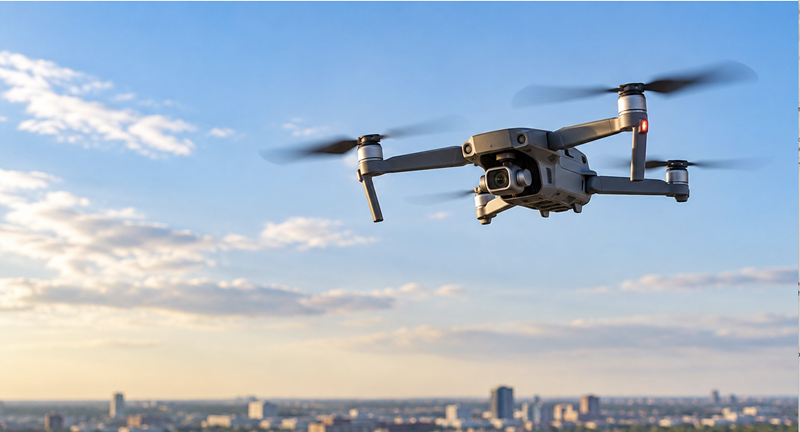
When the Arlington Police Department (APD) began exploring whether drones could respond to certain calls for service, department leaders wanted more than a demonstration of what the technology could do. They wanted evidence of how it might work in everyday policing.
Could drones reach calls faster? Could they resolve some incidents without requiring an officer to respond in person? And how would residents and police officers feel about the change?
To help answer those questions, APD partnered with researchers from The University of Texas at Arlington's College of Liberal Arts.
Dr. Jaya Davis, professor and master's programs director, and Dr. James Kelsay, assistant professor, both in UTA's Department of Criminology and Criminal Justice, helped design and evaluate APD's Drone as a First Responder (DFR) pilot program.
Their findings provided valuable information as APD considered how to expand its use of drones, demonstrating the role university research can play in public safety decisions.
From a Local Partnership to a New Research Question
The project grew out of a research partnership Davis had cultivated with APD over several years.
The department had previously deployed drones to respond to fireworks-related calls during Fourth of July and New Year's celebrations. Those experiences suggested drones could reach calls quickly and handle a greater volume of requests than traditional patrol responses alone.
APD wanted to explore whether similar benefits could extend to other types of calls, particularly those that did not always require an officer's physical presence.
 "The department was interested in deploying the technology on a wider scale but wanted to explore what necessary resources would be needed, benefits it might achieve, and barriers they hadn't anticipated," Davis said.
Davis and Kelsay joined a research team that included APD leadership, Aviation Unit personnel and a crime analyst. The partners worked together to develop an evaluation that accounted for the department's staffing and operational needs.
Davis supported the research design and communication of the findings. Kelsay cleaned and analyzed departmental data, helped develop surveys for residents and officers, reviewed existing research and co-drafted the evaluation report.
What the Pilot Revealed
The pilot took place across Arlington's four police districts, with each district participating for approximately one month. Drone pilots were assigned to the participating district during its evaluation period, although staffing limitations prevented continuous coverage.
Researchers examined response times, the number of calls resolved without an in-person officer response, and perceptions of the program among residents and officers.
During the pilot, drones responded to 246 calls for service. Approximately 30% of those calls were cleared without requiring an officer to respond in person.
The evaluation also found shorter average response times compared with the corresponding 2023 data.
For Priority 2 calls, average response times decreased from 24.74 minutes to 14.67 minutes. For Priority 3 calls, they decreased from 44.27 minutes to 17.29 minutes.
The report estimated that the pilot saved approximately 37 hours of patrol officer time, equivalent to about $1,778 in direct personnel costs. Researchers noted that additional evaluation would be needed to assess the program's full costs and long-term benefits.
Kelsay said the magnitude of the response-time improvements stood out to him.
"I was surprised to find that the reduction in response time was so robust," Kelsay said. "The drones really do improve police response to calls immensely."
The generally positive response from residents was another notable finding.
"In addition, the fact that citizens were generally satisfied with the drone response was somewhat surprising," Kelsay said.
Davis was particularly struck by the number of calls resolved without dispatching a patrol officer.
"While response times were significantly faster with DFR, what was significant to me was that DFR could clear over 30% of calls," Davis said. "This means for 30% of the calls that were under study, an officer did not have to go out."
The findings suggested that drones could help preserve patrol resources for situations requiring an officer's physical presence.
Understanding the Human Side of Technology
Response times and operational efficiency were only part of the evaluation.
The research team also wanted to understand how residents and officers experienced the technology, particularly given concerns about privacy, surveillance and staffing.
Residents who responded to the pilot survey generally expressed positive views of drone responses. Officer feedback was more mixed.
During the pilot, aviation personnel were reassigned from other shifts to support drone operations. Some officers questioned whether the program could be sustained without additional staffing, while others recognized its potential to reduce demands on patrol officers over time.
"Interestingly, there was a mixed response by officers," Davis said. "Some officers were skeptical of continuing the program after the pilot due to staffing concerns. Other officers recognized that staffing issues could be eased long-term by using the technology."
The evaluation also considered community perceptions of drone use.
APD had already undertaken efforts to educate residents about its drone operations and the privacy protections established through department policies and practices. The survey helped researchers understand what residents valued and what concerns might require continued attention.
"The emergence of public safety technology creates opportunities and risks," Davis said. "Public safety agencies can leverage their research partners to assist in evaluating both benefits and important considerations."
That broader perspective helped ensure the evaluation considered more than whether drones could respond quickly. It also examined what successful implementation would require.
Research That Helped Shape the Program
The findings provided APD with evidence to inform decisions about broader drone deployment.
In addition to documenting potential benefits, the evaluation identified practical considerations requiring attention, including staffing, communication with officers and continued community education.
The project also demonstrates the value of bringing researchers and practitioners together to examine emerging public safety strategies.
"I think this project reinforces the idea that academics and practitioners in criminal justice can and should work together to improve public safety," Kelsay said. "Practitioners bring so much to the table when they are involved with research projects like this."
He added that evaluating policies and practices helps agencies make informed decisions and demonstrates a commitment to accountability.
"This is a hallmark of evidence based policy and practice," Kelsay said.
By examining operational performance alongside community and officer perspectives, the UTA–APD team provided a fuller picture of the opportunities and challenges associated with drone response programs.
A Partnership That Continues
The drone evaluation is one of several projects connecting UTA's Department of Criminology and Criminal Justice with APD.
Davis and Kelsay are involved in a multiyear study examining police hiring and retention. Other collaborations have explored vehicle theft, observation technologies and cold case investigations.
The researchers are also developing a manuscript based on the drone pilot findings for potential submission to a peer-reviewed publication.
Their continued work reflects a research relationship built around the challenges facing public safety agencies and the communities they serve.
As emerging technologies become more common in policing, the partnership offers an example of how academic expertise can help agencies evaluate their options, identify potential concerns and make decisions grounded in evidence.
For UTA's College of Liberal Arts, the project demonstrates how research conducted in collaboration with community partners can contribute to meaningful change beyond campus.
Related reading: Modern Policing Takes Flight — Police Chief magazine