Tuesday, Aug 11, 2026
• Thomas Johns :
Thomas.Johns@uta.edu
The symposium brought together approximately 200 prevention professionals, educators, behavioral health practitioners, healthcare providers, researchers, law enforcement and community leaders to examine emerging trends in youth vaping while exploring evidence-based strategies to prevent substance use and support adolescents across North Texas.
As vaping products continue to evolve, challenges begin to surface that face parents, educators and healthcare professionals.
"Adolescent vaping has evolved rapidly over the past several years, with new products, changing patterns of use and increasing concerns about potential health consequences," said Dr. Melissa Lewis, professor in the UTA School of Social Work and co-director of the STARR Lab. "At the same time, many adults who work with adolescents are trying to keep pace with a constantly changing landscape."

A vape pen sits inside of a book in a simulated display at the Clouded Judgement Symposium. (Photo by Doughlas Gutierrez)
Lewis said the symposium was designed to bridge the gap between research and practice by bringing together experts from multiple disciplines to share the latest scientific findings, evidence-based prevention strategies and practical approaches that can be implemented in schools, healthcare settings and communities.
Addressing adolescent vaping requires far more than a single organization or profession, according to Dr. Dana Litt, professor at the UTA School of Social Work and co-director of the STARR Lab.
"Adolescent vaping is a complex public health issue that cannot be addressed by any one profession alone," Litt said. "Adolescents interact with schools, healthcare systems, families, community organizations and the legal system, and each of these settings plays an important role in prevention and early intervention."
By bringing together professionals from diverse backgrounds, the symposium created opportunities to share perspectives, identify common challenges and develop coordinated strategies that strengthen prevention efforts throughout the region.
A focal point of the event was its emphasis on translating research into real-world solutions.
Presenters shared current findings on new vaping products, patterns of nicotine and cannabis use among adolescents, prevention and intervention strategies supported by research. Attendees also received educational resources and practical tools they can immediately apply in prevention programming, clinical practice, school policies and community outreach.
"Our goal was for participants to leave not only better informed but also better equipped to apply what they learned within their own organizations," Lewis said.
The symposium also featured several interactive learning experiences designed to make the research more tangible.
Participants explored the "Hidden in Plain Sight" exhibit, which showcased commonly used vaping devices, concealment methods and other indicators of adolescent substance use that adults may easily overlook. The symposium also included a VAPE Takeback initiative led by the DEA Dallas Field Division in collaboration with the Tarrant County Sheriff's Office, promoting the safe disposal of vaping products while increasing community awareness.
"The interactive components of the symposium helped transform information into experience," Litt said. "These experiences helped attendees better understand the challenges young people face, strengthening their ability to identify warning signs, engage adolescents in meaningful conversations and implement more effective prevention strategies."
According to Litt, Challenge of Tarrant County and the DEA led the planning, organization and development of the event, helping bring together experts, community partners and resources to create a program that was both scientifically in-depth and directly applicable to professionals working with youth.
"Meaningful change happens when research institutions, community organizations and public agencies work together toward a common goal," Litt said. "At the STARR Lab, we are incredibly grateful to have partners who share our commitment to improving the health and well-being of adolescents."
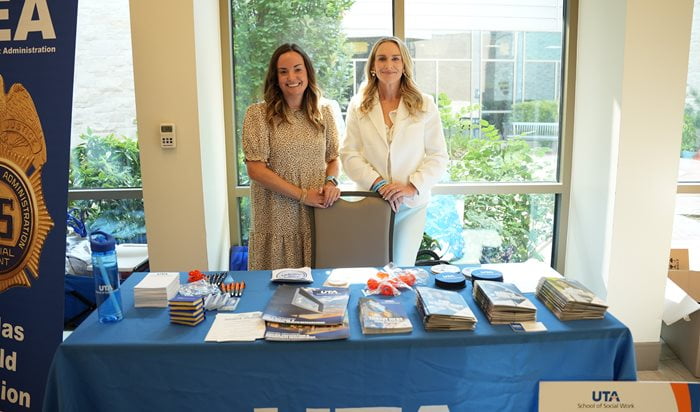
Dr. Dana Litt, professor at the UTA School of Social Work and co-director of the STARR Lab (Left) and Dr. Melissa Lewis, professor at the UTA School of Social Work and co-director of the STARR Lab (Right) pose for a photo at the Clouded Judgement Symposium. (Photo by Doughlas Gutierrez)
Organizers hope the symposium will have a lasting impact beyond the event itself.
"Our hope was that attendees left feeling more knowledgeable, more connected and more confident in their ability to address adolescent vaping within their own communities," Lewis said. "If participants returned to their organizations with new ideas, practical tools and renewed commitment to evidence-based prevention, then Clouded Judgement achieved its goal of making a lasting impact across North Texas."
By fostering collaboration across disciplines and equipping professionals with the latest research and practical prevention strategies, Clouded Judgement reinforced the UTA School of Social Work's commitment to improving adolescent health and empowering communities to better support youth and families.