

Office of the Provost–Division of Faculty Success
Trinity Hall 106, 800 Greek Row Dr., Box 19128
The University of Texas at Arlington
Arlington, TX 76019
Phone: 817-272-7464 | Email: CRTLE@uta.edu
Welcome to the Center for Research on Teaching and Learning Excellence (CRTLE)
The future of teaching is here and CRTLE is leading the charge with bold innovation, strong collaboration, and a dedicated commitment to faculty success.
One of my favorite phrases is “Fortune favors the bold,” and that spirit guides our work as we help faculty embrace change and lead with confidence.
Teaching and learning at UT Arlington continue to evolve in response to changing student needs, emerging technologies, and the realities of today’s higher education landscape and workforce demands. At CRTLE, our work is guided by a commitment to supporting faculty in practical, meaningful, and sustainable ways; it is one that is rooted in research and evidence-based practice, informed by experience, future-ready, and shaped by collaboration.
CRTLE is your hub for bold ideas and knowledge sharing. It is a space where faculty define the present and future of teaching, not just respond to it. Here, you’ll find resources, hands-on opportunities, chances to dialogue, and a community committed to preparing students for life beyond college.
In 2025–2026, key CRTLE initiatives include ACUE (Association of College and University Educators) courses and offerings focusing on Effective Teaching, The Faculty Voices series, Pedagogy NEXT blog posts from faculty and CRTLE, AI Literacy alignment, Technology Test Kitchen experiential learning events, MAFE Faculty Fellows, and the Center for Service Learning’s 25th‑year of service at UT Arington, and more.
Have a look through our main CRTLE initiatives, partnerships, future directions (looking ahead), and call to action for faculty. We are eager to serve you in your mission to develop excellence in teaching.
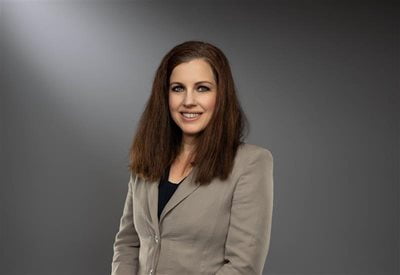
Peggy Semingson, Ph.D.
Interim Director, Center for Research on Teaching and Learning Excellence
The Center for Research on Teaching and Learning Excellence (CRTLE) at The University of Texas at Arlington has evolved over several decades since 1973 to reflect shifting institutional priorities, leadership, and approaches to faculty development. Originally established as the Faculty Development Resource Center (1973–1985) under the leadership of Dr. Mary Lynn Crow, the center provided early support for instructional innovation before being discontinued during a period of institutional transition. This early center seemed to be a space where faculty physically came for workshops and had a reading resource room for faculty to read physical books and resources.
After 1985, the center entered a hiatus. Faculty development efforts were later re-envisioned through the Center for Teaching and Learning Excellence (CTLE), which was relaunched in 2013–2014 under the leadership of Dr. Lana Rings as interim director. She established the website, led innovation initiatives such as Team-Based Learning, and otherwise rebooted the center. Dr. Nakia Pope took over from 2015–2016, and his leadership reflected a developmental phase of CTLE, characterized by pilot initiatives, peer-review processes, and the establishment of structured but evolving faculty development practices.
After Dr. Pope’s departure, a a university-level re-envisioning effort led by a committee convened by the Provost, Teik Lim. was formed to reimagine the CTLE, and Dr. Ann Cavallo was hired in August 2018 to lead the center’s refresh. In January 2019, the center was reestablished as the Center for Research on Teaching and Learning Excellence (CRTLE). The addition of the word “Research” to the center’s name was intended to ensure that faculty development would be grounded in research and that the center would actively study and assess the impact of its initiatives on some level. Under Dr. Cavallo’s leadership, CRTLE provided SEED grants for faculty ($2,500 to $5,000) to conduct research on the scholarship of teaching and learning with the aim of dissemination of findings and publication and scale toward other funding opportunities. The mission statement summarizes this research-focused approach:
The CRTLE mission is to engage faculty in research-based practices that innovate and enhance their teaching, resulting in clear and measurable advances in student learning. The Center remains at the cutting edge of teaching and learning advances in online and on-campus environments to address the deep structured, logical thinking, intellectual, social, and emotional needs of students in today’s technological world. The Center’s goal is to prepare and advance university teaching so that each UTA student is highly prepared for the workplace of the future.
This shift marked a significant expansion in scope—from supporting teaching practices to advancing research-informed, evidence-based approaches to teaching and learning, as well as generating insights into faculty and student outcomes.
Since 2025, CRTLE has been led by Dr. Peggy Semingson (Interim Director), continuing to build on this foundation by advancing faculty development, teaching innovation, and research-informed practices in higher education. Under Dr. Semingson’s leadership, CRTLE has expanded its focus on future-ready teaching through innovative faculty development initiatives, including AI Course Redesign Institutes, microcredential programming, and scalable professional learning opportunities. Her work has emphasized practical, high-impact strategies that support faculty in integrating emerging technologies, improving student engagement, and designing sustainable, forward-thinking approaches to teaching and learning.
It should be noted that the Quality Enhancement Programs (QEP) over the years also provided budgeted structured support for faculty development over the years that sometimes overlapped with the aims and functions of the various centers for teaching and learning. For instance, under David Silva, the QEP maintained a focus on “Active Learning”. This QEP focus supported faculty development with funds to pilot and document innovations in teaching.
Faculty Development Resource Center (1973-1985)
Center for Teaching and Learning Excellence (CTLE)
Center for Research on Teaching and Learning Excellence
Meet our administration, staff, and facilitators.