Life Sciences Building, Room 206
501 S. Nedderman Drive
Box 19047
Arlington, TX 76019
UTA hosting symposium on climate smart agriculture
Project aims to encourage more students, particularly in underrepresented groups, to pursue agricultural careers
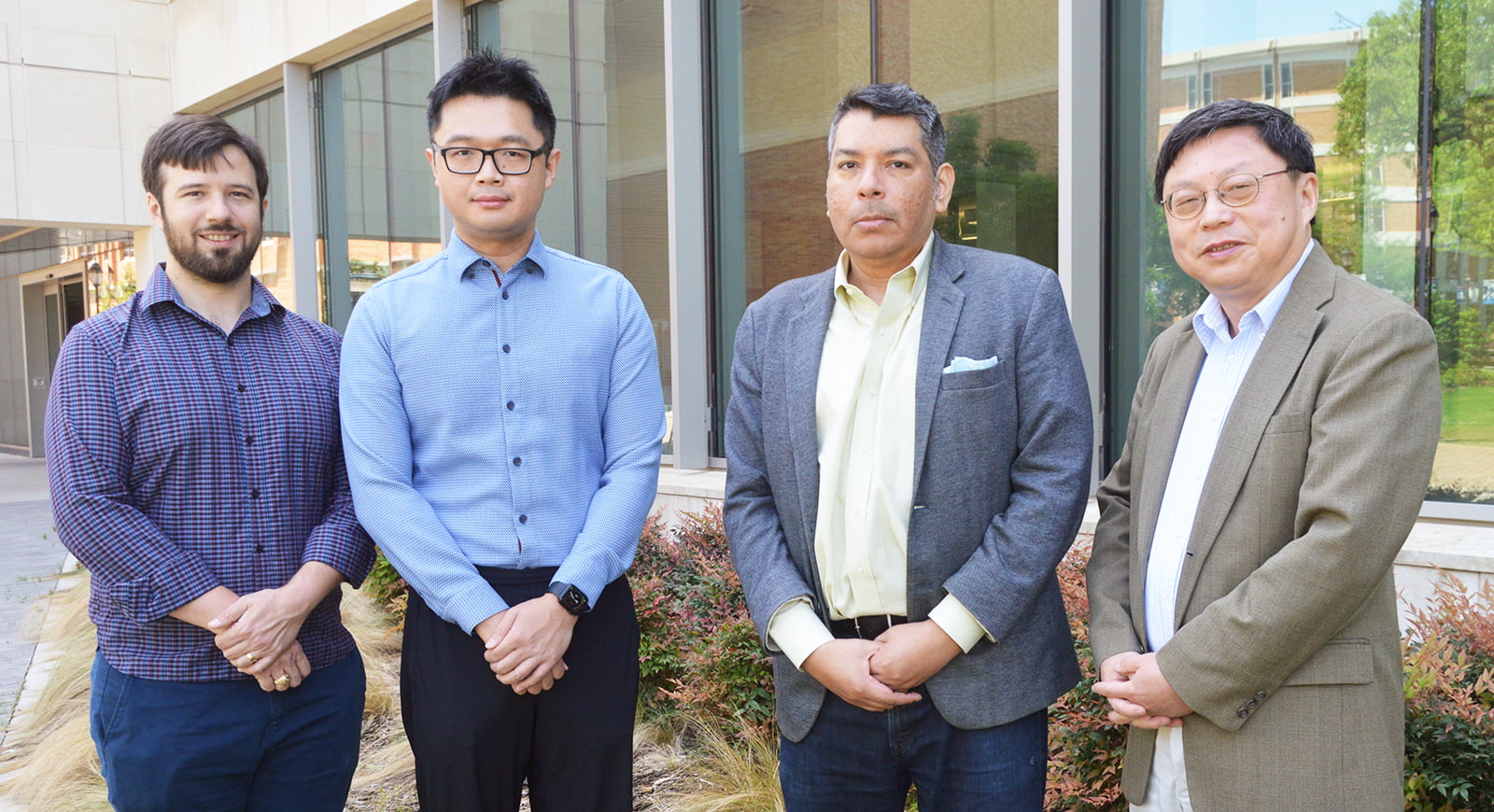
Leaders in the effort to encourage more students to pursue careers in agricultural fields will convene at The University of Texas at Arlington on May 15 for a daylong Climate Smart Agriculture Symposium.
A team of UTA mathematicians is leading a national initiative with this goal in mind. The project was launched in 2022 with a three-year, $500,000 Agricultural Workforce Training grant from the National Institute of Food and Agriculture (NIFA), a federal agency within the United States Department of Agriculture (USDA).
Opal Lee, the Fort Worth activist and retired teacher whose tireless work over decades helped make Juneteenth a federal holiday in 2021, will be the distinguished speaker at the symposium’s concluding dinner. Lee, 96, is often described as the “grandmother of Juneteenth.” She will share her life experiences working in an agricultural area and talk about her decades of public service.
Jianzhong Su, professor and chair of the UTA Department of Mathematics, is heading the NIFA project and is joined by Keaton Hamm and Dengdeng Yu, UTA assistant professors of mathematics, and Jaime Cantu, UTA adjunct professor of engineering. Other partners in the project are Texas A&M University at Kingsville, New Mexico State University, and community colleges in Texas and New Mexico, including Tarrant County College.
The purpose of the May 15 symposium is to discuss the status of the project, which is titled “Developing an Alliance for Training and Apprenticeship in Climate-Smart Agriculture (DATA-Ag)”, and the goals the project is intended to meet.
The project is designed to equip students from community colleges and underrepresented groups with modern data and technology skills to pursue careers in agriculture. Its objectives include expanding and improving workforce training through student engagement; to provide curriculum development and faculty preparation; and to build a regional agricultural alliance among Hispanic Serving Institutions (HSIs).
“There is a strong need to increase the number of students—particularly underrepresented students— in STEM and agriculture,” Su said. “We want to find effective ways to create pathways for students to pursue careers in agricultural fields, by preparing students with data and technology skills and attainment of industry recognized credentials. This symposium will direct a focus on this urgent need and will provide the opportunity to exchange ideas and information as we move forward with this important project.”
The project addresses NIFA’s goals by trying to increase the number and diversity of students who pursue careers in agriculture; enhancing students’ educational experience; and creating a technology- and data-savvy workforce.
Symposium speakers will talk about the components within each participating institution that aid the formation of strong collaborations with community colleges and the Natural Resources Conservation Service (NRCS), Su said. Participants will review the project’s first-year progress, with an emphasis on climate smart agriculture and natural resource conservation. One of the day’s goals will be to connect students directly with USDA NRCS staff, industry partners and potential employers through an industry panel discussion and a career fair. The USDA NRCS office in Fort Worth, under the leadership of Ray Dotson, has been instrumental to the success of the project and hosted a student NRCS internship program.
Opening remarks will be made by Kate Miller, UTA vice president for research and innovation; Kenneth Walker, assistant chief of USDA NRCS; and Kristy Oates, state conservationist with the NRCS Texas Office. Morteza Khaledi, dean of the UTA College of Science, will moderate an industry partner panel discussion.
A series of panel discussions are planned, along with a working lunch and showcase presentations. A poster session will allow students to display research they have worked on in the past year, with prizes awarded to the winners.
One panel discussion, “The New Generation of Agricultural Workforce,” will feature recent graduates who work for NRCS at the federal and state levels sharing their experiences. Speakers will discuss the kinds of knowledge and skills necessary to work in the agricultural industry and for the USDA.
Another panel talk, “Institutional Programs to Promote, Facilitate and Support Climate Smart Agriculture”, will examine how schools and organizations are adapting agricultural programs amid climate changes. Faculty and students will share what they have learned from working with agricultural problems, their experiences as NRCS interns and in community college education programs, and the roles of informal STEM education.
A final panel session will focus on the question, “What resources can we use to prepare and motivate students to pursue climate smart agriculture experiences?” with discussion both in terms of curriculum, programs, and student opportunities, as well as developing student experiential learning research on a large scale.
--
The UTA College of Science, a Texas Tier One and Carnegie R1 research institution, is preparing the next generation of leaders in science through innovative education and hands-on research and offers programs in Biology, Chemistry & Biochemistry, Data Science, Earth & Environmental Sciences, Health Professions, Mathematics, Physics and Psychology. To support educational and research efforts visit the giving page, or if you're a prospective student interested in beginning your #MaverickScience journey visit our future students page.