Life Sciences Building, Room 206
501 S. Nedderman Drive
Box 19047
Arlington, TX 76019
Impact of Apple, MP Materials’ $500M deal on N. Texas
UTA expert J. Ping Liu explains how the partnership strengthens U.S. tech, supply chains and local workforce
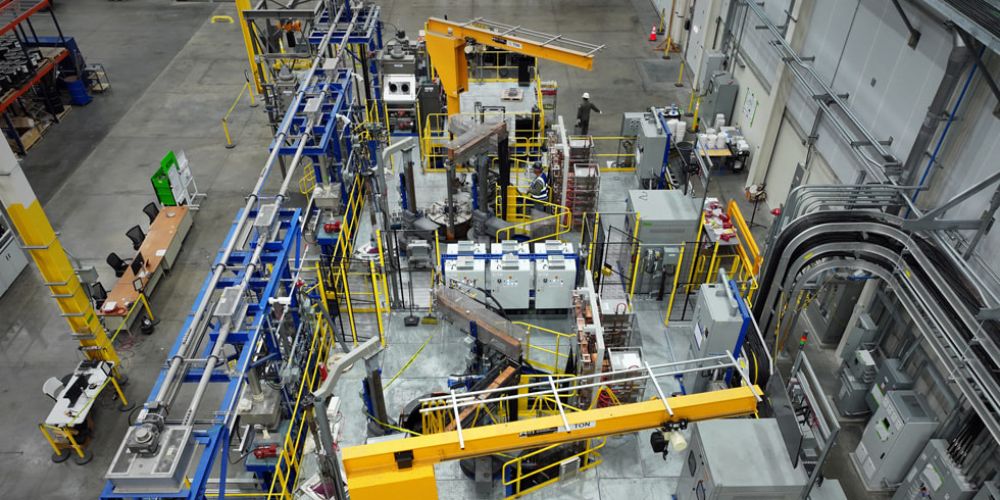
Apple and MP Materials recently announced a $500 million agreement to source rare-earth magnets from MP Materials’ new Fort Worth plant and to develop a U.S.-based recycling facility. MP Materials has also reached an agreement with the Department of Defense in partial ownership of the company. Rare-earth magnets are essential components in technologies ranging from smartphones and tablets to electric vehicles and clean energy infrastructure.
According to Apple, it and MP Materials will build out the state-of-the-art Texas factory with a series of neodymium magnet manufacturing lines specifically designed for Apple products. The new equipment and technical capacity will allow MP Materials to significantly boost its overall production. Once built, the American-made magnets will be shipped across the country and all over the world, helping to meet increasing global demand for the material.
.jpg?revision=f98109d1-2528-48c3-9e6f-91af33ae00a1)
Related: UTA powers domestic magnetic manufacturing
To help explain the impact of this partnership, The University of Texas at Arlington’s J. Ping Liu, professor of physics and a leading researcher in rare-earth materials, shared his insights. Dr. Liu has collaborated with MP Materials on projects supported by the U.S. Department of Energy and has worked with company leaders on research and workforce initiatives at UT Arlington.
Why is this deal between Apple and MP Materials significant?
Liu: It’s significant because it underscores how vital strong magnets are for electronics, clean energy and other high-tech applications in our daily life and national security. In addition, it also demonstrates that for high-tech businesses to succeed at scale, they need broad support—from both industry partners and government. The Apple partnership, along with MP Materials’ agreement with the Department of Defense, provides critical momentum for expanding U.S. magnet production.
Why are rare-earth magnets so important in today’s technology?
Liu: Rare-earth magnets are critical because of their unique electronic structures. The 4f electrons in rare-earth elements are the origin of everything: They give the magnets high coercivity, which makes it possible to create devices that are smaller, lighter but more powerful. Think about a smartphone: It now does much more work than a desktop computer could do 20 years ago. That leap in capability is tied directly to the development of advanced materials, particularly advanced semiconductors and strong rare-earth magnets.
Could this reduce U.S. dependence on China for rare-earth materials?
Liu: MP Materials is unique because it operates the full supply chain, from processing ores at its Mountain Pass mine in California to, now, manufacturing magnets in Fort Worth. If the company can produce magnets at scale and at competitive cost, the U.S. will be far less dependent on imports—especially from China, which currently dominates global supply. The Apple and DOD deals are important steps toward reaching that goal.
What does this mean for Fort Worth’s economy?
Liu: As I have learned, MP Materials chose Fort Worth carefully, recognizing the region’s strengths for high-tech manufacturing. The new facility will boost the local economy through job creation and enhanced manufacturing capacity. This area also benefits from local strong research in physics, chemistry and materials science. MP Materials leaders visited my UTA laboratory in 2022, where they were welcome by our University leadership. That visit led to a sponsored grant and a joint research project from the Department of Energy. These kinds of collaborations highlight how North Texas can become a hub for advanced materials research and production.
How does building a domestic rare-earth supply chain connect to broader national security and sustainability goals?
Liu: I have worked in the U.S. in magnets research for 30 years. In my view, our current shortage in rare-earth supply is caused by the shortage in workforce training (education) and fundamental research in magnetic materials. Look at the facts here: The U.S. has the resources (rare-earth deposition), why does it have the supply-chain problem now? I have witnessed the monotonous reduction of research activities in this area in the U.S. in the past 20 years caused by research funding cuts, which are essentially cuts to the most important supply chains: education and research supply chains. Recall the Manhattan Project, a great time for strong national security in U.S. history—the government invested in scientific research substantially and attracted foreign scientists. Now we can only see this kind of story in the movies. It is clear to me that building strong U.S. education and research supply chains is about more than creating jobs or advancing technology; it’s also a matter of national security and sustainability.
--
The UTA College of Science, a Carnegie R1 research institution, is preparing the next generation of leaders in science through innovative education and hands-on research and offers programs in Biology, Chemistry & Biochemistry, Data Science, Earth & Environmental Sciences, Health Professions, Mathematics, Physics and Psychology. To support educational and research efforts visit the giving page, or if you're a prospective student interested in beginning your #MaverickScience journey visit our future students page.