Life Sciences Building, Room 206
501 S. Nedderman Drive
Box 19047
Arlington, TX 76019
UTA researchers to study soldier ingenuity with SJTs
A two-year study will provide insights into how soldiers can be trained to demonstrate ingenuity in high-stakes, limited-resource scenarios
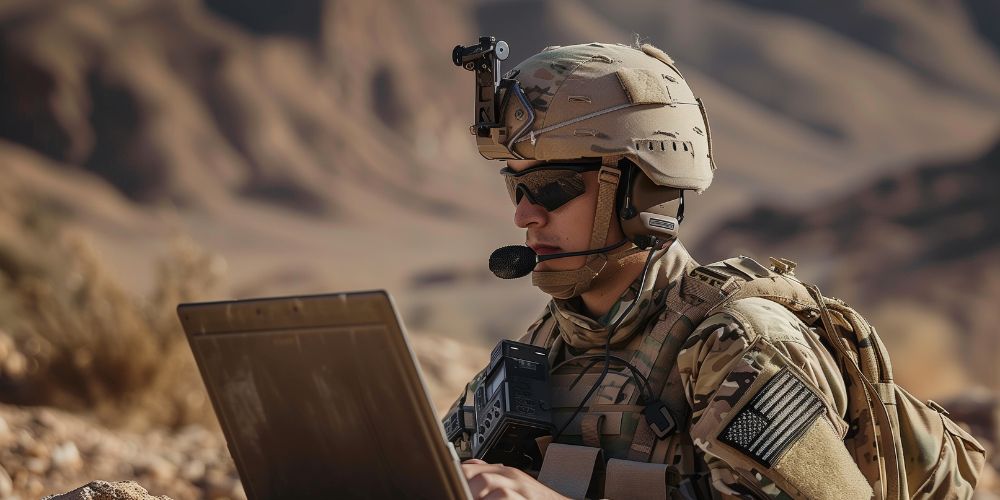
A new study at The University of Texas at Arlington will look at how situational judgement tests (SJTs) can enhance soldier ingenuity in high-stakes environments.
“We’re looking at scenarios where soldiers have to come up with creative solutions in resource-constrained environments,” said Michelle Martín-Raugh, UT Arlington psychology professor and director of the Employee Assessment, Selection, and Training Lab. “While SJTs are established as predictive tools, there’s limited research on them being used for training purposes. We really want to dive deeper into their utility for training and developing a more effective force.”
Related: UTA earns gold for supporting military students

“Part of the beauty of SJTs, and one of the reasons they’re really great predictors, is because they almost have a one-to-one correspondence to how people behave in the real world,” Martín-Raugh said. “We can get real-world examples from our subject matter experts and then judgements from them on what the best and worst approaches for handling those situations might be.”
The SJTs could include both technical and social challenges soldiers may face in the field. On the technical side, a scenario might involve a soldier needing to breach a door without proper equipment, requiring creative problem-solving. From a social perspective, a scenario may involve a unit with limited personnel that must repurpose roles to accomplish a mission.
Related: UTA study suggests simple steps may improve team ethics
Being able to problem-solve and use creativity in these situations would increase the probability for more favorable outcomes. It’s similar to the ingenuity farmers rely on—using experience-based solutions to adapt to challenges like unpredictable weather or limited resources.
“SJTs can be used to measure technical stuff, but they’re also really great for assessing how people navigate complex situations that are sometimes social in nature,” Martín-Raugh said.
The findings could also benefit other high-stakes professions, including firefighters, police officers, and emergency medical personnel.
--
The UTA College of Science, a Carnegie R1 research institution, is preparing the next generation of leaders in science through innovative education and hands-on research and offers programs in Biology, Chemistry & Biochemistry, Data Science, Earth & Environmental Sciences, Health Professions, Mathematics, Physics and Psychology. To support educational and research efforts visit the giving page, or if you're a prospective student interested in beginning your #MaverickScience journey visit our future students page.