Life Sciences Building, Room 206
501 S. Nedderman Drive
Box 19047
Arlington, TX 76019
Biology student selected for undergraduate summer research program at URI
Burns taking part in initiative designed to address problems of plastic pollution
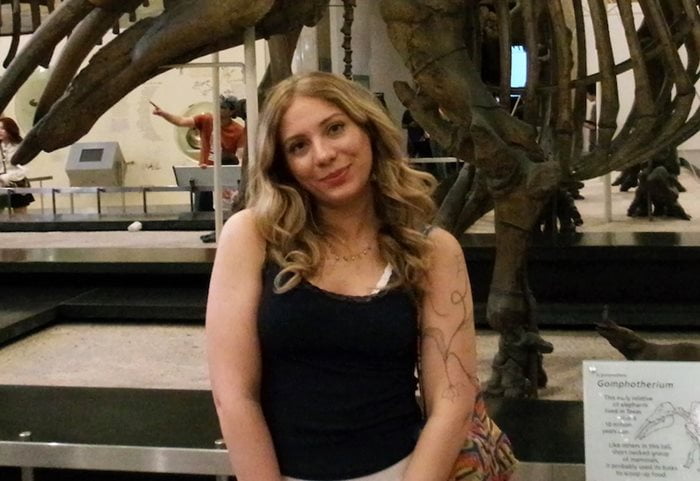
Photo caption: Isabelle Burns, UTA senior in biology (photo courtesy of Isabelle Burns)
An undergraduate student at The University of Texas at Arlington is participating in a prestigious summer research program which aims to develop new ways to manage locally generated plastic waste, focusing on reducing its impact on coastal environments and their communities.
Isabelle Burns, a pre-med senior in biology, was one of 10 students nationwide selected for the Research Experience for Undergraduates (REU) Plastics Initiative at the University of Rhode Island (URI). The program assesses the environmental, societal, and economic implications of plastic pollution and seeks sustainable solutions through interdisciplinary research.
The 10-week program provides students with the opportunity to conduct cutting-edge research as they work alongside URI faculty and graduate student mentors on a range of research projects addressing the challenges of plastics and sustainability. Each student has their own research project and gains experience in experimental design, data collection, and analysis while contributing to ongoing research surrounding plastics and sustainability.
Students also develop professional skills and experience coastal Rhode Island through academic, cultural, and social activities. They deliver mid-program research updates, and present final research talks to faculty, mentors, and community members. In addition, they showcase their work at the statewide Rhode Island Summer Undergraduate Research Symposium.
“When I received the email telling me that I had been accepted into the program, I was ecstatic,” Burns said. “I have never considered myself the strongest student academically, but I have always been ambitious and willing to put significant effort into the things I am passionate about, especially research. I had also never spent an entire summer away from my family. It felt like the perfect opportunity.”
Though she wanted to become a doctor or veterinarian as a child, Burns said she also thought about studying literature or psychology as college drew closer. Taking several biology classes at Collin College led her to decide to major in biology with the goal of attending medical school.
“I quickly realized how much I loved learning about the human body, its complexity, and how every system is interconnected and works together,” she said.
After graduating from Independence High School in Frisco, Burns knew that she wanted to remain relatively close to home for college. She looked at several universities in North Texas but selected UTA because of the opportunities it offered and its strong STEM programs.
Last fall, after seeing a notice for a research assistant position in an email from the Office of Health Professions, she applied and was accepted for the spot in the lab of Salman Sohrabi, UTA assistant professor of bioengineering. In the lab, she focused on the genetic modification of C. elegans, a tiny roundworm frequently used in research because while primitive, it shares many of the biological characteristics that are central problems of human biology.
“Looking back, it was one of the best decisions I have made,” she said. “I learned so much during my time in the lab, including data analysis, laboratory techniques, working with live microscopic model organisms, and many other valuable research skills.”
Burns said that after graduating from UTA, she plans to take a gap year before applying to medical and Ph.D. programs, primarily in Texas. Right now, she’s looking forward to the rest of her summer experience in the REU Plastics Initiative.
“The research experience I have gained this summer has played a significant role in shaping my future career goals,” she said. “Not only have I had the opportunity to meet incredible people, but I have also been able to truly experience what it means to be a scientist."
“Through leading my own research project, presenting presentations and posters, collaborating with other laboratories and members of the scientific community, training on specialized research equipment, and countless other experiences, I have developed both as a researcher and as a future physician-scientist.”
--
The UTA College of Science, a Carnegie R1 research institution, is preparing the next generation of leaders in science through innovative education and hands-on research and offers programs in Biology, Chemistry & Biochemistry, Data Science, Earth & Environmental Sciences, Health Professions, Mathematics, Physics and Psychology. To support educational and research efforts visit the giving page, or if you're a prospective student interested in beginning your #MaverickScience journey visit our future students page.