Life Sciences Building, Room 206
501 S. Nedderman Drive
Box 19047
Arlington, TX 76019
In Memoriam: Verne Cox, former College of Science interim dean
Professor emeritus in psychology was a respected researcher and beloved teacher
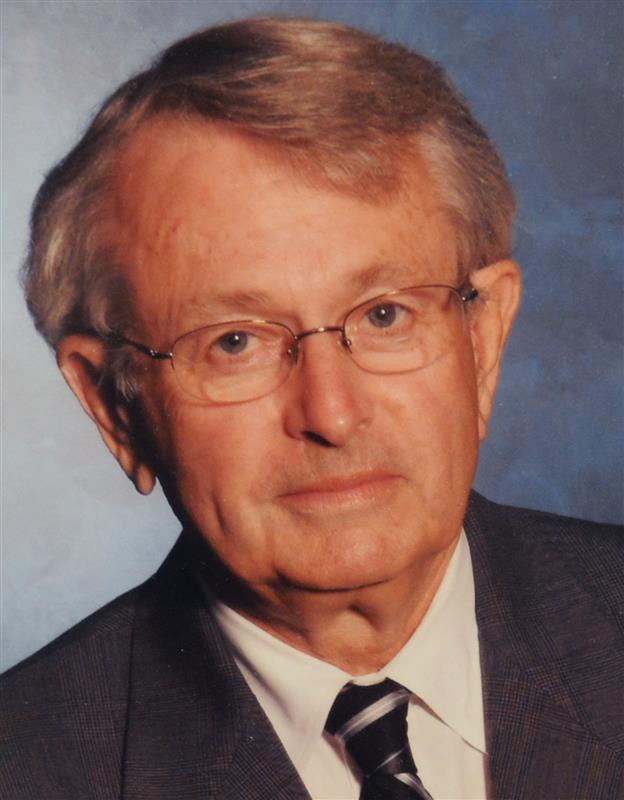
Verne Cox was interim dean of the College of Science from 1996-98.
Verne C. Cox, professor emeritus in psychology and a major contributor to the growth and success of the College of Science over many decades, passed away on September 21 at age 87.
Dr. Cox’s career at The University of Texas at Arlington began in 1970 and spanned 45 years. He served as interim dean of the College from 1996-98. He was a highly respected scientist who did influential research in brain systems involved in pain and analgesia and brain systems involved in food intake and body weight regulation.
He was also a beloved instructor who was very popular with students and twice received the UTA College of Science Teacher of the Year award (1981, 1996). In addition, he was a skilled administrator who prior to serving as interim dean was chair of the Department of Psychology from 1982-88.
“Verne was a long-standing and cherished member of our department. He was deeply committed to his students and colleagues, and his passion for teaching and scholarship was evident in all that he did,” said Linda Perrotti, professor and chair of the Department of Psychology. “Many of us will remember his sharp wit, generous spirit, and the warmth he brought to every interaction. His influence and friendship enriched our department and the lives of those who had the privilege of working alongside him.”
Paul Paulus, dean emeritus and professor emeritus in psychology, came to UTA the same year as Dr. Cox and the two became lifelong friends and colleagues.
“Verne was an excellent scholar in what was then called physiological psychology, examining issues related to pain,” Paulus said. “He was also a very dedicated and inspiring teacher of both advanced courses and introductory psychology courses. He loved enthralling students with the beauty of science in psychology and continued teaching introductory psychology for many years after his retirement.”
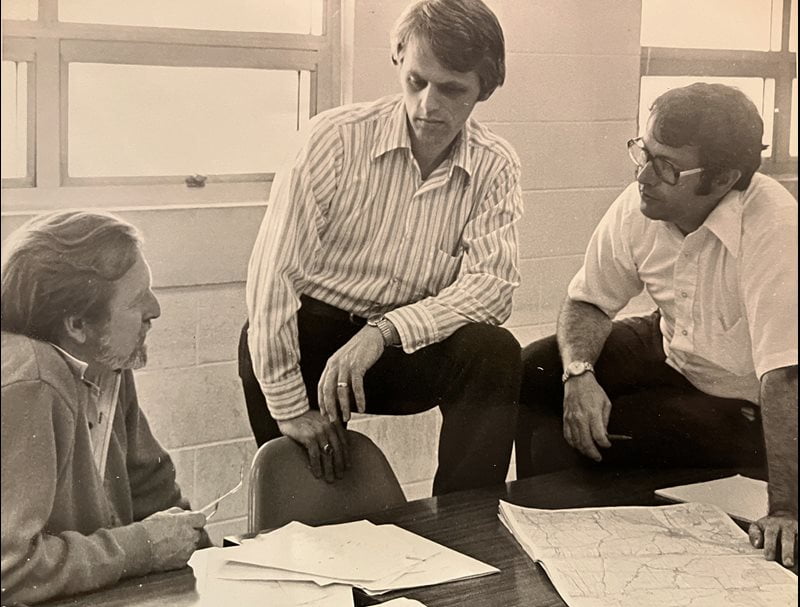
From left, Garvin McCain, Paul Paulus, and Verne Cox did groundbreaking research on prison overcrowding in the 1970s and 1980s.
Dr. Cox, Paulus and fellow UTA psychology professor Garvin McCain conducted groundbreaking research on the effects of overcrowding in prisons in the 1970s and 1980s.
“There was considerable debate at that time about the human consequences of overcrowding in our cities and other environments,” Paulus said. “Some famous studies by John Calhoun with mice and rats suggested dire consequences of overcrowding. We decided that prisons would be an excellent environment to examine the potential negative effects of crowding in humans since many were overcrowded, and legal trials were ongoing about prison conditions.”
The trio received a federal grant from the Department of Justice for their research. They visited more than 50 prisons and jails in their 15 years of work on the project and published many papers and a book demonstrating the negative consequences of prison crowding. They also testified in many legal trials on the issue, including a full week of testimony in a federal trial in Houston which was at the time the longest civil rights trial in U.S. history. That trial resulted in new prison standards for Texas and the U.S. in general.
Dr. Cox was born in Newport, Rhode Island on August 31, 1938, and moved to Texas as a child. He earned a B.A. degree from UT Austin in 1960, an M.A. degree in Psychology from the University of Houston in 1962 and a Ph.D. from the University of Houston in 1964. While at UT Austin he met and married Mary, his wife of 65 years.
After earning his Ph.D., Dr. Cox worked as a research scientist at the Fels Research Institute for the Study of Human Development in Yellow Springs, Ohio from 1964-70. He then accepted an associate professor position at UTA and immediately went about establishing his research program. He was promoted to full professor in 1973 and in 1974 he was awarded the UTA Distinguished Research Award.
In 1996, when College of Science Dean Peter Rosen resigned to take a position with the U.S. Department of Energy, Dr. Cox took on the job of dean on an interim basis. In 1998, the College hired Neal Smatresk and Dr. Cox stepped down. That same year he retired from his full-time faculty position and the following year he was named professor emeritus. He returned in 2000 to teach part-time and continued in that role until 2015. He also established the Verne Cox Graduate Fellowship in Psychology to help students pay for their graduate studies.
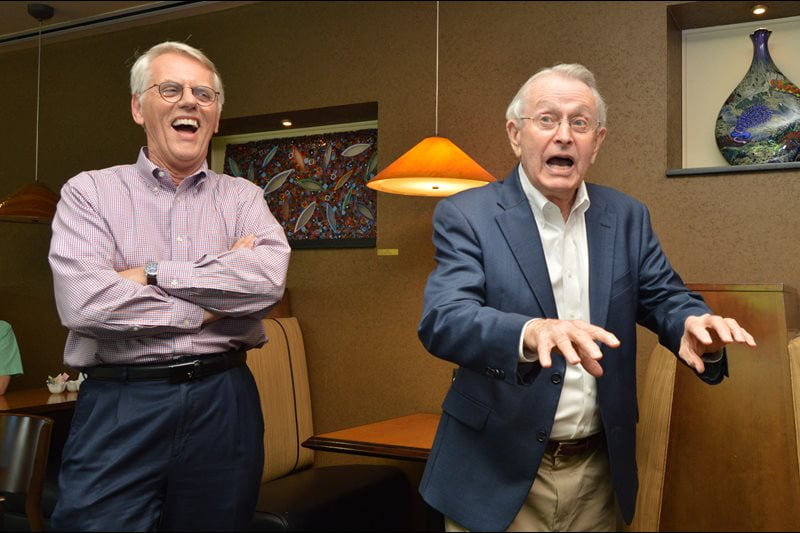
Verne Cox, right, shares an anecdote as Paul Paulus laughs during a reception in 2016.
“He was a man full of energy in his work, intellect, and social life,” Paulus said. “He would walk up and down the hallways for brief visits and reflections with faculty and students. He was loved by his students, was a great mentor and colleague, and a dear friend. It is hard to believe that this dynamic man is no longer with us. However, his positive impact on the lives of others remains.”
His family notes that he will be remembered for his keen intellect, love of family, contributions to science, and his professorial talent. He was a lifelong supporter of the arts, a jazz aficionado, and a strong believer that all people should be treated with decency and fairness.
He is survived by his wife, Mary; three sons, Robin, Kevin, and Sean; and granddaughter, Savannah.
--
The UTA College of Science, a Carnegie R1 research institution, is preparing the next generation of leaders in science through innovative education and hands-on research and offers programs in Biology, Chemistry & Biochemistry, Data Science, Earth & Environmental Sciences, Health Professions, Mathematics, Physics and Psychology. To support educational and research efforts visit the giving page, or if you're a prospective student interested in beginning your #MaverickScience journey visit our future students page.