Events

Upcoming Events

3-5 p.m. Friday, August 22
Science & Engineering Innovation & Research (SEIR) Building 2nd floor lobby

All new and returning College of Science students are invited to our back-to-school mixer as we kick off our 60th anniversary! Make new friends and chat with College of Science faculty members from all departments in an informal setting. Refreshments will be served.
11 a.m. - 1 p.m. Monday, August 25
Chemistry & Physics Building (CPB) lobby and Planetarium Plaza

You are invited to join the College of Science during our Maverick Stampede welcome back to school event! Come by for a cold treat, games, giveaways, and more. Connect with other Mavericks, cool off and find your community in a science student organization.

 
12-1 p.m. Monday, September 8
Science & Engineering Innovation & Research (SEIR) Building, Room 198 

All College of Science students are invited to this session about ways that you can use your science degree to find the job you want. Chik-fil-A will be served. Everyone who attends all four Career Lab sessions will receive an exclusive gift from the College of Science. 
 
3-5 p.m. Tuesday, September 30
Science & Engineering Innovation & Research (SEIR) Building, Room 198 

All COS students who are interested in a Ph.D. degree in the College of Science are invited to this event, which will include an intro on why undergraduates should consider graduate school, and the value of a Ph.D. degree. This will be followed by a Q&A panel discussion with current doctoral students, and an informal mixer where students can learn more about each department's Ph.D. program. Chik-fil-A will be served. Everyone who attends all four Career Lab sessions will receive an exclusive gift from the College of Science. 
3-5 p.m. Wednesday, October 1
Science & Engineering Innovation & Research (SEIR) Building Room 298 and 2nd floor atrium

Students, are you interested in learning how to get involved in undergraduate research in the College of Science? Come to this event where a panel of student researchers will discuss how they got started. Kayunta Johnson-Winters, director of the UTA Office of Undergraduate Research, will give opening remarks, followed by a panel Q&A session. The panel will be followed by a faculty-student mixer in the SEIR 2nd floor lobby where you can ask faculty members from various departments questions about research for students! Refreshments will be served at the mixer.

8:30-10:30 p.m. Saturday, October 4
UTA Observatory, Park Central Garage, 500 S. Center St. on the UTA campus

Everyone is invited to this fun annual event that serves as a global celebration of the Moon. The UTA Planetarium and COS will host an observing party at the UTA Observatory, where guests can take a close look at the Moon on the Observatory's 16” Meade LX200 Astronomical telescope. You can bring your own telescopes, cameras, or binoculars too!

12-1 p.m. Monday, October 13
Science and Engineering Innovation and Research (SEIR) Building, Room 198

All College of Science students are invited to this session about strategies for finding a great career with your College of Science degree. Chik-fil-A will be served. Everyone who attends all four Career Lab sessions will receive an exclusive gift from the College of Science.

October 6-10

The Office of Health Professions hosts a week of informative and fun events for students interested in careers in health professions fields. The lineup includes:

Monday, October 6
Health Professions Week Kickoff Fair — 11 a.m.-1 p.m. Planetarium Plaza
Meet our office staff, student organizations, mentors, and grab some goodies!

Burnout in Healthcare Talk & Mingle — 3-4:30 p.m. SEIR 198
Led by Dr. Drew Weiner, M.D., and Lisa Britt, R.N., directors of emergency departments

Tuesday, October 7
Healthcare Skills Workshop/Free Vision Screenings — 2-5 p.m. SEIR 198
Participate in hands-on skills and events plus get a free vision screening. Led by pre-health orgs and in collaboration with Prevent Blindness Texas 

JAMP Info Session — 5:30-6:30 p.m. SEIR 198
Learn about the Joint Admission Medical Program from JAMP students, JAMP faculty director Greg Hale, and Dr. Meeks, Texas Health Education executive director

Wednesday, October 8
Healthcare Alumni Panel & Mixer — 12-1 p.m. SEIR 198
COS alumni will discuss their career paths and offer advice to pre-health students. Panelists include a pharmacist, a paramedic, a dentist, an MSN, and more!

How to Become a Certified Anesthesiology Assistant — 5-6 p.m. Virtual
Hosted by Case Western University; registration is required

Alternative Careers in Healthcare — 6-7 p.m. on Teams
Session hosted in conjunction with UT Health Houston

Thursday, October 9
Suture Workshop — 3-5 p.m. SEIR 198
UNT Health PA and TCOM students will host a workshop for students to learn how to do sutures

Friday, October 10
UTA Day at UNT Health Fort Worth — 12-3:30 p.m. at UNT Health Fort Worth
Schedule includes a tour of the UNT Health campus, networking with students and faculty, a competitive applicant session, and more

COLLOQUIUM SERIES

Each semester, the Department of Physics hosts a weekly colloquium featuring a guest speaker discussing a topic related to their research. Colloquia are held each Wednesday from 4-5 p.m. in Science Hall (SH) Room 121 unless otherwise noted. Cookies, tea and coffee are served prior to each talk at 3:30 p.m. in SH 108.

Physics colloquia announcements will be sent via email each week. To receive announcements by email, send a new email message to listserv@listserv.uta.edu with no subject line. In the body of the email, type “subscribe phys-info” (with no quotation marks) to join the listserv.

Date Speaker Speaker Info Institution Title Video Link
Jan. 22

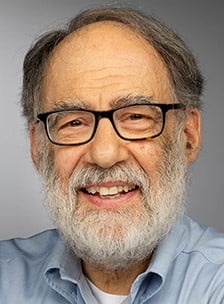
Alan Chodos

Alan Chodos
Dr. Chodos is a UTA Research Professor, a former Director of the Yale Center for Theoretical Physics, and the former Associate Executive Officer of the American Physical Society, where he is a Fellow. UT Arlington Changing the World: Heisenberg, Schrödinger, and the Birth of Quantum Mechanics Link
Jan. 29

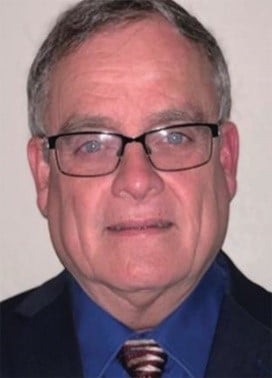
James Rejcek

James Rejcek
Dr. Rejcek is Director, Pac-3 Mse Program at Lockheed Martin Lockheed Martin Antimatter Technology Link
Feb. 12

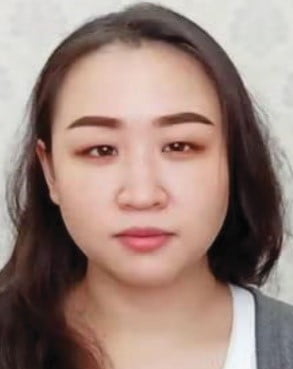
Chih-Ting Hsu

Chih Ting Hsu
Dr. Hsu is a Project Scientist I at the National Science Foundation National Center for Atmospheric Research, High Altitude Observatory. She advances data assimilation techniques for whole-atmosphere models, integrating diverse geospace observation systems to enhance space weather forecasting capabilities. NSF National Center for Atmospheric Research, High Altitude Observatory Thermospheric and Ionospheric Data Assimilation for current and future satellite missions Link
Feb. 19

Zhonghua Xu

Zhonghua Xu
Dr. Xu is a clinical associate professor Virginia Tech University Enhancing Geospace Research with Autonomous Magnetometers in Polar Regions: Current and Future Link
Feb. 26

Pauline Dredger

Pauline Dredger

Dr. Dredger is a postdoctoral research fellow and UTA alumna (Ph.D. Physics ’23) University of Michigan Solar Wind Input and its Effect on Space Weather Forecasting Link
Mar. 5

Kurtis Nishimura

Kurtis Nishimura

Dr. Nishimura is an assistant professor of physics and astronomy University of Hawaii From HEP to BCI & the Future of Brain-Computer Interfaces at Paradromics Link
March 19

Karl Stephan

Karl Stephan 
Dr. Stephan is a professor in the Ingram School of Engineering Texas State University Could Ball Lightning Be Magnetic Monopoles? Link
March 26

Justin Dressel

Justin Dressel 
Dr. Dressel is an associate professor of physics and principal investigator of the Spin Group Chapman University Continuous Monitoring and Feedback Control of Superconducting Qubits Link
April 2

Gabriel Sawakuchi

Gabriel Sawakuchi
Dr. Sawakuchi is a board-certified medical physicist and tenured associate professor in the Department of Radiation Physics at MD Anderson. He is also a faculty member of the Graduate School of Biomedical Sciences at The University of Texas, Houston and an adjunct associate professor in the Department of Biosciences at Rice University. He has a Ph.D. in Physics from Oklahoma State University. His research is at the interface of radiation physics, radiobiology, DNA repair, and immunology and currently focuses on understanding how radiation-induced DNA damage, and repair can be leveraged to radiosensitize tumors and activate the immune system to combat cancer. His lab studies how different forms of clinical radiation including photons, protons, carbon ions and alpha particles modulate oxidative stress, DNA damage, DNA repair and immune activation. The University of Texas MD Anderson Cancer Center How to use ionizing radiation as a cancer vaccine? Hint: DNA damage Link
April 9

Mustafa Amin

Dr. Amin is an associate professor of physics and astronomy at Rice University. He obtained his undergraduate education at UTA, followed by graduate studies at Stanford University and postodoctoral fellowships at MIT and University of Cambridge. His work is aimed at understanding the origin of structure and matter in our cosmos. He specializes in exploring nonlinear dynamics of cosmological fields, especially implications of nonperturbative phenomenon for the end of inflation and dark matter. Rice University A Spin on Dark Matter Link
April 16

Billy Quarles

Billy Quarles
Dr. Quarles is an assistant professor of physics & astronomy at East Texas A&M University (Fall 2024), where he returns to his academic roots to discuss the complex dynamics of exoplanetary systems, particularly circumbinary planets. He holds a B.S. from TCU (’06), M.S. from Stephen F. Austin State University (’08), and, notably, a Ph.D. in Physics from UTA (’12). As a NASA postdoctoral researcher, he worked with the Kepler Mission applying those skills to validate exoplanet candidates and characterize eclipsing binaries for the Kepler Catalogs. His research utilizes computational modeling and observational data analysis to determine exoplanet masses, identify exomoon candidates, and model the radiative transfer governing potential exoplanet climates. East Texas A&M University Planets of the Twin Suns: Revealing the Orbital Dynamics of Binary Star Planets Link
April 16

Note special time
and location:
2:30 p.m. 
CPB 303

Kimberly Palladino

Kim Palladino

Dr. Palladino is an associate professor of physics at the University of Oxford. Her research interests include dark matter, particle astrophysics, and neutrinos. She works on the international LZ experiment. University of Oxford In Pursuit of Particle Dark Matter: Recent Results from LZ and Plans for XLZD
April 23

Andrew Brandt

Andrew Brandt

Dr. Brandt is a distinguished professor of physics at UTA. His research focuses on particle physics. He is a member of the UTA Center of Excellence for High Energy Physics and is a part of the international ATLAS experiment utilizing the Large Hadron Collider at CERN. UT Arlington Triggers, Protons, and Gaps (Oh My) Link
April 24

Note special
time and location:
2 pm, SH 325

Paul Leisher

Paul Leisher 
Dr. Leisher is Vice President of Research and Fellow at Luminant. He leads the company's research and development of laser sources for LIDAR. Luminar Technologies Progress in Brightness, Power, and Efficiency of Semiconductor Lasers for High Power Applications
Date Speaker Speaker Info Institution Title Video Link
Sep. 03

Michael Kesdan

Michael Kesden received his PhD in theoretical astrophysics from Caltech in 2005 and has been on the faculty of the University of Texas at Dallas since 2013 where he is currently Professor and Undergraduate Program Head of the Department of Physics. His research focuses on two phenomena involving spinning black holes: binary black hole (BBH) mergers and stellar tidal disruption. BBH spins misaligned with their orbital angular momentum cause the latter to precess and nutate about the total angular momentum as the BBHs inspiral towards merger due to gravitational-wave (GW) emission. Dr. Kesden investigates the GW signatures of BBH precession and nutation and how they can be used to distinguish between different astrophysical BBH formation channels. He also studies how black-hole spin affects the tidal disruption and direct capture of stars by supermassive black holes. These determine the observational properties and rates of tidal disruption events as observed in astronomical surveys like the upcoming LSST by the Vera Rubin Observatory. Dr. Kesden is also deeply interested in how technology can promote physics education and outreach and has developed STEPP (Scaffolded Training Environment for Physics Programming) and VIGOR (Virtual Interaction with Gravitational waves to Observe Relativity). STEPP is a series of publicly available education modules to teach algebra-based introductory physics, while VIGOR is an interactive simulation of BBHs and the GWs they emit. This research is supported by NSF and NASA grants. UTD
Identifying Precessional Modulation of Gravitational Waves Emitted During Binary Black-Hole Mergers  Link

Sep. 10

Heidi Wu Dr. Heidi Wu is currently an assistant professor at Southern Methodist University. Before moving to Dallas, she was an assistant professor at Boise State University. She held postdoctoral positions at the Ohio State University, Caltech, and the University of Michigan. She received her Ph.D. in physics from Stanford University and a bachelor's degree from National Taiwan University. SMU Probing Cosmic Acceleration with Galaxy Clusters  Link
Sep. 17

Raquel Castillo-Fernandez

Dr. Raquel Castillo Fernández is an assistant professor at the University of Texas at Arlington, her research focuses on neutrino physics and specializes on oscillations, uncertainty control and modeling of neutrino interactions. She and her group work for the SBN (Short Baseline Neutrino), DUNE (Deep Underground Neutrino Experiment), and EMPHATIC (Experiment To Measure The Production Of Hadrons At a Testbeam In Chicagoland) experiments and she is also member of the international NuSTEC (Neutrino Scattering Theory and Experimenter Collaboration). Before joining UTA she was a postdoctoral researcher in the Neutrino Division at Fermilab (Chicago) working in the MicroBooNE experiment. She received her Ph.D in Physics from the Universitat Autònoma de Barcelona (UAB) and the Institut de Física d’Altes Energies (IFAE) working in the T2K experiment (Japan) and a bachelor’s degree from the Universitat de Barcelona (UB). She is originally from Barcelona, Spain.  UTA Neutrino Oscillations and the Path to Discovery: Insights from SBN and DUNE   Link
Sep. 24 Ben Jones Benjamin J. P. Jones is an Associate Professor of Physics at UTA. He received his undergraduate degree from Cambridge University and his PhD from the Massachusetts Institute of Technology. His PhD thesis work, which probed the properties of atmospheric neutrinos at the IceCube Neutrino Telescope and neutrinos from particle accelerators with liquid argon time projection chamber technology, was recognized with the Tanaka Dissertation Award from the American Physical Society. Jones’s research group at UTA focuses on neutrino physics and astrophysics, in particular the nature and size of the mass of the neutrino mass, development of barium tagging for neutrinoless double beta decay, and searches for exotic phenomena such as oscillations of sterile neutrinos. He is co-chair of the Speakers and Readers Committee for the NEXT neutrinoless double beta decay collaboration, served as co-leader of the US Snowmass Process Neutrino Properties Working Group, and is an associate director of the UTA Center for High Energy and Nuclear Physics and co-Director of the UTA Center for Advanced Detector Technology. UTA  Super-radiant Neutrino Lasers from Radioactive Condensates   Link 
Oct. 01 Ben Rose Benjamin Rose, Ph.D., is an assistant professor of physics at Baylor University. He researches Type Ia supernovae, absolute and relative calibration of telescopes, space telescope missions, and large computational analysis. In 2018, he received his doctorate from the University of Notre Dame, where his dissertation focused on systematic biases of Type Ia supernova distances used in observational cosmology. Since then, he has held positions at Space Telescope Science Institute and Duke University. Dr. Rose joined Baylor University in 2023 and was named as one of four co-principal investigators for the Roman Supernovae Cosmology Project Infrastructure Team. The team is working with NASA to investigate infrastructure solutions to the complex analysis pipelines for the Nancy Grace Roman Telescope. Baylor University Supernova Cosmology and the Nancy Grace Roman Space Telescope   Link
Oct. 08 Fatemeh Bagheri Fatemeh (Fatima) Bagheri is a NASA Postdoctoral Fellow at the Goddard Space Flight Center. Her research spans astrophysics, planetary science, and computational physics, with a focus on exoplanet detection and planetary habitability. She earned her first Ph.D. in Astronomy from Sharif University of Technology, where she studied exoplanets detection via gravitational microlensing. She then completed a second Ph.D. in Space Science at the University of Texas at Arlington, specializing in magnetohydrodynamic (MHD) simulations of solar wind–magnetosphere interactions. As an NSF MPS-Ascend Postdoctoral Fellow, she pioneered new approaches to detecting exoplanets through radio emissions during microlensing events and investigated the magnetospheres of exoplanets using advanced MHD modeling. At NASA Goddard, her work bridges space physics and astrophysics, contributing to flagship missions such as the Roman Space Telescope and the Habitable Worlds Observatory. NASA Magnetospheres: From Models to Detection  Link 
Oct. 15 Mei Yuan   UTA      
Oct. 22  Xiaojia Zhang    UTD    
Oct. 29 Jonathan Asaadi   UTA    
Nov. 05 Ping Liu   UTA    
Nov. 19 Haleh Hadavand   UTA    

Explore Student Events

UTA has over 260 active student organizations – including more than 30 related to science. Student organizations are a great way for students to make new friends, meet peers with similar interests, participate in service activities, hear from industry professionals, and establish connections which can be helpful when it’s time to find a job. Visit the MavOrgs webpage for a listing of current events.