Why Undergraduate Research Can Change the Course of Your Career
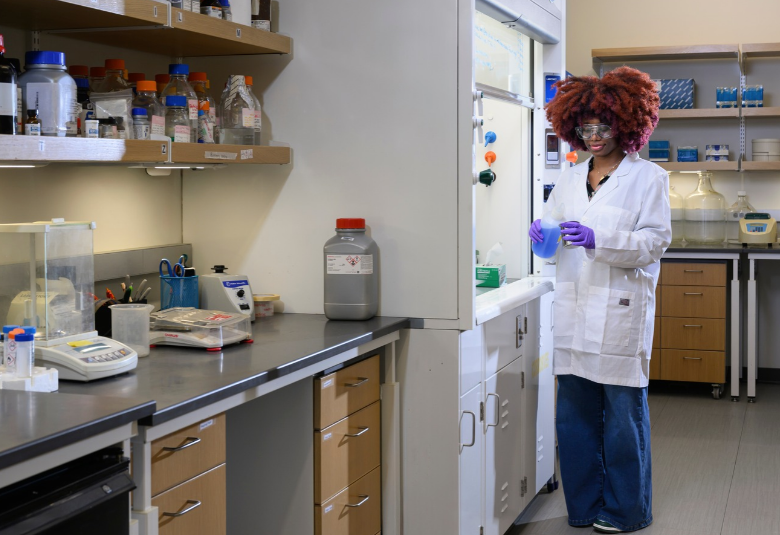
College gives you the basics, but undergraduate research lets you see what a real career in science could be like.
If you’re majoring in science, research is your chance to move past textbooks and lectures and get involved in real discovery. You won’t just learn what’s already known—you will ask your own questions, dig into evidence, solve problems, and explore innovative ideas.
At UTA’s College of Science, undergraduate research connects what you learn in class to real scientific discovery. You’ll build skills that matter for graduate school, professional programs, and careers in science, technology, healthcare, data analysis, and beyond.
Research isn’t just a résumé booster. It can change how you see your education and open new possibilities for your future.
What Is Undergraduate Research?
Undergraduate research means getting hands-on with real scientific work, often working side by side with faculty, graduate students, and other researchers.
Depending on your major, research might mean working in a lab, heading out for fieldwork, analyzing data, building models, studying human behavior, or using computers to answer scientific questions.
No matter what field you’re in, research lets you play an active role in making new discoveries.
One of the best things about undergraduate research is that you move from just learning facts to investigating questions that don’t have answers yet.
UTA College Of Science Undergraduate Research
Bridging Classroom Learning and Practical Experience
In class, you learn scientific concepts, theories, and techniques. Research gives you the chance to put that knowledge into working in real situations.
For example, if you’re studying biology, you might use what you know about genetics or cells to answer real research questions. Chemistry majors are exploring molecules and materials. Psychology students investigate human behavior, and students in math, physics, or data science use numbers and models to find patterns or understand complex systems.
Research teaches you something important—real-world problems don’t come with easy answers.
Through research, you learn to ask smart questions, look at evidence, test your ideas, handle surprises, and adapt when things don’t go as planned.
These skills will help you long after you leave the lab.
UTA College Of Science Research – At The Forefront Of Discovery
Undergraduate Research as a Foundation for Career-Ready Skills 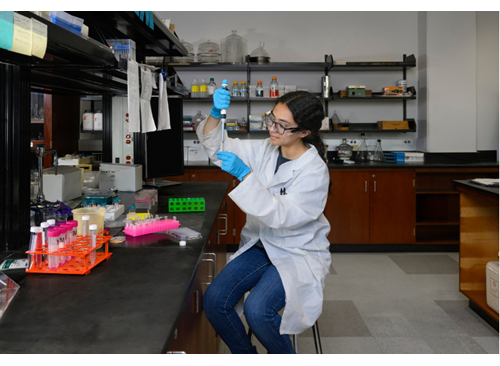
Employers seek graduates who can analyze information, solve complex problems, communicate effectively, collaborate with others, and adapt to emerging challenges.
Getting involved in research helps you build all these skills at the same time.
As a Carnegie R1 institution, the University of Texas at Arlington endeavors to improve the world we live in through the relentless pursuit of game-changing discovery.
Research sharpens your critical thinking, data analysis, communication, teamwork, project management, tech skills, and problem-solving. You’ll also get used to working through uncertainty, which is essential in today’s fast-changing world.
Your research experience gives you real stories and examples to share with future employers.
Instead of just saying you have analytical skills, you can talk about the research problems you worked on, how you approached them, the challenges you faced, and what you learned along the way.
That is real proof you’re ready to take on your career.
UTA College Of Science
Exploring Potential Career Paths
One of the biggest benefits of undergraduate research is getting to explore different careers.
Many students start college loving science but do not realize just how many career options are out there. Getting involved in research can introduce you to new fields, cutting-edge technology, graduate school opportunities, and career paths you might not have thought about before.
Research can also help you figure out what isn’t the right fit for you.
If you realize a field isn’t right for you while you’re still in college, you have time to try something else, change your academic plan, or pick up new skills before you graduate.
That’s why undergraduate research isn’t academics. It is a powerful way to shape your career.
Research gives you a chance to connect with faculty in ways that do not happen in regular classroom settings.
At UTA’s College of Science, faculty mentors help you build research skills, explore your interests, learn about graduate and professional schools, and start growing your professional network.
These connections can also help you when you are applying for graduate school, internships, scholarships, fellowships, or jobs.
If you are thinking about graduate or professional school, research lets you dive into advanced science and shows you can manage a big academic project.
The Distinctive Value of Research Experience
To stand out in a competitive field, you need more than simply good grades.
Undergraduate research is one of the best ways to stand out.
Research shows initiative, curiosity, persistence, and the ability to tackle tough problems. Sharing your work at conferences, poster sessions, or in publications helps you build effective communication skills.
These experiences turn your résumé into real proof of what you can do—not just a list of classes you have taken. Instead of saying, "I studied science," you can say, "I used scientific methods to investigate a problem."
That difference can make all the difference.
UTA College Of Science Graduate Degree Programs
Preparing for Careers That Are Still Emerging
Fields like artificial intelligence, biotechnology, computational science, healthcare innovation, advanced materials, environmental science, and data-driven discovery are creating new career opportunities and changing established professions.
If you are starting your career now, you might end up in a job that did not even exist when you started college.
That is why adaptability matters more than ever. Research teaches you to approach questions with no known answers. Through this process, you learn to gather information, evaluate evidence, assess possible solutions, and communicate your findings.
These skills will stay valuable, no matter how much technology or industry changes.
UTA College Of Science Undergraduate Degree Programs
Undergraduate Research Opportunities
You will find scientific learning and discovery coming together in all kinds of fields in the College of Science.
As an undergraduate, you get hands-on experience with the scientific process and build practical skills you will use in your career.
But the value goes beyond just being part of a research project—it shapes how you think and learn.
You will develop a scientific way of thinking: staying curious, asking smart questions, analyzing evidence, challenging what you think you know, and always looking for answers.
This mindset can shape how you approach your career long after you graduate. You do not need to have your whole career plan figured out before you start doing research.
One research project could introduce you to a whole new field. Your faculty mentor might suggest a career you never thought about. The questions you work on could lead you to graduate school, internships, or jobs in industries you hadn’t considered before.
Sometimes, research confirms what you already wanted to do. Other times, it might make you rethink your whole plan—and that’s okay.
Either way, both experiences are valuable.
Undergraduate research lets you discover new things, figure out what excites or challenges you, and explores where your science skills might take you.
These discoveries can change the direction of your career.
UTA Office of Admissions