Symphonic Band
"Sounds of the American Landscape"
Program Notes compiled from www.windrep.org
American Riversongs
About the piece
American Riversongs is based on traditional and composed music of an earlier time, when the rivers and waterways were the lifelines of a growing nation.American Riversongs begins with a rousing setting of Down the River, followed by an expansive and dramatic treatment of Shenandoah, or Across the Wide Missouri, as it is sometimes called. After a brief transition, a brass band is heard playing a quadrille-like version of Stephen Foster's The Glendy Burk. As the Glendy Burk travels along, a second theme is introduced by piccolo, flutes and tambourine. The second theme is based on a Creole bamboula tune that probably originated in the Louisiana delta region. Other composers have used this melody, including Louis Moreau Gottschalk in his La Bamboula, Op. 2, for piano and his Symphony No. 1, subtitled A Night in the Tropics. The bamboula theme is marked by an incessant syncopated ragtime rhythm and used to good effect in the coda to bring American Riversongs to a rowdy, foot-stomping close!
About the composer
 Pierre LaPlante (not La Plante) (b. 25 September 1943, West Allis, Wisc. - 22 May 2024, Oregon, Wisc.) was an American composer of French-Canadian descent.
LaPlante grew up in Sturgeon Bay, Wisconsin. He received his Bachelor and Master of Music degrees from the University of Wisconsin at Madison, where he was a composition student of James Christensen. LaPlante plays bassoon with the Beloit-Janesville Symphony Orchestra. He recently retired after teaching general music and beginning band at Pecatonica Elementary School in Blanchardsville, Wisconsin, for 25 years.
LaPlante adjudicated for solo and ensemble contests and played bassoon in regional orchestras, including the Dubuque Symphony Orchestra and the Beloit-Janesville Symphony. He was member of MENC, ASCAP, Wisconsin Music Educators Conference, Wisconsin Youth Band Directors Association, as well as the Madison Wind ensemble. He resided in Oregon, Wisconsin.
Glaciers
About the piece
The wonder of nature is demonstrated through five musical vignettes. The piece opens with sounds that conjure the image of incredible ice formations that build to grandiose proportions. As the work develops, listeners hear the destruction of the massive ice structure as it crashes into the sea, the glacier's survival and the beginning of the cycle once again. A stunning look at a nature's might.
About the composer
 Scott Director is an American composer and percussionist.
Mr. Director began his career performing with regional orchestras and other ensembles while still in high school. He studied with Clifton Williams, Frederick Fennell, and Alfred Reed at the University of Miami (Bachelor of Music Education degree). Director is active in the Los Angeles area as a composer, arranger and teacher. As a percussionist, he has played for operas, ballets, orchestras, and in the pit for Broadway musicals. He is a member of ASCAP and has several short film scores to his credit.
Red Rock Mountain
About the piece
This composition is an episodic work that paints a musical portrait of a beautiful mountain landscape. Brass fanfares and soaring wind lines begin the piece, transitioning into an emotional section depicting the mountains at dusk. As the sun rises and sheds light on its peaks, the music becomes lyrical and rhythmically incisive, culminating in a heroic brass finale that depicts the full grandeur of the mountains.
About the composer
 Rossano Galante (b. 10 January 1967, Buffalo, N.Y.) is an American composer.
Galante earned a degree in trumpet performance from the State University of New York at Buffalo in 1992. He then was accepted into the film scoring program at the University of Southern California and studied with film composer Jerry Goldsmith.
Mr. Galante has composed music for the films Bite Marks, The Last Straight Man, Monday Morning and Channels. He has served as orchestrator for over sixty studio films including A Quiet Place, The Mummy, Logan, Big Fat Liar, Scary Movie 2, The Tuxedo, and Tuesdays With Morrie, to name only a few.
For his large-scale wind ensemble compositions, he has been commissioned by the Federation of Gay Games-Paris 2018, Atlanta Freedom Band, Lake Braddock High School Band, Hofstra University Symphonic Band, and the Nebraska Wind Symphony, among many others.
Symphonic Winds
"Forged from Stardust: Hidden Forces in Creation"
Splitting Light
About the piece
When composing the piece, Joni Greene wrote:
I love writing about the cosmos not only because of exciting scientific developments, but also for my father (a physicist) who passed away in 2021. He and I spent many years looking through his telescope and learning about the universe. I am particularly thrilled to write about Vera C. Rubin who was a tremendously influential woman in physics and crucial to the advanced findings of dark matter.
What if the universe is mostly invisible?
That’s not a philosophical question — it’s a scientific one. Astronomers now believe that roughly eighty-five percent of all matter in the universe is what they call dark matter: a substance that emits no light, reflects no light, and yet exerts a gravitational pull so powerful that without it, galaxies as we know them could not exist. We cannot see it. We cannot touch it. And yet the evidence for its presence is overwhelming. It is, in every sense, a hidden force in creation.
For several years, Greene has composed works inspired by images from the James Webb Space Telescope, building a series of pieces that translate the breathtaking discoveries of modern astrophysics into sound. Tonight's work adds a new chapter to that journey — one inspired by the Vera C. Rubin Observatory, a revolutionary telescope whose central mission is to map dark matter across the night sky. Originally named The Dark Matter Telescope, the Rubin Observatory will survey the cosmos in extraordinary detail, hunting for the invisible architecture that holds the universe together.
“Splitting Light” received its world premiere just a month ago, on March 23rd, performed by the Hartwick College Wind Ensemble. Tonight, you are among the first audiences in the country to experience it — made possible in part through a commissioning consortium of which the University of Texas at Arlington is a proud member.
About the composer
 Joni Greene is described as "a master of sonic color," drawing on her synesthesia, where sound appears as shifting hues and auras. Through a process she calls organized color, her music centers on vivid imagery shaped by a hierarchy of instrumental color. She has a particular interest in space, physics, and nature, and many of her pieces incorporate outside sources—including images from the James Webb Space Telescope and the Vera Rubin Observatory, as well as photography, science, and poetry—offering performers and audiences a window into her sensory perspective.
Her music has been performed throughout the world, including the United States, Canada, Europe, China, Japan, and Australia. Her diverse catalog includes works for band, choir, orchestra, chamber ensemble, and chamber opera. Notable awards include the 2nd and 3rd Frank Ticheli competitions, the ASCAP/Lotte Lehman "Damien Top" Prize, and the ACC Band Directors Association Emerging Artist Grant. Recordings of her works, Glow and The Moon Glistens, are available through Klavier Music Productions, featuring the University of Kansas Wind Ensemble with conductor Paul W. Popiel.
Ms. Greene is frequently commissioned by universities and school districts. She is currently working on a piece for concert band inspired by the findings of the Vera Rubin Observatory on dark matter, which will be premiered at Carnegie Hall this spring. She recently completed a collaboration with Professor Emeritus and librettist, Robert Hatten, on a libretto for her upcoming work The White Rose for Wind Ensemble and Soprano Voice, inspired by her ancestors Sophie and Hans Scholl. She continues to lead The Next Music Project with educator, Michael Kasper, which commissions works for young band from diverse perspectives. Exciting future works include an Alto Saxophone concerto for Otis Murphy, and a work for Solo Cello and Wind Ensemble for Hyerim Mapp.
Ms. Greene's music is widely performed at conferences and festivals including: the Midwest Clinic, Texas Bandmasters Association (TBA), American Bandmasters Association (ABA), College Band Directors National Association (CBDNA), Nebraska State Bandmasters Association (NSBA), the International Tuba Euphonium Conference, the World Association for Symphonic Bands and Ensembles conference in Taiwan (WASBE), the Las Americas en Concierto/Composers in New York, the Albert Roussel International Festival in France, Essentially Choral Reading Sessions, and the North American Saxophone Alliance (NASA) Conference. Additionally, her music can be heard by U.S. military bands, All-State bands, and honor bands.
Analyses of Ms. Greene's music for wind band may be found in the School Band and Orchestra (SBO) magazine and Manhattan Beach Times issues 5-7. Additionally, conductor Chad Simons has published a dissertation on the topic of Ms. Greene's life and music. Ms. Greene holds MM and BM degrees from Indiana University. Past and current mentors who inspire her music include Sven-David Sandstrom, Michael Colgrass, and Michael Gandolfi.
When she is not composing, Ms. Greene enjoys working in residence with all levels of concert band, orchestra, choir and chamber groups. She currently resides in Driftwood, Texas with her husband and two sons. She is also a proud marching band parent and baseball coach!
The Coppersmiths
About the piece
If you drive out of Phoenix, Arizona, you’ll find the mysterious Superstition Mountains hovering along the eastern horizon. Cut around and head south along scenic Highway 177 toward the San Carlos Apache Indian Reservation and you’ll soon pass the White Canyon Wilderness. When you start to spot patches of rusty orange silt on the landscape, you’ll have reached the small mining town of Ray, named for the Ray Copper Company. Founded in 1882 (and, remarkably, still in operation today), the Ray open-pit mine is home to one of the largest copper reserves in the United States, earning Arizona its affectionate nickname, “The Copper State.”Keep driving past the mine and you’ll find the Gila River suddenly guiding you toward another small mining town, Kearny, the home of Ray High School. This is where—for over 30 years—Mr. Mark Muñoz taught music to hundreds and hundreds of young people. It’s where he taught clarinet to a young Jon Gomez. Mr. Jon Gomez, of course, would eventually go on to teach music himself at Dobson High School in Mesa, Arizona, where a young rough, ready, and rather unrefined Michael Markowski was eager to play saxophone and study scores.
In August of 2025, right as I was beginning work on this piece, Mr. Muñoz passed away. Remembering him, Jon wrote, “I will forever be profoundly grateful for the potential Mr. Muñoz saw in me, long before I realized it myself. With patience, positivity, and encouragement, he helped me develop and cultivate what would eventually become my passion.”
I kept thinking about how grateful I am for my own Mr. Muñoz: Mr. Gomez— grateful to him and to all the people in my life I’ve been lucky to call teachers and mentors. Like Mr. Muñoz before him, Jon can see something precious deep inside his students. He can sense unrealized potential waiting to be extracted—our hunger to express our true selves and our hope to shine brightly for him.
Copper—being one of the softer metals—is easily malleable. It doesn’t require heavy force or excessive heat to bend or change its shape into a useful, beautiful thing. As many great Coppersmiths will tell you, all it needs is a little warmth, a soft wooden hammer, and perhaps a little “patience, positivity, and encouragement.”
Michael Markowski
November 30, 2025
About the composer
 Michael Markowski (b. 14 November 1986, Mesa, Ariz.) is fully qualified to watch movies and cartoons. In 2010, he successfully graduated magna cum laude with a Bachelor of Arts Degree in Film from Arizona State University.
While Markowski has never studied music at a university, he has studied privately with his mentors Jon Gomez and Dr. Karl Schindler. However, he has continued his education by participating in a number of programs including "the art of orchestration" with television and film orchestrator Steven Scott Smalley, and in 2008, was invited to be a part of the National Band Association's Young Composer and Conductor Mentorship program.
In 2006, his work for concert band, Shadow Rituals, was honored with first prize in the first Frank Ticheli Composition Contest, sponsored by Manhattan Beach Music. The work is now published by Manhattan Beach Music and is on several state lists including the Texas Prescribed Music List. The piece has received a number of prestigious performances since its premiere by the Arizona State University Wind Symphony, some of which include the Midwest Clinic in Chicago by the VanderCook College of Music and by the 4A Honor Band at the 2008 Texas Music Educators Association Conference, Poteet High School.
Other notable performances include The Phoenix Symphony Orchestra, the U.S. Air Force Band of the Golden West, the U.S. Air Force Band of Mid-America, Arizona State University, California State University-Fullerton, Rutgers University, San Jose State University, The University of North Texas, Arrowhead Union High School, The University of Wisconsin-Milwaukee Youth Wind Ensembles, and the Austin Symphonic Band.
Markowski has received commissions for new works from a number of organizations including CBDNA, The Consortium for the Advancement of Wind Band Literature, The Lesbian and Gay Band Association, Arrowhead Union High School, and the University of Wisconsin-Milwaukee Youth Wind Ensembles, Bethel High School, and other consortiums of schools.
A brief insight into Markowski's creative process can be found in a contributing chapter of Composers on Composing for Band, Vol. IV: Young Emerging Composers, published by GIA Music. His work has also been analyzed in the Teaching Music Through Performance in Band series (Volume 7).
For the last several years, he has arranged, co-composed, and been music director for an original musical celebrating the life of Judy Garland aptly titled Judy: The Musical. He is a member of ASCAP and currently lives in Astoria, New York.
Aurora Awakes
About the Piece
Aurora now had left her saffron bed,And beams of early light the heav'ns o'erspread,
When, from a tow'r, the queen, with wakeful eyes,
Saw day point upward from the rosy skies.
- Virgil, The Aeneid, Book IV, Lines 584-587
Aurora – the Roman goddess of the dawn – is a mythological figure frequently associated with beauty and light. Also known as Eos (her Greek analogue), Aurora would rise each morning and stream across the sky, heralding the coming of her brother Sol, the sun. Though she is herself among the lesser deities of Roman and Greek mythologies, her cultural influence has persevered, most notably in the naming of the vibrant flashes of light that occur in Arctic and Antarctic regions – the Aurora Borealis and Aurora Australis.
John Mackey’s Aurora Awakes is, thus, a piece about the heralding of the coming of light. Built in two substantial sections, the piece moves over the course of eleven minutes from a place of remarkable stillness to an unbridled explosion of energy – from darkness to light, placid grey to startling rainbows of color. The work is almost entirely in the key of E-flat major (a choice made to create a unique effect at the work’s conclusion, as mentioned below), although it journeys through G-flat and F as the work progresses. Despite the harmonic shifts, however, the piece always maintains a – pun intended – bright optimism.
Though Mackey is known to use stylistic imitation, it is less common for him to utilize outright quotation. As such, the presence of two more-or-less direct quotations of other musical compositions is particularly noteworthy in Aurora Awakes. The first, which appears at the beginning of the second section, is an ostinato based on the familiar guitar introduction to U2’s Where The Streets Have No Name. Though the strains of The Edge’s guitar have been metamorphosed into the insistent repetitions of keyboard percussion, the aesthetic is similar – a distant proclamation that grows steadily in fervor. The difference between U2’s presentation and Mackey’s, however, is that the guitar riff disappears for the majority of the song, while in Aurora Awakes, the motive persists for nearly the entirety of the remainder of the piece:
“When I heard that song on the radio last winter, I thought it was kind of a shame that he only uses that little motive almost as a throwaway bookend. That's my favorite part of the song, so why not try to write an entire piece that uses that little hint of minimalism as its basis?”
The other quotation is a sly reference to Gustav Holst’s First Suite in E-flat for Military Band. The brilliant E-flat chord that closes the Chaconne of that work is orchestrated (nearly) identically as the final sonority of Aurora Awakes – producing an unmistakably vibrant timbre that won’t be missed by aficionados of the repertoire. This same effect was, somewhat ironically, suggested by Mackey for the ending of composer Jonathan Newman’s My Hands Are a City. Mackey adds an even brighter element, however, by including instruments not in Holst’s original.
“That has always been one of my favorite chords because it's just so damn bright. In a piece that's about the awaking of the goddess of dawn, you need a damn bright ending -- and there was no topping Holst. Well... except to add crotales.”
- Program Note by Jake Wallace
About the Composer
 John Mackey (b. 1 October 1973, New Philadelphia, Ohio) is an American composer.
Mackey holds a Master of Music degree from The Juilliard School and a Bachelor of Fine Arts Degree from the Cleveland Institute of Music, where he studied with John Corigliano and Donald Erb, respectively. Mr. Mackey particularly enjoys writing music for dance and for symphonic winds, and he has focused on those media for the past few years.
His works have been performed at the Sydney Opera House; the Brooklyn Academy of Music; Carnegie Hall; the Kennedy Center; Weill Recital Hall; Jacob's Pillow Dance Festival; Italy's Spoleto Festival; Alice Tully Hall; the Joyce Theater; Dance Theater Workshop; and throughout Italy, Chile, Japan, Colombia, Austria, Brazil, Germany, England, Australia, New Zealand, and the United States.
John has received numerous commissions from the Parsons Dance Company, as well as commissions from the Cleveland Orchestra Youth Orchestra, New York City Ballet’s Choreographic Institute, the Dallas Theater Center, the Alvin Ailey Dance Company, the New York Youth Symphony, Ailey 2, Concert Artists Guild, Peridance Ensemble, and Jeanne Ruddy Dance, among many others. Recent and upcoming commissions include works for the concert bands of the SEC Athletic Conference, the American Bandmasters Association, and the Dallas Wind Symphony.
As a frequent collaborator, John has worked with a diverse range of artists, from Doug Varone to David Parsons, from Robert Battle to the U.S. Olympic Synchronized Swim Team. (The team won a bronze medal in the 2004 Athens Olympics performing to Mackey's score Damn.)
John has been recognized with numerous grants and awards from organizations including ASCAP (Concert Music Awards, 1999 through 2006; Morton Gould Young Composer Award, 2002 and 2003), the American Music Center (Margaret Jory Fairbanks Copying Assistance Grant, 2000, 2002), and the Mary Flagler Cary Charitable Trust (Live Music for Dance commissioning grants, 1998, 1999, 2000, and 2005). He was a CalArts/Alpert Award nominee in 2000.
In February 2003, the Brooklyn Philharmonic premiered John’s work Redline Tango at the BAM Opera House, with Kristjan Jarvi conducting. John made a new version of the work for wind ensemble in 2004 -- Mackey's first work for wind band -- and that version has since received over 100 performances worldwide. The wind version won the 2004 Walter Beeler Memorial Composition Prize, and in 2005, the ABA/Ostwald Award from the American Bandmasters Association, making John the youngest composer to receive the honor.
In 2009, John's work Aurora Awakes received both the ABA/Ostwald Award and the NBA William D. Revelli Composition Contest.
John served as a Meet-The-Composer/American Symphony Orchestra League "Music Alive!" Composer In Residence with the Greater Twin Cities Youth Symphony in 2002-2003, and with the Seattle Youth Symphony Orchestra in 2004-2005. He was Composer In Residence at the Vail Valley Music Festival in Vail, Colorado, in the summer of 2004, Composer In Residence at the Cabrillo Festival of Contemporary Music in August 2005. He has held college residencies at Florida State, University of Michigan, Ohio State, Arizona State, University of Southern California, University of Texas, among many others. Mr. Mackey served as music director of the Parsons Dance Company from 1999-2003.
To entertain himself while procrastinating on commissions, John is a photography enthusiast.
 Michael Haithcock became director of bands and professor of music (conducting) at the University of Michigan in the fall of 2001 following twenty-three years on the faculty of Baylor University. Following in the footsteps of William D. Revelli and H. Robert Reynolds, Professor Haithcock conducted the internationally renowned University of Michigan Symphony Band, guided the acclaimed graduate band and wind ensemble conducting program, and provided administrative leadership for all aspects of the University of Michigan’s diverse and historic band program.
 George Gershwin (26 September 1898, Brooklyn, N.Y. – 11 July 1937, Los Angeles, Calif.) was an American composer and pianist.
 R. Mark Rogers (b. 20 January 1955) is an American composer, arranger and conductor.
 Multiple GRAMMY Award-winning composer Michael Daugherty (b. 28 April 1954, Cedar Rapids, Iowa) achieved international recognition as one of the ten most performed American composers of concert music, according to the League of American Orchestras. His orchestral music, recorded by Naxos over the last two decades, has received six GRAMMY Awards, including Best Contemporary Classical Composition in 2011 for Deus ex Machina for piano and orchestra and in 2017 for Tales of Hemingway for cello and orchestra.
 Dennis Llinás (b. 1980, Miami, Fla.) is an American conductor, educator and composer.
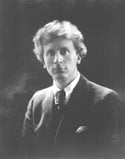 George Percy Grainger (8 July 1882, Brighton, Victoria, Australia – 20 February 1961, White Plains, N.Y.) was an Australian-born composer, pianist and champion of the saxophone and the concert band, who worked under the stage name of Percy Aldridge Grainger.
  Ron Nelson (14 December 1929, Joliet, Ill. – 24 December 2023, Scottsdale, Ariz.) was an American composer.
 Calvin H. Custer (15 July 1939 - 21 April 1998) was an American composer and arranger.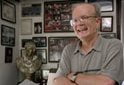

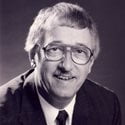
 Thomas Root (22 February 1947, Redwood Falls, Minn. - 4 August 2023, Ogden, Utah) was an American composer and music educator.
  David Maslanka (30 August 1943, New Bedford, Mass. – 6 August 2017, Missoula, Mont.) was an American composer.
 Stephen Peterson (Fort Collins, CO) Stephen Peterson has enjoyed a 43-year career teaching and conducting throughout the United States and around the world. Most recently, he served as Director of Bands at the University of Illinois, where he served from 2015 until his retirement in 2022. At Illinois, he conducted the Illinois Wind Symphony, led the graduate wind conducting program, taught courses in wind literature, and guided all aspects of one of the nation’s oldest, largest, and most storied band programs.
 Leonard Bernstein (25 August 1918 in Lawrence, Mass. - 14 October 1990, New York, N.Y.) was an American composer, pianist, and conductor.
 Paul Lavender is an American composer, music businessman and arranger.
 Dmitri Dmitriyevich Shostakovich (25 September 1906, Saint Petersburg, Russia – 9 August 1975, Moscow, Russia) was a Russian composer who lived under the Soviet regime.
 Harrah Robert Reynolds (April 10, 1934 – January 30, 2026) was an American musician, conductor and academic. He was the principal conductor of the Wind Ensemble at the Thornton School of Music at the University of Southern California, where he held the H. Robert Reynolds Professorship in Wind Conducting. Reynold's appointment at the University of Southern California followed his retirement, after 26 years, from the School of Music of the University of Michigan where he served as the Henry F. Thurnau Professor of Music, director of university bands, and director of the division of instrumental studies. In addition to these responsibilities, he was also, for nearly 30 years, the conductor of the Detroit Chamber Winds and Strings, which is made up primarily of members from the Detroit Symphony.
 Ryan Nowlin (b. 1978, Parma, Ohio) is an American composer, arranger and conductor.
 Vincent Persichetti (6 June 1915, Philadelphia, Penn. – 14 August 1987, Philadelphia) was an American composer, music educator and pianist.
 Marie A. Douglas (b. 1987) is an American hornist, educator, arranger, and composer.
 Aaron Perrine (pronounced per-EEN) (b. 1979, McGregor, Minnesota) is an American composer.
 Arturo Márquez (b. 20 December 1950, Alamos, Sonora, Mexico) is a Mexican composer.
 Viet Cuong (b. 1990, West Hills, Calif.) is an American composer.
 John Philip Sousa (6 November 1854, Washington, D.C. – 6 March 1932, Reading, Pennsylvania) was America's best known composer and conductor during his lifetime. Highly regarded for his military band marches, Sousa is often called the "The March King" or "American March King".
 Brian Balmages (b. 24 January 1975, Baltimore, Md.) is an active trumpeter composer, conductor, producer, and performer.
 Hugh M. Stuart (5 October 1917, Harrisburg, Pa. – 31 January 2006, Albuquerque, N.M.) was an American composer, arranger and educator.
 Brant Karrick (b. 14 August 1960, Bowling Green, Ky.) is an American composer, arranger and educator.
 Sir Malcolm Arnold (21 October 1921, Northampton, England – 23 September 2006, Norfolk, England) was a British composer and trumpeter.
 John P. Paynter (29 May 1928, Mineral Point, Wis. – 4 February 1996, Glenview, Ill.) was an American arranger, conductor and clarinetist.
 Alfred Reed (25 January 1921, Manhattan, N.Y. – 17 September 2005, Miami, Fla.) was an American composer, arranger, conductor and educator.
 James Charles Barnes (b. 9 September 1949, Hobart, Okla.) is an American composer, conductor and educator.
  Peter Graham (b. 1958, Lanarkshire, Scotland), is a British composer.
  Russell T. Alexander (26 February 1877, Nevada, Mo. - 2 October 1915, Liberty, N.Y.) was an American composer.
  John Barnes "Barney" Chance (1932, Beaumont, Texas - 1972, Lexington, Kentucky) was an American composer.
  Frederick Alton Jewell (28 May 1875, Worthington, Ind. - 11 February 1936, Worthington, Ind.) was an American euphoniumist, conductor and composer.

 A native of Greeley, Colorado, Dr. Lowell E. Graham was the Director of Orchestral Activities and Professor of Conducting at the University of Texas at El Paso (UTEP) and was the recipient of the “Abraham Chavez” Professorship in Music. From 2002-2014 he served as Chair of the Department of Music. He has enjoyed a distinguished career conducting ensembles in many musical media, including the Green Bay Symphony Orchestra, the Virginia Symphony, the Spokane Symphony, the Valdosta Symphony Orchestra, the El Paso Symphony Orchestra, the American Promenade Orchestra, the Greeley Philharmonic, Chamber Music Palm Beach Chamber Orchestra, the Westsachsisches Symphonieorchester, the Mormon Tabernacle Choir, Banda Sinfonica do Estado de Sao Paulo, Orquestra de Sopros Brasileira, Banda Sinfonica de la Provincia de Cordoba – Argentina, Banda Municipal de Musica de Bilbao – Espana, Banda Municipal de Barcelona – Espana, the National Symphonic Winds, the National Chamber Players, the Avatar Brass Ensemble and the Denver Brass. In 2006 he was named the “Director Honorifico Anual” for the Orquesta Sinfonica Nacional de Paraguay. He has held numerous conducting positions to include that of the Commander and Conductor of the United States Air Force’s premier musical organization in Washington, DC. As a USAF Colonel, he became the senior ranking musician in the Department of Defense.
 William Owens (b. 22 January 1963, Gary, Indiana) is an American composer, conductor, clinician and educator.
 Frank Ticheli (b. 21 January 1958, Monroe, La.) is an American composer and conductor.
 Douglas Akey (b. 13 October 1957) is an American composer and teacher.
 John Mackey (b. 1 October 1973, New Philadelphia, Ohio) is an American composer.
 Eric Whitacre (b. 2 January 1970, Reno, Nev.) is an American composer, conductor and lecturer.
 Vincent Persichetti (6 June 1915, Philadelphia, Penn. – 14 August 1987, Philadelphia) was an American composer, music educator and pianist.
 Norman Dello Joio (born Nicodemo DeGioio 24 January 1913, New York City - 24 July 2008, East Hampton, N.Y.) was an American composer.