Research Topics

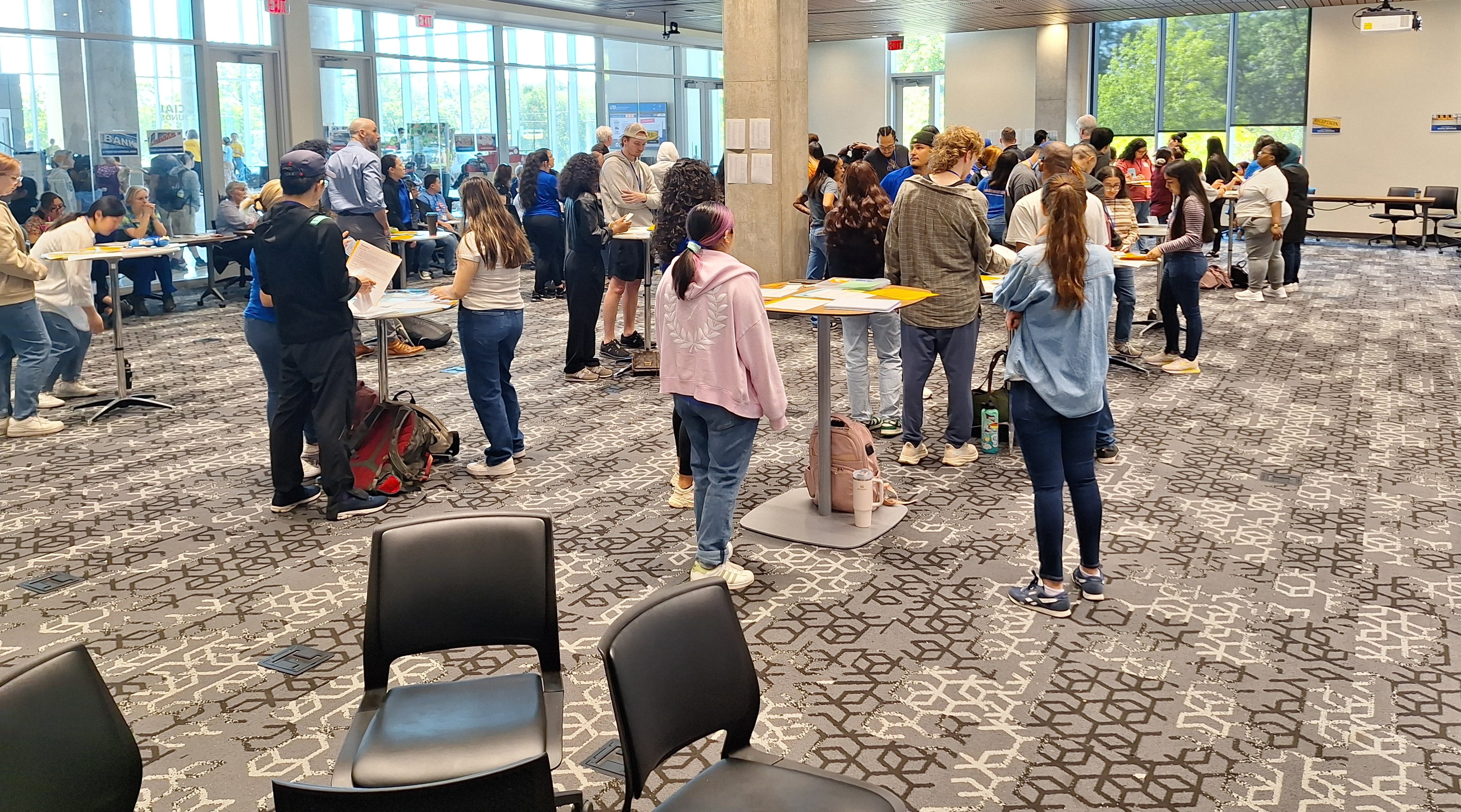
Interpersonal Violence Education event

The commercial sexual exploitation of children, which is sometimes referred to as child sex trafficking, occurs when an individual under the age of 18 exchanges sex or sexual acts for goods, services, drugs, or money. Multiple projects and PIVOT seek to understand compounded risk for this form of victimization, as well as fostering resiliency and building prevention.

Project NEXUS

This online survey of youth ages 13-24 in the United States examined patterns and predictors of desired help, help sought, comfort in data collection processes, and identification protocols.

Personnel: Jennifer O’Brien, Kimberly Mitchell, Deirdre Colburn, Lisa Jones


Project Impact

Researchers from the University of Texas at Arlington, The University of New Hampshire, and the University of Minnesota received funding from the U.S. Centers for Disease Control (CDC) to evaluate the Not a Number trafficking prevention program.  The goal of the study is to evaluate the effectiveness of this program in preventing commercial sexual exploitation among children and youth.

Personnel: Jennifer O’Brien, Lisa Jones, Lauren Martin
Website: https://projectimpact-evaluation.org/


Publications

  • Jones, L.M., O’Brien, J.E., & Graham, S. (2025). Building the evidence on preventing youth commercial sexual exploitation: A non-randomized, quasi-experimental evaluation of the Not a Number trafficking prevention program. Journal of Interpersonal Violence. 1-29. https://doi.org/10.1177/08862605251336355
  • Jones, L.M., O’Brien, J.E., Colburn, D., McKinney, K., & Martin, L. (2024). Youth perspectives on commercial sexual exploitation: Results from pre- and post- program surveys administered by the Not a Number trafficking prevention curriculum. Research in Human Development. 20 (2-3). 1-20. https://doi.org/10.1080/15427609.2024.2412427
  • O’Brien, J.E., McKinney, K., Martin, L., & Jones, L.M. (2024). Help-seeking among children impacted by commercial sexual exploitation: A scoping review. Trauma, Violence, & Abuse. 1-22. https://doi.org/10.1177/1524838024125.

Understanding the physical and psychological health and wellness needs of minor sex trafficking victims

Personnel: Jennifer O’Brien, Amy Farrell, Carlos Cuevas, Lisa Jones, Rebecca Pfeffer
Report: https://nu-sccj.github.io/mst-report/assets/Understanding%20Physical%20and%20Psychological%20Health%20MST_Technical%20Report.pdf

Publications

  • Pfeffer, R., Houston-Kolnik, J., Farrell, A., O’Brien, J.E., Wagner, A., Bacy, S., Lincoln, A. (2025). Perceptions of trauma-informed care: The experiences of minor sex trafficking survivors in medical settings. BMC Emergency Medicine. https://doi.org/10.21203/rs.3.rs-8098953/v1
  • Wagner, A., Lockwood, S., Farrell, A., Cuevas, C., O’Brien, J.E., Pfeffer, R., Kolnik, J., & Lincoln, A. (2024). Understanding the Retrospective and Current Health Care Needs and Service Experiences of Adult Survivors of Minor Sex Trafficking. Research in Human Development. 20 (2-3). 135-158. https://doi.org/10.1080/15427609.2024.2407257


Law Enforcement’s Response to Child Sex Trafficking

This completed study used a combination of mail surveys and in-depth telephone interviews with agencies and law enforcement investigators to better understand the police response to CST. Focusing on the year 2021, we collected information from agencies by mail on how many cases of CST they investigated. We then followed up with key investigating officers from the agencies who reported cases in 2021 to ask them more details about the cases. Details of interest included victim and offender characteristics, types of cases (e.g. trafficking involving a controlling person, survival sex, or exchange of child sexual abuse material for monetary gain), other agency involvement, community resources deployed, and case outcomes (charges and arrests).

Personnel: Jennifer O’Brien, Kimberly Mitchell, Lisa Jones, David Finkelhor
Report: https://www.unh.edu/ccrc/sites/default/files/media/2025-10/Final%20LEA-CST%20Report%20%28FOR%20RELEASE%29.pdf

Publications

  • Mitchell, K.J., O’Brien, J.E., Puchlopek-Adams, A., & Jones, L.M. (2025). Law enforcement agency practices and policies for the investigation of 2024 sex trafficking: Are agencies using victim-centered approaches? American Journal of Criminal Justice. 1-19. https://doi.org/10.1007/s12103-024-09776-6
  • Mitchell, K.J., Jones, L.M., O’Brien, J.E., & Puchlopek-Adams, A. (2025). A typology of commercial sexual exploitation of children cases coming to law enforcement attention in 2021: Implications for identification and investigations. Child Abuse & Neglect. 169 (1). 1-13. https://doi.org/10.1016/j.chiabu.2025.107619
  • O'Brien, J.E., Jones, L.M., Mitchell, K.M., Zwerling Kahn, G. (2025). COVID-19 and child sex trafficking: Qualitative insights on the impact of the pandemic on victimization and service provision. Public Health Reports. 1-9 https://doi.org/10.1177/00333549241267721
  • O’Brien, J.E., Kahn, G.Z., Gast, L., & Mitchell, K.J. (2025). “They are not victimless crimes…that’s frustrating to hear”: Qualitative insights from prosecutors working on cases related to technology facilitated child sexual abuse material. Child Abuse & Neglect. 159. 1-14. https://doi.org/10.1016/j.chiabu.2024.107169
  • O’Brien, J.E., Mitchell, K.J., Jones, L., & Chinwokwu-Njemanze, C. (2025). The importance of fostering trust in service delivery with child and youth survivors of commercial sexual exploitation. Journal of Forensic Nursing. 1-12. https://doi.org/10.1097/JFN.0000000000000533
  • Rizo, C., O’Brien, J.E., Preble, K., & Mitchell, K. (2025). Human Trafficking Services for Youth with Minoritized Identities: Application of an Access to Care Framework. Child and Youth Services Review. 172. 1-10. https://doi.org/10.1016/j.childyouth.2025.108263
  • Prior, A., O’Brien, J.E., Cattarin, E., Murphy, M., Kahn, G., & Mitchell, K.J. (2025). “There’s absolutely no borders.  There’s no limitations.”: Law enforcement insights on technology’s role in the trajectories of commercial sexual exploitation of children crimes. Journal of Children and Media. Online First. https://doi.org/10.1080/17482798.2025.2556205
  • O’Brien, J.E., Prior, A., & Mitchell, K.J. (2025). “These victims are some of the most difficult you're going to work with”: Challenges in police work with commercially sexually exploited children. Criminal Justice and Behavior. Online First. https://doi.org/10.1177/00938548251372066
  • Prior, A., O’Brien, J.E., Puchlopek-Adams, A., Finkelhor, D., & Mitchell, K.J. (2025). “They had to change the model to fit the victim, versus the victim having to fit the model”: Innovative solutions in community response to CSEC crimes. Child and Youth Services Review. https://doi.org/10.1016/j.childyouth.2025.108682


Drug endangered children are those children growing up in homes where caregivers and/or siblings are using substances.  A risk factor for a variety of adverse childhood experiences, familial and caregiver substance use In collaboration with the National Alliance for Drug Endangered Children, Dr. Jennifer O’Brien is exploring profiles of risk and resiliency via a national survey.  While data collection is ongoing, find out more about NADEC Here: www.NADEC.org

Human trafficking is the exploitation of individuals through the use of force, fraud or coercion.  Broader and legally disparate from the commercial sexual exploitation of children, human trafficking research at PIVOT encompasses both sex and labor trafficking in adulthood.

Personnel: Kathleen Preble, Jennifer O'Brien
Projects includeMissouri Project and the Missouri Resource Guide and the "Substance Use and Harm Reduction among survivors of Human Trafficking”

Citations

  • Preble, K. M., Nichols, A., & Owens, M. (2023). Assets and logic: Proposing an evidenced-based strategic partnership model for anti-trafficking response. Journal of human trafficking, 9(2), 131-147.
  • Nichols, A., & Preble, K. (2022). A Method to Develop a Statewide Resource Guide, Needs Assessment, and Service Inventory to Respond to Human Trafficking. Dignity: A Journal of Analysis of Exploitation and Violence, 7(3), 4.
  • Dell, N. A., Anasti, T., Preble, K. M., & Patel, H. (2025). Substance Use Disorders Among Human Trafficking Victims: Evidence from the 2019 to 2021 Nationwide Emergency Department Sample. Substance Use & Misuse, 60(5), 619-627.
  • Dell, N. A., Carbone, J. T., Anasti, T., Grimes, L., Preble, K. M., Gezinski, L. B., & Thibodeau, H. (2025). Patterns of polysubstance use disorder among human trafficking survivors: A latent class analysis. Addictive behaviors, 108563.
  • Gezinski, L. B., Richer, A. M., Dilanchian, A., Preble, K., Anasti, T., Dell, N. A., & Price, C. (2025). “If It’s Not Relevant to Your Diagnosis, We Don’t Need to Ask”: Provider Perspectives on Trauma-Informed Care with Survivors of Sex Trafficking. Behavioral Medicine, 1-15.

Housing Interventions for Domestic Violence

Projects: Safe Transitions & Safe Transitions for Teens

Domestic violence transitional housing (DVTH) is a time-limited model offered by over 600 domestic violence programs across the United States. DVTH provides housing units and supportive advocacy services to build stability and support for survivors. Despite the widespread use of DVTH, programs remain largely untested for efficacy, creating a significant gap in our understanding of impactful housing for DV survivors. This national project, funded by the Office on Violence Against Women and National Institutes of Justice in the United States Department of Justice, is employing longitudinal mixed methods approaches to understand DVTH program outcomes across individual, organizational, and community-level indicators, as well as intergenerational and safety impacts of stable housing and DVTH programming on parents and teens residing in DVTH together.

Personnel: Rachel Voth Schrag (Project Co-Investigator) (Key external collaborators: Bethany Backes, PhD, Leila Wood, PhD, Julia O’Connor, PhD)

Publications

  • Wood, L., Backes, B., Voth Schrag, R., O’Conner, J., & Leibovits, I. (2025). A model for advocacy approaches and goals in domestic violence transitional housing. Journal of Family Violence. DOI: 10.1007/s10896-025-00987-x
  • Voth Schrag, R., O’Connor, J., Leibovits, I., Wood, L., & Backes, B. (2025). Family Health and Wellbeing in Domestic Violence Transitional Housing: Service Provider Perspectives. Families in Society. DOI: 10.1177/10443894251339853
  • Backes, B., O’Conner, J., Olomi, J., Voth Schrag, R., & Wood, L., (2025). Understanding the landscape of domestic violence transitional housing: Services and housing for rural and non-rural clientele. Housing Studies, 40 (8), 1781-1799.  DOI: 10.1080/02673037.2024.2373993

Website: https://ccie.ucf.edu/safe-transitions/


Masculinity and IPV

The PIVOT lab is interested in understanding the intersection of masculinities and interpersonal violence, both from the perspectives of men causing harm as well as men experiencing harm and seeking help as survivors. Dr. PettyJohn service on the Editorial Board of the APA journal, Psychology of Men and Masculinities.

Peer-reviewed pubs


Hidden Homicides

Project: The PIVOT team is working in partnership with One Safe Place, the Family Justice Center of Tarrant County, to learn more about hidden homicides in cases of intimate partner violence. Hidden homicides involve the intentional staging of death scenes to look like a suicide, accident, or overdose, to mislead investigators away from the actual manner of death. While this is a known issue amongst practitioners and advocacy groups, little empirical research has explored incidence patterns in cases of intimate partner violence, nor validated tools that have been proposed for helping investigators identify suspicious deaths. This is a multi-phase project which involves a scoping review being completed by an MSW thesis student as well as case file reviews in collaboration with One Safe Place.

Personnel: Morgan PettyJohn, Kathleen Preble, One Safe Place of Tarrant County, Ronaldo Arriaga (MSW student)


Project: Evaluation of Campus Based Advocacy

This work focuses on understanding and addressing the impacts of experiencing dating and sexual violence while pursuing higher education, including evaluating effective interventions to improve student-survivor impacts across educational, safety, and well-being outcomes. This project includes attention to educational sabotage as a tactic of coercive control, as well as links between experiences of intimate partner violence, trauma related mental health challenges, and academic disruption for student-survivors. The first two phases of our Evaluation of Campus Based Advocacy project has been conducted with partners across five campuses in Texas to understand the key components of effective campus-based survivor advocacy for a diverse group of survivors. We have developed tools for the implementation and evaluation of advocacy programming and identified medium and long-term outcomes of engaging in campus-based advocacy for student survivors. This project has provided the best evidence to date for clear improvements for service users in terms of safety across multiple forms of violence, institutional connection, and academic outcomes.

Personnel: Rachel Voth Schrag (key external collaborators: Leila Wood, PhD)

Publications

  • Voth Schrag, R., Baumler, E., Hairston, D., Jones, C., & Wood, L. (2024). Safety and academic outcomes of campus-based advocacy service users. Journal of Interpersonal Violence, 39(3-4), 869-896. DOI: 10.1177/08862605231198487
  • Klein, L., Brewer, N., Cloy C., Lover, H., Bangen, M., McLean, K., Voth Schrag, R., & Wood, L. (2023). Campus interpersonal violence survivor advocacy services. Journal of American College Health, DOI: 10/1080/07448481.2023.2209188
  • Gezinski, L., O’Connor, J., & Voth Schrag, R. (2025). The effect of intimate partner violence on psychological distress and suicidal ideation: An investigation of protective factors among university students in the USA. Journal of Interpersonal Violence. DOI: 10.1177/0886265251336349
  • Voth Schrag, R., & Wood, L., (2025). Development and validation of the School Sabotage Scale to address school specific tactics of intimate partner violence. Journal of Family Violence. DOI: 10.1007/s10896-025-0082-5
  • O’Conner, J., Voth Schrag, R., Woerner, J., Backes, B., Hybl, M., & Garib, W. (2025). Protective and risk factors for campus dating and sexual violence at non-traditional academic institutions: A scoping literature review. Trauma, Violence & Abuse. DOI: 10.1177/1524838024131885
  • Gezinski, L., O’Conner, J., Voth Schrag, R., & Wood, L. (2024). Intimate partner violence and academic challenges among college students: The role of campus belonging and campus community safety. Psychology of Violence, online first, DOI: 10.1037/vio0000546
  • Wood. L., Voth Schrag, R., Hairston, D., & Jones, C. (2021). Exploring advocacy practices for interpersonal violence survivors on college campuses: Approaches and key factors. Psychology of Violence, 11(1), 28-39.https://doi.org/10.1037/vio0000343
  • Voth Schrag, R., Hairston, D., Brown, M., & Wood, L. (2022). Advocate and survivor perspectives on the role of technology in help seeking and services with emerging adults in higher education . Journal of Family Violence, 37(1) 123-136. https://doi.org/10.1007/s10896-021-00279-0

Website:  The Campus Based Advocacy ToolKit 2.0 https://med.uth.edu/psychiatry/the-campus-based-advocacy-evaluation-toolkit-implementation-and-evaluation/

Additional Work

The PIVOT lab seeks to improve response to sexual assault through university and community-based response services.

  • PettyJohn, M. E., Kramer Jacobs, A., Breeden, K., Backes, B., & Wood, L. (2025). “I just really felt like I was heard for the first time”: Survivor experiences with an Adult Forensic Interviewing model. Violence Against Women. https://doi.org/10.1177/10778012251379426
  • PettyJohn, M. E., Ashley, A., Freifeld, M., Dontje, K., Markowitz, J., & Campbell, R. (2025). “I’m just trying to squeeze in hours here and there”: New SANEs’ perspectives on challenges gaining practice experience. Journal of Forensic Nursing. https://pubmed.ncbi.nlm.nih.gov/41181936/
  • Campbell, R., Gregory, K., PettyJohn, M. E., Moylan, C. A., Buchanan, N. T., Wiklund, L., Kindraka, M., Chapman, C., & Nason, J. (2024). Building a Culture of Support: The use of a social norms campaign to create a trauma-informed campus community. Journal of American College Health, Online. https://doi.org/10.1080/07448481.2024.2338444
  • Campbell, R., Moylan, C. A., PettyJohn, M. E., Munford, A., Schweda, K., Fedewa, T., Rosen, H., Ferguson, M. A., Beal, J., & Buchanan, N. T. (2022). Adopting a “both/and” mindset to address relationship violence and sexual misconduct (RVSM) in institutions of higher education. Violence Against Women, 29(1), 74-83. https://doi.org/10.1177/10778012221130105
  • Campbell, R., Munford, A., Moylan, C. A., PettyJohn, M. E., Schweda, K., Fedewa, T., Rosen, H., Ferguson, M. A., Beal, J., & Buchanan, N. T. (2022). Creating a university strategic plan to address relationship violence and sexual misconduct (RVSM): An application of principles-focused evaluation at Michigan State University. Violence Against Women, 29(1), 3-34. https://doi.org/10.1177/10778012221130106 

Mavericks Ending Tech Abuse (MAVS ETA) Project

MAVS ETA is an interdisciplinary research and service project led by scholars from the PIVOT Lab in the School of Social Work along with the Privacy and Security Lab in the College of Engineering, and faculty from the College of Liberal Arts. Supported by the Wolen’s Foundation, MAVS ETA aims to identify and respond to tactics of Technology Facilitated Abuse (TFA) via research, training, and technical support. We engage students, community partner agencies, and survivors of TFA living in North Texas to document needs related to TFA and develop and test educational and technical solutions to help promote safety and wellbeing. One way we are applying the findings of our research to support the community is through launching the UTA Tech-Abuse Clinic (TAC). Modeled on the work of the Clinic to End Tech Abuse at Cornell, the UTA TAC is a free consultation service that pairs trained MSW practicum students and computer engineering students with survivors referred to us from community-based violence service agencies across the Dallas-Fort Worth metroplex. Through the clinic and our community partnerships, we are building on-the-ground knowledge of current TFA tactics allowing us to identify emerging trends and associated intervention approaches from cybersecurity and public health perspectives.

Personnel: Rachel Voth Schrag (Project director), Morgan PettyJohn (Clinic Director), Minjaal Raval (PhD student), Amna Hamdan (MSW student)
Press: UTA Fights Digital Abuse in Domestic Violence Cases: https://www.socialworktoday.com/news/enews_0925.shtml
Website: https://www.mavsetalab.uta.edu/


Image Based Sexual Abuse of Minors

Multiple projects related to images (still or videos) of minors are being conducted through PIVOT. This includes instances of child sexual abuse material (CSAM).  In these studies, we explore disclosure, typologies, and service provision.  We have also looked at law enforcement wellness following investigations into these crimes.

Personnel: Jennifer O’Brien


Publications

  • Finkelhor, D., Colburn, D., Gewirtz-Mayden, O’Brien, J.E., Jones, L.M., Turner, H., & Mitchell, K.J. (Accepted). Youth-produced images are the majority of child sexual abuse materials: Categories of youth and adult perpetrators from victim-based epidemiology. Sexual Abuse
  • Gewirtz-Meydan, A., Mitchell, K., O’Brien, J.E., & Colburn, D. (2025). One group or many? Identifying distinct profiles of adolescents involved in image-based sexual abuse. Journal of Interpersonal Violence. https://doi.org/10.1177/088626052513937
  • Mitchell, K.J., Jones, L.M., Gewirtz-Meydan, A., O’Brien, J.E., Colburn, D. (2025). Image-based sexual abuse: Characteristics linked to different reasons why youth decide not to disclose. Prevention Science. https://doi.org/10.1007/s11121-025-01853-4
  • Colburn, D., Mitchell, K.J., Gewirtz-Meydan, A., Finkelhor, D., Turner, H., & O’Brien, J.E. (2025). Life impact following image-based sexual abuse involvement among a sample of young adults. Child Abuse &Neglect. 167. 1-13. https://doi.org/10.1016/j.chiabu.2025.107584
  • Mitchell, KJ, Gewirtz-Meydan, A, O’Brien, J.E. & Ein-Dor, T (2024). Exposure to child sexual abuse material among law enforcement investigators: Exploring trauma and resilience profiles. Psychological Trauma: Theory, Research, Practice, and Policy. Special Issue on Trauma in the Modern Age of Technology. 1-11. https://doi.org/10.1037/tra0001804
  • O’Brien, J.E., Kahn, G.Z., Gast, L., & Mitchell, K.J. (2025). “They are not victimless crimes…that’s frustrating to hear”: Qualitative insights from prosecutors working on cases related to technology facilitated child sexual abuse material. Child Abuse & Neglect. 159. 1-14. https://doi.org/10.1016/j.chiabu.2024.107169
  • Mitchell, KJ, Gewirtz-Meydan, A, O’Brien, J.E. & Ein-Dor, T (2024). Exposure to child sexual abuse material among law enforcement investigators: Exploring trauma and resilience profiles. Psychological Trauma: Theory, Research, Practice, and Policy. Special Issue on Trauma in the Modern Age of Technology. 1-11. https://doi.org/10.1037/tra0001804
  • Gewirtz-Meydan, A, Mitchell, K.J., & O’Brien, J (2024). Trauma behind the keyboard: Exploring disparities in child sexual abuse material exposure and mental health factors among police investigators and forensic examiners – A network analysis. Child Abuse & Neglect. 152. 1-14. https://doi.org/10.1016/j.chiabu.2024.106757
  • O’Brien, J.E., Gewirtz-Meydan, A., & Mitchell, K.J. (2024). Emotional wellbeing and cognitive appraisals among law enforcement exposed to child sexual abuse material: A mixed method study. Criminal Justice and Behavior. 51(3). 420-439. https://doi.org/10.1177/00938548231224815
  • Mitchell, K.J., Gewirtz-Meydan, A., Finkelhor, D., O’Brien, J.E., & Jones, L.M. (2023). The mental health of officials who regularly examine child sexual abuse material: Strategies for harm mitigation. BMC Psychiatry. 940. 1-12. https://doi.org/10.1186/s12888-023-05445-w
  • Gewirtz-Meydan, A., Mitchell, K., & O’Brien, J.E. (2023). Sexual posttraumatic stress among investigators of child sexual abuse material. Policing: A Journal of Policy and Practice. 17, 1-14. https://doi.org/10.1093/police/paad052

Sextortion on college campuses

Personnel: Morgan PettyJohn, Fangzhou Wang (Department of Criminology and Criminal Justice), Jennifer Sterling (Crime Victim Services Coordinator- UTA PD; PhD student in UTA SSW)

Project

This mixed methods project explores sextortion incidences, characteristics, and impacts amongst college students through an interdisciplinary lens. In partnership with UTA Police, we are conducting a case file review of sextortion incidents which students have formally reported or informally sought resources from the Victim Services unit. We are also fielding a survey across UTA’s campus and will be recruiting a subsample of victims from this survey for qualitative interviews. This project will provide information on trends and impacts of sextortion amongst college student populations to inform prevention, identification, and response.

The PIVOT lab is interested in how digital technologies can assist victims of violence across the lifespan in accessing supportive resources, through both formal and informal support services.


Survivors use of chat and text hotlines

Peer-reviewed pubs

  • Wood, L., PettyJohn, M. E., Voth Schrag, R., Caballero, R.,† Temple, J. R., & Baumler, E. (2023). “Even through text, there is that connection”: User experiences on chat and text hotlines for intimate partner violence and sexual assault. Journal of Family Violence, OnlineFirst. https://doi.org/10.1007/s10896-023-00646-zo

Disclosures of child abuse or neglect on social media

Peer-reviewed pubs

  • PettyJohn, M. E., Tasnim, R.,* Hall, A.,* & Schwab-Reese, L. M. (2025). “It was an outlet when I needed it”: Exploring youth motivations and experiences disclosing child maltreatment on social media. Journal of Family Violence, Online. https://doi.org/10.1007/s10896-025-00917-x
  • Schwab-Reese, L., PettyJohn, M. E., Tasnim, R.*, & Fingerman, M. (2025). Social media facilitates disclosure among people experiencing child maltreatment. Child Protection and Practice, 5, 100158. https://doi.org/10.1016/j.chipro.2025.100158
  • Williams, A. W.,* Williams, A. H.,* PettyJohn, M. E., Cash, S. J., & Schwab-Reese, L. (2023). Understanding how peers respond to online child maltreatment disclosures: A qualitative content analysis of family violence discussions on social media. Child Abuse & Neglect, 146, 106401. https://doi.org/10.1016/j.chiabu.2023.106401
  • Williams, A. H.,* Williams, A. W.,* Renner, L. M., PettyJohn, M. E., Cash, S., Schwab-Reese, L. M. (2024). “I need to talk to someone…What do I do?”: Peer-to-peer disclosures of child maltreatment on social media. Journal of Family Violence, Online. https://doi.org/10.1007/s10896-024-00697-w


Project: Evaluation of Technology Based Advocacy (ETA).

Digital (chat and text) hotline is a rapidly expanding front door to interpersonal violence services, but little is known about the user experience, needs, or impact of digital hotline support. The goals of this project, funded by the National Institutes of Justice, are to expand the evidence-base on the use and implementation of chat and text-based advocacy for victims of crime and to assess the safety, well-being, and service connection outcomes of chat and text-based advocacy service users. To achieve these goals, we conducted qualitative interviews with survivors who have used chat and text hotlines, as well as staff who work on chat and text based hotlines. We are also implemented a longitudinal survey of survivors following their outcomes in the 6 months after first engaging with chat/text hotline services, and conducted rigorous mixed methods analysis of a set of 400 chat and text hotline transcripts from partner agencies. 

Personnel: Rachel Voth Schrag; Morgan PettyJohn (key external collaborators: Leila Wood, PhD)

Publications:

  • Voth Schrag, R., Jacobs, A., Mammah, R., Guerro, C., & Wood, L. (2026) "You deserve to be safe: Approaches to safety planning on digital interpersonal violence hotlines." Journal of Interpersonal Violence. https://doi.org/10.1177/08862605251408134
  • Wood, L., Baumler, E., Voth Schrag, R., Jacobs, A., Temple, J., & Clark, E. (Online First). Short-term health and safety outcomes associated with digital hotline use at interpersonal violence-focused agencies. Inquiry. DOI: 10.1177/00469580251381991
  • Wood, L., Baumler, E., Jacobs, A., Temple, J., Torres, M., Voth Schrag, R. (2025). Characteristics, needs, and experiences of digital interpersonal violence hotline service participants. Journal of the Society for Social Work and Research, DOI: 10.1086/733027
  • Wood, L., PettyJohn, M., Voth Schrag, R., Caballero, R., Temple, J., & Baumler, E. (2023). ‘Even through text, there is that connection’: User experience on chat and text hotlines for intimate partner violence and sexual assault. Journal of Family Violence, DOI: 10.1007/s10896-023-
  • Wood, L., Hairston, D., Voth Schrag, R., Clark, E., Parra-Cardona, R., & Temple, J. (2021). Creating a digital trauma informed space: Chat and text advocacy for survivors of violence. Journal of Interpersonal Violence, https://doi.org/10.1177/08862605211043573